

For migrants, prejudice can be a life and death matter. Research in India and South Africa shows life is considerably harder if migrants have a darker skin and come from a poorer country.
Articles on Prejudice
Displaying 61 - 80 of 113 articles

Trump’s recent comments echo a troubled history of the use of dogs against people of color, as well as pejorative depictions of people of color as animals.
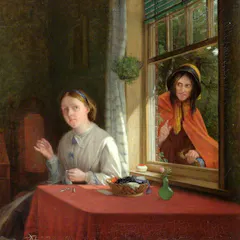
Attacking Gypsies and Travellers is an easy win for politicians, thanks to centuries of prejudice cultured by the state and the media.

According to a new survey of 6,000 Australians, more than a quarter of respondents report experiencing some form of discrimination at least weekly.

Examining current attitudes to accents in Britain, do the same biases hold true as they did 50 years ago and what does that mean when it comes to the interview process?

In the face of growing anti-Muslim sentiment, young Muslim Australians believe the power of contact and exchange can transform prejudice.
We have entered a resurgent age of racism wherein discrimination is globalised, normalised and weaponised.

Race is embedded into the way many Italians look at themselves. The Italian nation is thought to be constituted first and foremost by white Catholics.

EastEnders is planning to introduce a new bisexual character – let’s hope they don’t portray many of the classic stereotypes about bi people often seen on TV.

A new study in Glasgow suggests latent anti-Pakistani sentiment may affect the house-moving decisions of white British homeowners.

Imaginaries of gangs as inherent forms of brutal anarchy promote particular political agendas and obscure the ways gangs can reveal the underlying dynamics of the contexts within which they emerge.

The deepening geographic, racial, gender and educational divisions in America shows some striking parallels between the nation today and in the 1920s.

Muslim women in the UK don’t feel able to discuss their healthcare needs because of fears of islamaphobia.
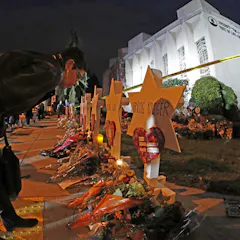
American anti-Semitism took an organized form in the 20th century. The German American Bund and the Silver Legion developed a unique culture of hatred for Jews that persists today in alt-right groups.

As the US federal government shifts toward harsher and more restrictive immigration policies, local authorities are pushing back with the “sanctuary cities” movement.

Dwarf wrestling is a spectacle that harks back to the Victorian age of ‘freak shows’.

The fourth is the Oxford-style debate series, this article argues that “the impact reflected by Trump is here to stay”.

Our neural circuits lead us to find comfort in those like us and unease with those who differ, resulting in a battle between reward and distrust. But these brain connections aren’t the end of the story.

The hostile environment that marginalised people find themselves in serves as a source of constant stress.

New research among well-off Roma families in Romania shows how widespread prejudice against them is.
Top contributors
-

Professor of Psychology, The University of Melbourne
-
Instructional Associate Professor of Gerontology, University of Southern California
-
Spécialiste de la politique américaine, Sciences Po
-
Emanuel Ringelblum Professor in Jewish History, University of California, Davis
-
Director, BehaviourWorks, Monash Sustainable Development Institute, Monash University
-
Research fellow, BehaviourWorks Australia, Monash Sustainable Development Institute, Monash University
-
Professor of Clinical Psychology and Applied Science, Director, University of Bath and AWP NHS Trust Centre for Specialist Psychological Treatments of Anxiety and Related Problems (CSPTARP), University of Bath
-
Director of Undergraduate Studies, School of Journalism, Media and Cultural Studies, Cardiff University
-
Ph.D. Candidate in Psychology, Northwestern University
-
Doctoral Researcher, Aston University
-
Senior Lecturer in Human Development, Te Kunenga ki Pūrehuroa – Massey University
-
Associate Professor of the Practice, Bush School of Government & Public Service, Texas A&M University
-
Senior Lecturer in Clinical Psychology, UCL
-
Postdoctoral research fellow, Goldsmiths, University of London
-
Professor of Psychology, University of Wisconsin-Madison