
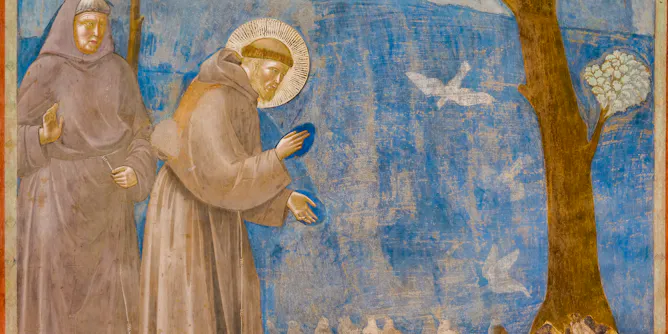
Medieval texts and frescoes show how Francis of Assisi’s legends formed – and why his call to poverty and care for creation still resonates.
Articles on Poor
Displaying 1 - 20 of 30 articles

People tend to associate with others who are in a similar financial position, making them underestimate the true levels on inequality.
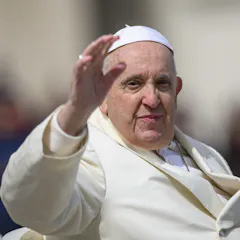
A scholar of global Catholicism writes how Francis has opened the church to the outside world in ways no pope had done before.
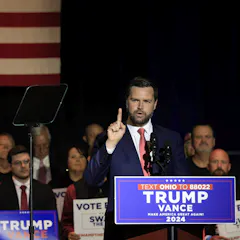
It happens in journalism and it happens in the arts. But in Congress – where just 2% of representatives held blue-collar or service-industry jobs before entering politics – it’s rampant.

Eliminating poverty has not been a major campaign issue during the 2024 presidential campaign.
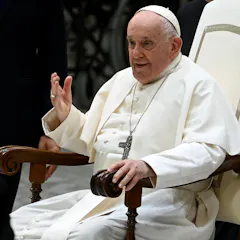
A scholar of Roman Catholicism explains why Pope Francis’ visit to Mongolia, home to fewer than 1,500 Catholics, is significant.

Offering free pregnancy tests, sonograms and counseling, the pregnancy help movement maintains more than 2,700 resource centers throughout the United States.

The change point at which the happiness of most Australians no longer strongly depends on income has almost doubled from A$43,000 to A$74,000.

Students who come from families that are more well-off financially have an advantage in their quest to become a college athlete, researchers have found.
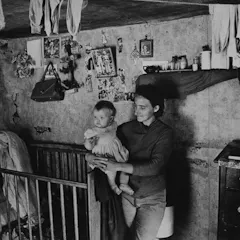
Newer measures of poverty may do a better job of counting America’s poor, which is necessary to helping them.

Some among the Baptist movement interpret the Resurrection as God’s response and commitment to liberating the poor and the oppressed.
Fair global agreements, home-grown vaccines and sharing extra doses with poorer nations are all needed if we’re to ever emerge from this pandemic.

The earned income tax credit lifts around 6 million of the working poor out of poverty every year, but with the economy hammered by COVID-19, many might not get the benefit they need.
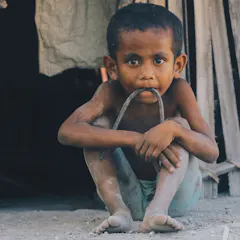
Bappenas conducted a simulation to predict how COVID-19 will impact poverty in Indonesia. Without intervention, the pandemic will drag at least 3.6 million Indonesians into poverty by the end of 2020.
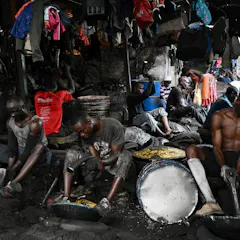
More needs to be done to cushion low-income families from the economic effects of the new coronavirus.

Then – as now – the wealthy fled to the countryside, while the urban poor were forced to work on the front lines.
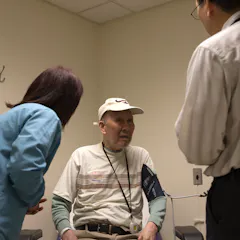
Different groups in society can suffer from social distancing practices. That includes higher risk of domestic violence, child abuse and mental health problems.

States are increasingly turning to machine learning and algorithms to detect fraud in food stamps, Medicaid and other welfare programs – despite little evidence of actual fraud.

A narrow definition of family can neglect the experiences of many people and can impact policy and programs. It’s time to expand our ideas of what family means.
The drumbeat of data breaches and the growing problem of identity theft disproportionately harm low-income Americans.
Top contributors
-

Venable Professor of Law, University of Baltimore
-
Durham University
-
Research Fellow, University of York
-
Professor of Architecture; Affiliate Faculty, Rock Ethics Institute, Penn State
-
Post Doctoral Researcher, Graduate School of Business (GSB), University of Cape Town
-
Senior Research Fellow in Evaluation Design and Research Methods, University of Dundee
-
Associate Professor of Computational Social Science, London School of Economics and Political Science
-
Professor of Economics and Public Policy, ANU College of Arts and Social Sciences, Australian National University
-
Reader in Psychometric Epidemiology, University of York
-
Associate Professor of Christian Origins, University of Dayton
-
Professor of Philosophy, California State University, Fullerton
-
ARC DECRA Fellow, Australian National University
-
Professor and Knight Center Chair in Media & Religion, USC Annenberg School for Communication and Journalism
-
Associate Professor in Taxation, Stellenbosch University
-
Postgraduate research assistant, Imperial College London