
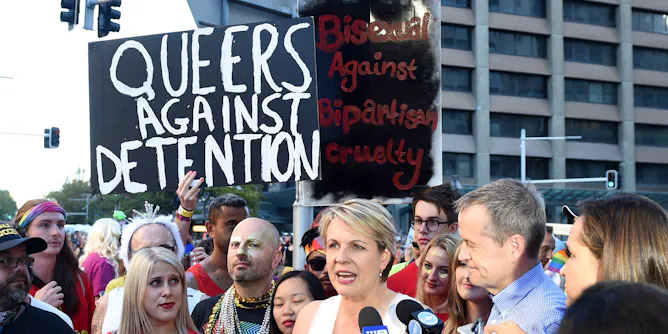
Western leaders and activists should show humility and allow themselves to be guided by local organisations if they wish to be effective in promoting same-sex rights.
Articles on Political history
Displaying 161 - 180 of 255 articles
Australian parliaments routinely legislate in respect of socially contentious issues without resorting to plebiscites or referenda.
Australia’s political system would be better off with more ordinary people and fewer career party politicians in the Senate. It would thus be more representative of ordinary Australians, not less.
Ultra-conservatism has a rich and complex history within Australian parties, and Malcolm Turnbull has the difficult task of balancing the more extreme elements of his party with his own liberal views.
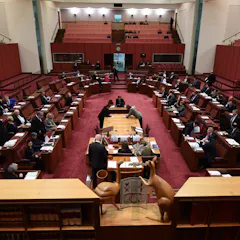
Those who do understand the Senate voting system have the potential to wield some influence both in its conduct and in debates about how it might be reformed.
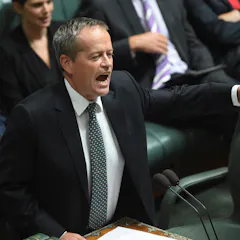
In recent months the opposition has been on the policy front foot, but it’s a risky strategy that has had mixed success for both major parties.
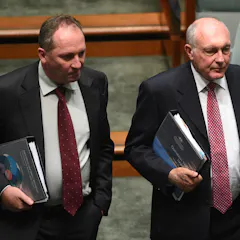
Under new leader Barnaby Joyce, the Nationals – the most-successful minor party in Australia’s political history – will pretty much continue to be treated as the Akubra wing of the Liberals.
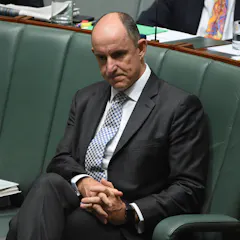
The principle underlying the ministerial standards is that ministers should uphold the public’s trust as they wield a great deal of power deriving from their public office.
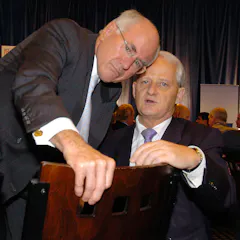
As Australia’s special envoy for human rights, Philip Ruddock will have the chance to change the world instead of listening to other people make suggestions about how it might be done.
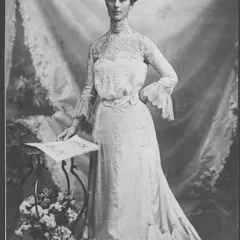
Australia’s inimitability with regard to women’s political equality has barely entered conventional studies of political history.
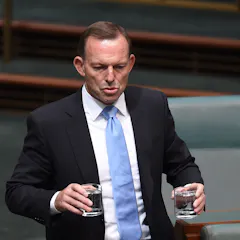
Only when systems change and cultural adjustments occur will the political class return to governing rather than ruling.
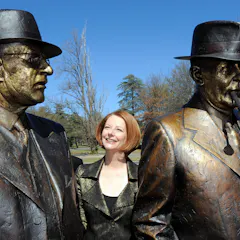
Alfred Deakin and his contemporaries invented the Australian prime ministership. But it was not settled as a platform for national leadership until John Curtin and Ben Chifley’s time.
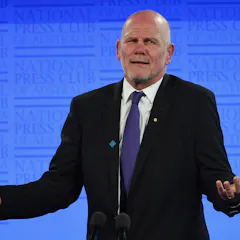
Australians should want the reality of a republic. The rest is but window-dressing.
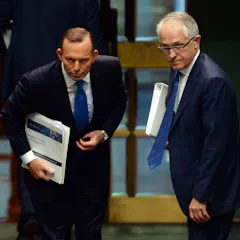
Governing was not meant to be easy. It never has been either.

Australian scholars have almost universally downplayed evidence for the ‘Ndrangheta’s existence or significance, or avoided the topic altogether.
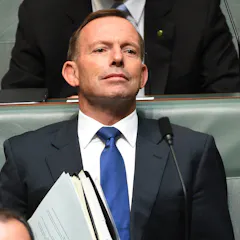
Tony Abbott failed to read the signs of the times. His rhetoric was Churchillian, emphasising struggle, crisis and emergency.

The logic of the policy changes initiated by the Hawke government in mid-1990 has underpinned asylum-seeker policy for much of the quarter-century since.
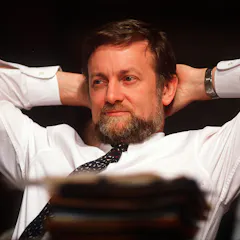
There is little of Gareth Evans’ sweeping analysis in the cabinet papers of 1990-91 of a rapidly changing world order or of his vision of good international citizenship.
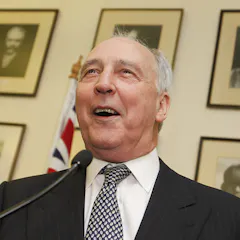
Kerry O'Brien has provided the platform for Paul Keating to define his political career, explain what drove his reform agenda and cement his position as one of Australia’s greatest leaders.

Australia’s Constitution sets the ground rules for its system of government. But many things one might expect to be in the Constitution are simply not there.
Top contributors
-

Professor of History and Politics, School of Humanities and Social Inquiry, University of Wollongong
-
Senior Lecturer, School of Humanities and Social Sciences, Deakin University
-
Director, Vice-Chancellor's Centre of Public Ideas (CoPI) and Donald Horne Professor of History and Public Ideas, University of Canberra
-
Emerita Professor of Politics, Adelaide University
-
Professorial Fellow, University of Canberra
-
Associate Professor of Political Science, Erie Campus, Penn State
-
Emeritus Professor of Politics, La Trobe University
-
Senior Lecturer, School of Political and Social Inquiry, Monash University
-
Honorary lecturer, School of Social Sciences, UNSW
-
Emeritus Professor of Politics, Monash University
-
Dennis Altman is a Friend of The Conversation.
Vice Chancellor's Fellow and Professorial Fellow, Institute for Human Security and Social Change, La Trobe University
-
ANU Law, Australian National University
-
Senior Lecturer in Law, Charles Sturt University
-
Emeritus Professor, Department of Government and International Relations, University of Sydney
-
Research Manager and Doctoral Candidate, Centre for the Study of Australian Politics, Australian National University