
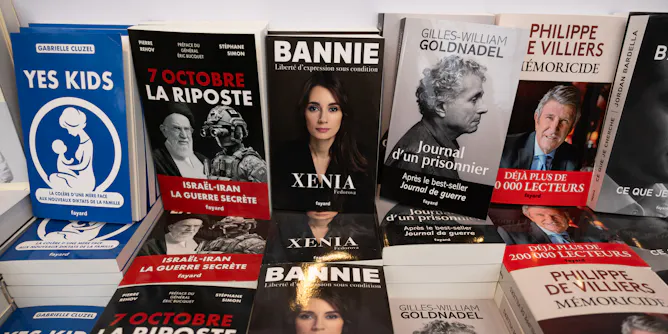
The Fedorova case is emblematic of a rhetorical method used by Russian propaganda: appealing to the targeted public’s critical thinking to convince them to disregard sources seen as “official” and “dominant.”
Articles on Political discourse
Displaying all articles
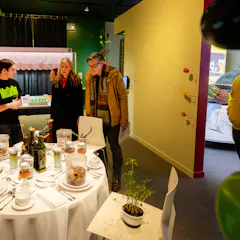
As social divisions grow, museums provide forums for civic connection and discourse across political and cultural lines.
Conversations don’t immediately change people’s minds, but they can eventually. And in the meantime, they help forge real connections across a diverse and complex society.

Misinformation suppression laws can actually make the problem of erroneous beliefs worse.
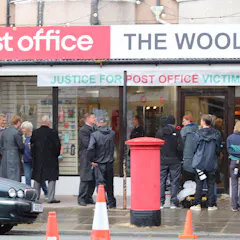
Like the exemplars of social realist cinema, Mr Bates vs The Post Office follows stories of individual plight facing a social problem filmed in a naturalistic manner.

When sincerity counts as honesty, accuracy no longer matters.

Aristotle believed that the biggest and most widespread source of political tension is the struggle between the haves and the have-nots. More than 2,000 years later, he’s got a point.

Our analysis revealed the relative attention our news and opinion pieces gave to First Nations peoples began to grow steadily from around 2005, with a huge peak in 2007.
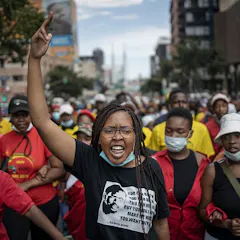
South Africans are increasingly dissatisfied with democracy because of its failure to address inequality.

Legitimate political discourse is based on persuasion, not coercion or violence. Two scholars of communication and democracy explain the difference.
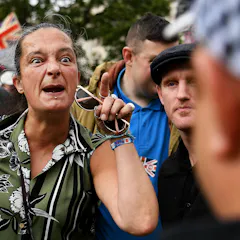
Deeply divisive issues like Brexit are seeping into the way people interact with one another, undermining trust and tolerance of others.

The midterm elections have put America’s political divide front and center, increasingly invading the work space and stressing out employees.

Nearly half of Americans say they see a great deal of bias in the news media. But the research on this subject is unresolved.
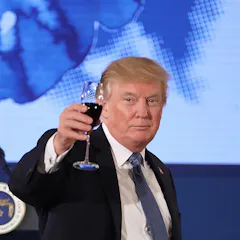
U.S. President Donald Trump’s “scourge of oppressive stupidity” has been in the Oval Office for a year. His assault on higher education is among Trump’s more disturbing penchants.

Moral disputes are a product of independent minds with independent agendas. Thus, there is little reason to see ourselves as unbiased sources of righteousness.

What can future politicians learn from the president-elect’s social media presence while on the campaign trail?

We need political and civil society leaders to reflect on the language that they use, and to strive to shape a civic narrative with which we can all engage.

As somebody with a lifelong, but not very happy, involvement in politics, I must declare an interest, as a life member of the ALP. Nevertheless, I think I can be objective in describing the decay of our…

It was a foolish moment when prime minister Bob Hawke promised that by 1990 no child in Australia would be living in poverty. After all, what are the solutions to child poverty, to crime, to educational…
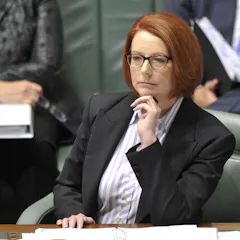
Lie (v.) (1) To make a politically unpopular statement; (2) [retrospectively applied] To make a statement which appears inconsistent with a more recent statement, indicating that its maker has changed…
Top contributors
-

Assistant Professor of Interdisciplinary Studies, Lakehead University
-
Adjunct Professor, Charles Sturt University
-
Margaret Whitlam Chair of Social Work, Western Sydney University
-
Lecturer, School of Information Studies, Charles Sturt University
-
Adjunct Research Fellow, School of Social Sciences, La Trobe University
-
Assistant Professor of Communication and Political Science, The Ohio State University
-
Professorial Fellow, The University of Melbourne
-
Chaired professor for Scholarship in the Public Interest in the Department of English and Cultural Studies, McMaster University
-
Professor of Organization Behavior, Florida State University
-
Associate Vice President for Entrepreneurship and Innovation, Clemson University
-
Adjunct Professor, Monash University
-
Professor of Communication and Journalism, Texas A&M University
-
Director of the MSU Museum and CoLab Studio, Michigan State University
-
Doctoral Researcher in Cinema, Sheffield Hallam University
-
Professor of Political Science and Philosophy, Carleton University