
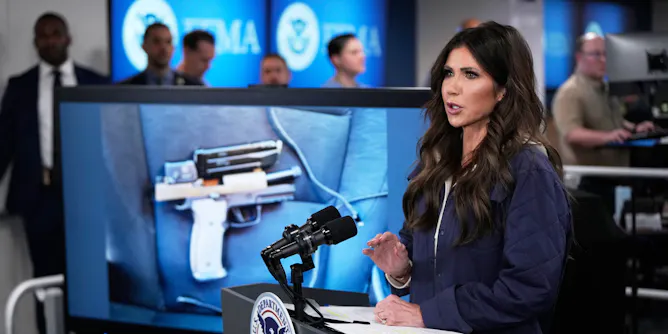
When officials lie time and again, people don’t know what to trust. And when this happens, citizens cannot deliberate, approve or dissent coherently, because a shared world no longer exists.
Articles on Pentagon Papers
Displaying all articles
Free press advocates warn that limiting how journalists cover the Defense Department hampers the stability and freedom that democracies enjoy.

Free speech is not absolute, nor does the Constitution protect only speech Americans like.

The truth may be out there, but the public rarely gets to see it.
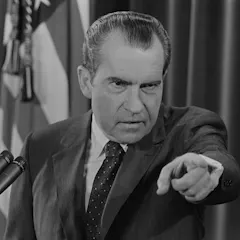
An enemies list isn’t a weapon against ‘the Deep State.’ It was a tool Richard Nixon used to create a deep state of his own.
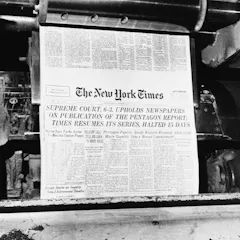
The New York Times’ publication of the Pentagon Papers showed the paper was willing to jeopardize connections to other powerful institutions, including the government, to serve the public interest.

Spy cases are rare. More typically, as in the Trump indictment, the act applies to the unauthorized gathering, possessing or transmitting of certain sensitive government information.
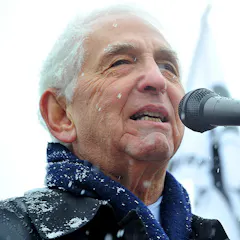
The Vietnam War whistleblower, who died on June 16, 2023, wrestled with his decision to leak thousands of pages of government documents.

Two national security law experts explain how the Espionage Act isn’t only about international intrigue, and share other important points about the law that was invoked in a search of Trump’s estate.
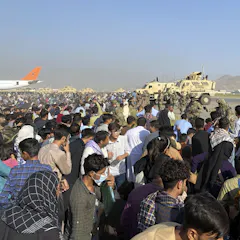
Secretary of State Antony Blinken said that the US Afghanistan pullout is not a repeat of failures in other recent wars. “This is not Saigon,” he said. A seasoned foreign policy expert disagrees.
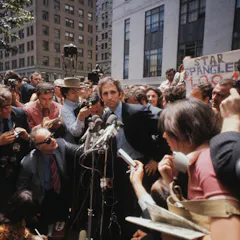
The episode might have slipped quietly from the news had Nixon decided to not attack the messenger.
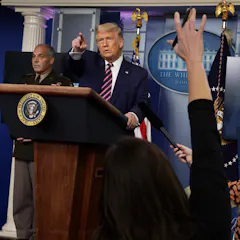
Press-bashing was a feature of the years Trump was president. But a new, more constructive kind of press criticism has also emerged that aims to improve journalism, not delegitimize it.
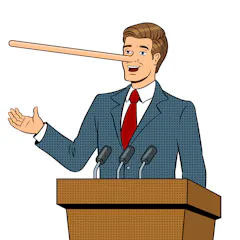
When a person or agency backed by the power and resources of the government tells a lie, it sometimes causes harm that only the government can inflict.

US officials have consistently lied over decades about progress in the Afghanistan war. The lies are no surprise, writes a foreign affairs scholar – but they have profound consequences.
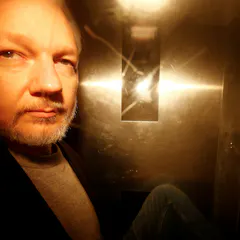
Julian Assange’s indictment under the Espionage Act, a sweeping law with heavy penalties for unauthorized receiving or disclosing of classified information, poses a threat to press freedom.
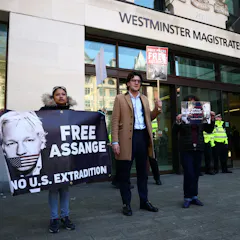
The US indicted WikiLeaks co-founder Julian Assange for conspiring to hack into a government computer. But the prosecution of Assange may also pose a risk to the rights of journalists in the US.
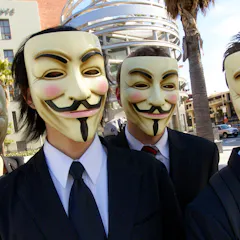
An expert argues why the anonymous op-ed in The New York Times can hardly be considered an act of civil disobedience and why it might make things even worse in the Trump administration.
Top contributors
-

Associate Professor of Journalism, Marist College
-
Professor of Constitutional Law, University of Oregon
-
Co-Director, National Security and Civil Rights Program, Loyola University Chicago
-
Professor Emeritus, American University School of International Service
-
Professor of History, UMass Amherst
-
Distinguished Practitioner in Residence, Loyola University Chicago
-
Rothgerber Chair in Constitutional Law, University of Colorado Boulder
-
John and Ann Curley Professor of First Amendment Studies, Penn State
-
Professor of Philosophy, Public Policy and Governance, University of Washington
-
Stephanie A. (Sam) Martin is a Friend of The Conversation.
Frank and Bethine Church Endowed Chair of Public Affairs, Boise State University
-
Research Specialist, the Miller Center, University of Virginia
-
Professor of Intelligence and National Security & Dean of Faculty, University of Hull
-
Associate Dean for Research and Intellectual Life, Albany Law School