

Peeing when you run or jump isn’t “just one of those things.” It’s a sign your pelvic floor needs support.
Articles on Pelvic floor
Displaying all articles
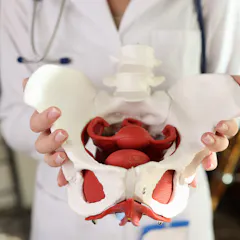
A strong pelvic floor can help prevent incontinence, prolapse and even pain during sex.

As a standalone statistic, the rate of ‘low risk’ caesarean births lacks the nuance needed to inform and improve individual care. Childbirth metrics must adopt a broader, patient-centred perspective.

Women in Canada who are affected by pelvic organ prolapse should have access to two treatment options: both hysterectomy and uterine-preserving surgeries.
Many are living with the burden of endometriosis and not receiving treatments that could improve their quality of life. So what might pelvic health physio involve?

How to improve your pelvic floor and get active after giving birth.
It turns out pregnancy itself, regardless of mode of delivery, is a significant risk factor for pelvic floor dysfunction. And there are other risks that have nothing to do with babies.

We need to ensure women have access to safe, effective procedures to treat incontinence and prolapse – including those using mesh.

They are rarely talked about but vaginal pessaries can give women freedom and security if they have prolapse or urinary incontinence.

Knowing where your pelvic floor is and how to exercise it properly can help male incontinence – and might even have some happy side effects.

Social media is awash with ads for interactive games and devices to strengthen the pelvic floor. But do they work?

Doing a ‘just in case’ wee too often, making a lifetime habit of it, can kick off a vicious cycle. You can end up training your bladder to ‘think’ it needs to go when it’s only slightly full.

A step-by- step coordinated physiotherapy plan is key for patients with disorders related to the pelvic floor.

If you haven’t had kids you probably haven’t given much thought to your pelvic floor muscles. But 5 out of 5 experts say all women should regularly exercise them.
Top contributors
-

Sessional Lecturer, CQUniversity Australia
-
Adjunct associate professor and urogynaecology & pelvic reconstructive surgery, Head Pelvic Floor Unit at Monash Health, Monash University
-
PhD Candidate, Department of Community Health Sciences, Cumming School of Medicine, University of Calgary
-
Gynecologist & Professor, Cumming School of Medicine, University of Calgary
-
Senior Clinical Lecturer in Urogynaecology, University of Sydney
-
Senior Midwifery Lecturer, Anglia Ruskin University
-
Senior Lecturer in Pain Sciences, Adelaide University
-
Assistant Professor, School of Physical and Occupational Therapy, McGill University
-
Associate Professor in Physiotherapy, University of Technology Sydney
-
Visiting Professor of Physiotherapy, University of Technology Sydney
-
Medical Student & Epidemiologist, Cumming School of Medicine, University of Calgary
-
Assistant Professor, Cumming School of Medicine, University of Calgary
-
Clinical academic PhD candidate, Bournemouth University
-
Professor, The University of Melbourne
-
Consultant Urogynaecologist, Pelvic Floor Unit, Monash Health