
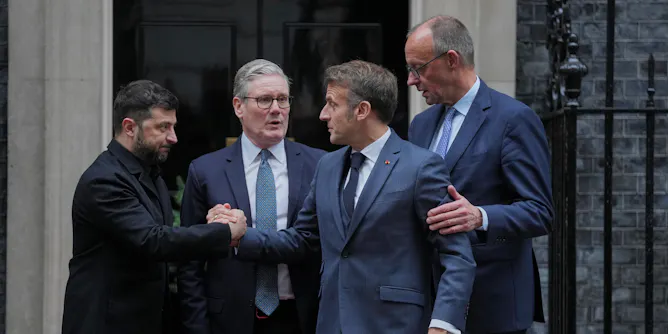
Just war theory, a centuries-old field of ethics, deals with how and when to start conflicts. It can also guide decisions about how and when to end them.
Articles on Peace negotiations
Displaying all articles

Ukraine President Volodymyr Zelenskyy meets with President Donald Trump in the aftermath of an inconclusive summit just days before. A veteran diplomat helps untangle what happened and what’s next.
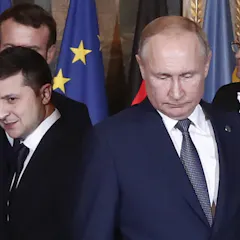
A second round of talks between Russia and Ukraine took place on June 2. Again both leaders were not present.
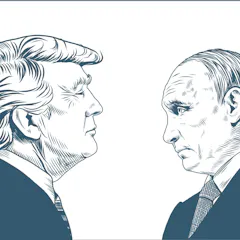
Trump is urging Putin – as well as others – to end the war in Ukraine, or face consequences.
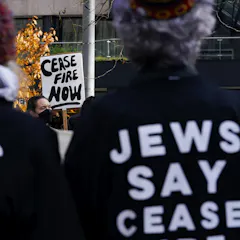
Calls for a cease-fire in Gaza are driven by humanitarian compassion and principles. But cease-fires are also technically complicated military and political ventures.
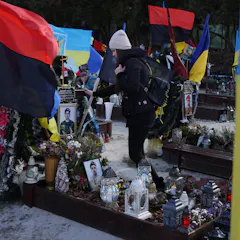
Questions about whether warring parties agree about how the war will end and the costs of war or peace are all key factors to help assess when a conflict might end.
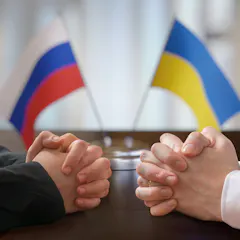
For now there is little hope of a peace deal, but back-channel agreements show that Ukraine and Russia are at least talking.
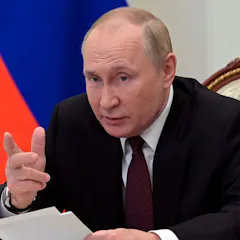
There are political risks to even floating the idea. But a summit could conceivably reset the discourse around a war currently stuck dangerously in cycles of escalation.
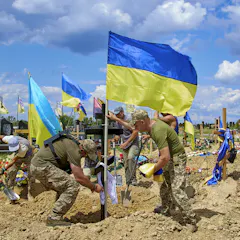
What ordinary Ukrainians think about the cost of war against Russia.
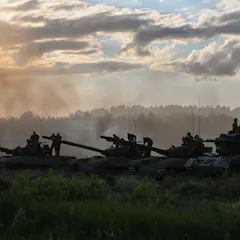
No one knows what Vladimir Putin’s peace terms for Ukraine might be, but the risk of war spreading means the West must propose its own.

The EU must play the biggest role in ending the war in Ukraine. Peace negotiators should take a systematic approach that focuses first on where there is likely to be agreement.
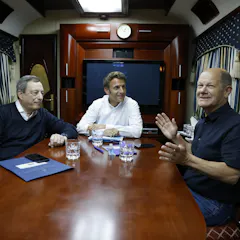
Five ideas based on solutions in other countries that could help bring the various players to the table.

Survey shows that Ukrainians’ attitudes about a peace settlement and any territorial concessions to the Russians differs dependng on their experience of war.
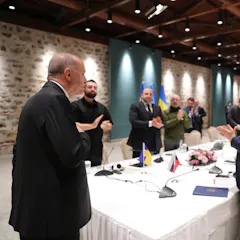
The warring countries have a long way to go before a credible peace settlement can be signed.
Top contributors
-

Assistant Professor, Department of Government, London School of Economics and Political Science
-
Departmental Lecturer in Politics, Department of Politics and International Relations (DPIR), University of Oxford
-
Professor of US Foreign Policy, Department of Politics and International Relations (DPIR), University of Oxford
-
Professor of Geography, University of Colorado Boulder
-
Associate Professor, Political Science, Colgate University
-
Professor, International Politics, University of Exeter
-
Professor of Government and International Affairs, Virginia Tech
-
Assistant Professor of International Relations, Webster University
-
Executive Director and Professor of Practice at Joan B. Kroc Institute for Peace, University of San Diego
-
Professor, Australian National University
-
Professor in Political Science and International Relations, UCL
-
Professor of Law, University of Waikato
-
Professor in International Conflict Analysis, University of Warwick
-
Professor of International Security, University of Birmingham
-
Professor of the Practice of Mediation, University of Notre Dame