

Publishing and having access to scientific articles is an expensive business for research institutions. Fortunately, there are content providers out there who deliver rigorous material that’s free of charge.
Articles on Paywalls
Displaying all articles

News outlets want readers – and big tech – to pay for their content. But blocking the Internet Archive will leave major holes in the public record of the web.
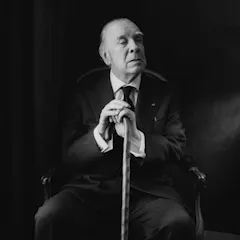
Borges imagined an endless library that contained every possible permutation of letters. The truth is out there, but it’s embedded among hordes of lies and gibberish.

It’s never been easier to sign up for subscriptions – and they’ve never been harder to manage.
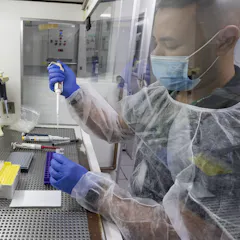
In open-source endowed research positions, professors release all of their intellectual property. Surveys of academics in the U.S. and Canada find most like the idea.
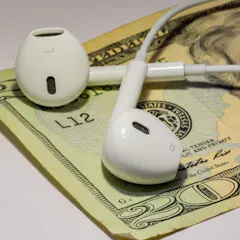
Podcasting exploded due to the lack of gatekeepers. Now big tech companies are starting to act like traditional media networks, signing popular hosts to exclusive contracts and establishing paywalls.

In many other countries, a majority of research publications are now open access, but the system of paying for access still dominates academic publishing in Australia.
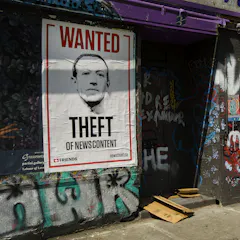
Canada’s news industry has been decimated by losses of advertising revenue during the pandemic. There are some promising signs, however, that more Canadians are paying for digital news subscriptions.

Canadians have relatively high trust in their media compared to other countries, but that doesn’t translate into a willingness to pay for online news.
Top contributors
-

Professeure/Professor, Directrice/Director, Centre d'études sur les médias, Université Laval
-
Dean of Research, Humanities, Curtin University
-
Professor of Practice in Journalism and Mass Communication, American University in Cairo
-
Chercheur en géologie, University of Bern
-
Senior Lecturer in Sedimentology, James Cook University
-
Professor of Media and Communication, Muhlenberg College
-
John M. Thompson Chair in Information Technology and Innovation and Professor, Western University
-
Senior Lecturer in Radio, University of Sunderland
-
Director of Research, Reuters Institute for the Study of Journalism, University of Oxford
-
Senior Lecturer in Media, Macquarie University
-
Professor of Sociology, University of Texas at Arlington
-
Professeur, Planétologie, Université Paris-Saclay
-
Roger J. Kreuz is a Friend of The Conversation.
Associate Dean and Feinstone Interdisciplinary Research Professor, University of Memphis