

Through songs such as ‘The Pill,’ Lynn addressed issues confronting all women. The country star died on Oct. 4 at age 90.
Articles on Patriarchy
Displaying 41 - 60 of 102 articles

“Toxic masculinity” has been used to explain everything from the election of Donald Trump to why Ross from Friends is awful. But what does it actually mean?

Not all human societies throughout history have been patriarchal.
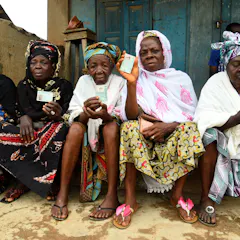
The Chrisland Schools incident shows how the media allows males to get away with actions that females cannot.

Accused men were protected by the SBC while the women who dared to speak up were called sluts, adulteresses, Jezebels and even agents of Satan. A scholar of evangelicalism writes about this culture.

We asked participants about why they think people (mostly men) harass others in public space. Their answers were revealing.
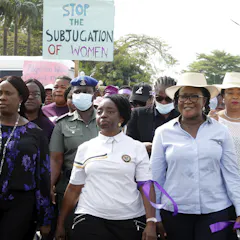
Women in more prestigious jobs than their husbands were seven times more likely to experience physical and emotional violence, compared to women ranked lower than their husbands.

Contemporary fiction on screen increasingly tells the stories of abusive men in a realistic way. This documentary does not.
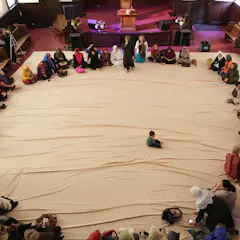
As Muslims congregate in their local mosques in communal prayer for Eid, the Women’s Mosque of America, located in Los Angeles, will provide an exclusive religious space for its female congregants.
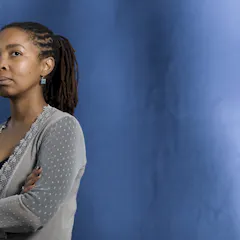
Female Fear Factory by Pumla Dineo Gqola sees gender violence as a sophisticated ecosystem kept alive by socially manufactured fear.

Darwin thought female animals were non-strategic and uniform, making similar decisions.
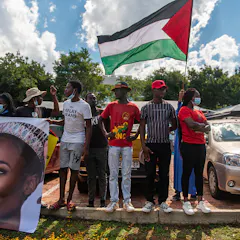
The objectification of women’s beauty measured by competitive processes, linked specifically to the body, strengthens patriarchal norms.

The focus on building democracy should be on more intermediary outcomes, which can serve as building blocks for longer term democratic renewal.

The pressure of needing to be a model minority — successful, quiet, hardworking — can force people to internalize their mental anguish and ends up leaving gaps in our mental health services.
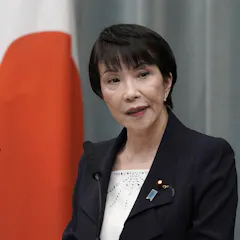
Japan has a very poor record on promoting gender equality – and it’s political system is no exception.
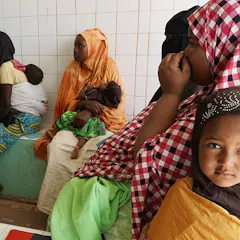
The average Nigerian woman or child faces a host of hindrances in accessing health services.

One criticism of traditional mentoring is that it teaches people how to succeed by playing by existing rules, thus reinforcing the status quo. But mentoring can also be a force for change.
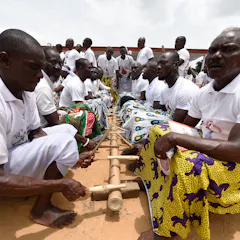
The Nigerian government must design more interventions to improve education, employment opportunities and the economy in order to control the country’s population growth.

Quota systems provide opportunities for more women to stand for election. But they’re not enough.

In Morocco, the COVID-19 pandemic has burdened women with more housework and duties at home, and violence against them has risen.
Top contributors
-

Senior Lecturer in Literature and Cultural Studies, University of East London
-
Senior researcher, Centre for Social Change, University of Johannesburg
-
Lecturer, Department of Political Science and Public Administration, Kyambogo University
-
Professor and Head of Department of Political and Conflict Studies, Nelson Mandela University
-
PhD Candidate, University of Lagos
-
Professor, Université Sidi Mohammed Ben Abdellah
-
Associate research scientist, Université Paris 1 Panthéon-Sorbonne
-
Professor Emeritus in Organization Studies, University of Bath
-
W.E.B. Du Bois Fellow, Harvard University | DPhil Student, University of Oxford, Harvard University
-
Associate Professor, Rochester Institute of Technology
-
Associate Professor in Literary Studies, Monash University
-
Professor of Psychology, Rhodes University
-
Senior Lecturer in Film, University of Roehampton
-
Lecturer in Sociology, Macquarie University
-
Adjunct Lecturer, School of Languages, Literatures, Cultures and Linguistics, Monash University