

Both sweeping immunity and overzealous prosecutions of former leaders can undermine democracy. But such prosecutions pose different risks for older democracies like the US than in younger ones.
Articles on Park Geun-hye
Displaying all articles
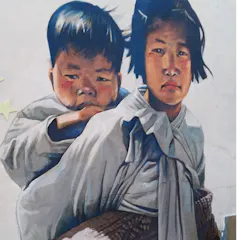
The 1988 Seoul Olympics shed light on South Korea’s institutionalised practice of international adoption.
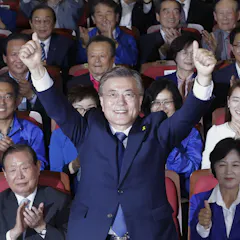
An aggressive neighbor to the north, a sputtering economy at home – and two more thorny issues facing South Korea’s new president.
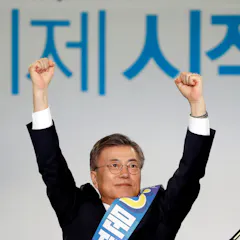
Balancing domestic expectations and delicate relations with neighbours while trying to deal with North Korea’s race to become a nuclear power will make for a challenging five-year term.
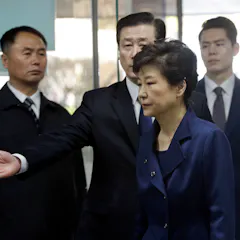
Beyond her own personal humiliation, the ramifications of Park’s fall are already reverberating from domestic South Korean politics into the fraught geopolitics of Northeast Asia.
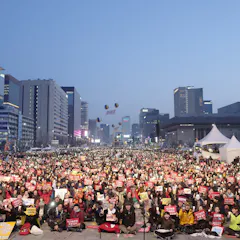
The euphoria many South Koreans feel at the demise of Park Geun-hye is offset by worries about the future of their political system.
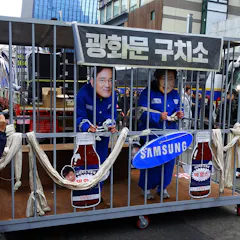
Fighting corruption in the business world requires transforming the internal structure and culture of big companies.
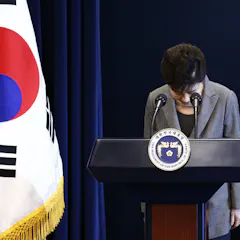
One of the world’s cleaner democracies just threw out its president for corruption. How can countries do a better job of keeping their leaders clean?
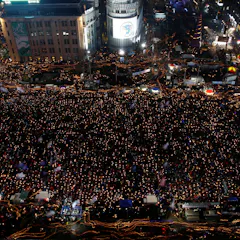
After weeks of mass demonstrations and a growing threat of impeachment, President Park Geun-Hye has said she is willing to resign before her term ends in February 2018.
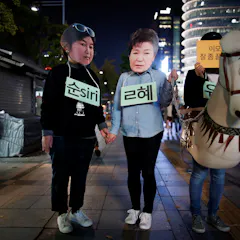
South Korean President Park Geun-Hye may be about to become the first national leader to be questioned by prosecutors while still in office.
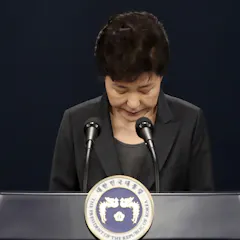
The president of South Korea has been accused of choosing her friends poorly.
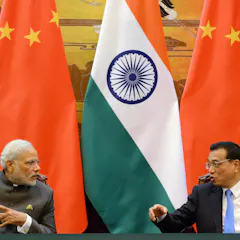
India wants closer engagement with its neighbours as it aspires to become a global manufacturing hub. Narendra Modi’s visits to China, Mongolia and South Korea are all about promoting this agenda.
Top contributors
-

Senior Lecturer in Law, Coventry University
-
Assistant Professor, Johns Hopkins University
-
Assistant Professor, Università di Bologna
-
Migration & Social Inclusion Researcher, University of Sheffield
-
Professor of International Relations and Security, University of Bradford
-
Professor of Political Science and Co-founder of the Political Economy Forum, University of Washington
-
Professor of Political Science, Co-founder of the Political Economy Forum, University of Washington
-
Assistant Professor of International Security, The University of Queensland
-
Postdoctoral fellow at the University of Zurich, University of Zurich
-
DECRA Senior Research Fellow, Deakin University
-
Adjunct Lecturer, Faculty of Economics, Hosei University
-
Professor of Sociology, Korea University