

Zoom’s privacy and security shortcomings are just the latest videoconferencing vulnerabilities. Knowing each platform’s risks can help people avoid many of the downsides of virtual gatherings.
Articles on Online security
Displaying 21 - 40 of 97 articles

Quantum communication is needed to make the internet much more secure.
A new digital ID system will gather piles of personal information in one place – and you won’t have full control over who has access
Facebook is planning to put end-to-end encryption on all its messaging services soon. But governments aren’t happy about it, as it could make it harder to catch criminals.

A major cyber attack on a data lake could have immense consequences for any of us. And the damage could be felt anywhere from banking to the healthcare sector.

The news that malware can invade iPhones and other Apple devices via the Safari web browser has damaged Apple’s reputation for security. But you can fix the problem by updating your phone’s software.

As the internet-connected world reels from revelations about personalized manipulation based on Facebook data, a scholar of virtual reality warns there’s an even bigger crisis of trust on the horizon.

An ultra-safe industry has important experience that could help a vulnerable new industry improve its safety.
Uber has admitted that the 2016 data breach puts at risk the personal information of 57 million users.

Like legitimate e-commerce, ransomware e-crime is increasing in scale, value and sophistication.

The rapid penetration of internet technologies in Africa provides hope for e-commerce’s continued growth. Potential online stores need to understand what draws or pushes customers away.
The banks are dealing with rising rates of online credit card fraud, but they can’t fix it on their own.

UK politicians are planning very different approaches to data privacy, security and surveillance.

If security advice from government agencies doesn’t ring true, customers won’t take it – which puts us all at risk.

Where people get advice about online safety may affect how safe they are.
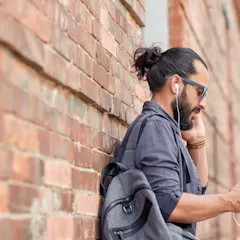
It may sound like science fiction, but research shows that all you really need to develop brain biometrics is a set of earphones.

The darknet, like the open internet, is not immune from illegal activity. But many darknet users are there in search of ‘hacker ethics’ values such as privacy and free speech.
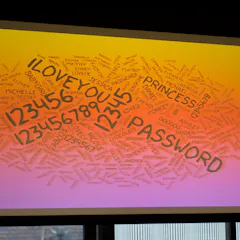
Tech giant Microsoft wants to rid the world of “dumb” passwords to improve online security. But maybe it’s the password itself we should dump.
If the banks can’t trust each other’s messages, can you trust the banks?
Developing tools to weed out would-be attackers from the world’s most-used privacy and anonymity system.
Top contributors
-

Senior Lecturer in Networking, The Open University
-
Professor of Cyber Security Practice, Edith Cowan University
-
Head, The Cyber Academy, Edinburgh Napier University
-
Professor of Cyber Security, University of Nottingham
-
Associate Professor in Cyber Security, Adelaide University
-
Faculty member & Research Group Leader, Max Planck Institute for Software Systems
-
Associate Dean (Learning & Teaching) Faculty of Creative Industries, Education and Social Justice, Queensland University of Technology
-
Royal Society University Research Fellow, UCL
-
Professor of Cybersecurity, Head of School of Computer Science and Informatics, De Montfort University
-
Professor, Department of Computer Science, University of Surrey
-
Director, Centre for Internet Safety, University of Canberra
-
Professor of Criminology, University of Leeds
-
Lecturer in Computer Security, University of Kent
-
Associate Professor in Telecommunications Engineering, Swinburne University of Technology
-
Adjunct Senior Lecturer, Applied Ethics and CyberSecurity, Griffith University