

What happens when promises of increased tourism revenue and reduced environmental impact aren’t met?
Articles on Okavango Delta
Displaying all articles

Many of these extraordinary places are increasingly at risk due to escalating climate change, invasive species, and and a lack of consistent funding to protect them.
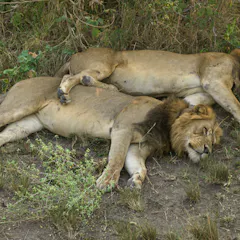
Male lions are making the risky swims, braving crocodiles and hippos, so as to find females.
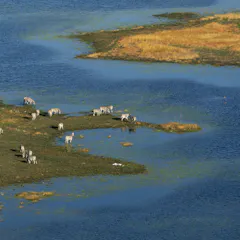
Oil and gas exploration pose a threat to the Okavango River Basin water resources. The Namibian and Botswana governments need to properly assess the risk of contamination.
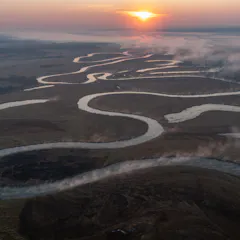
The Angolan Highlands are hydrologically and ecologically important - and the region’s newly mapped peatlands are valuable “carbon sinks”.
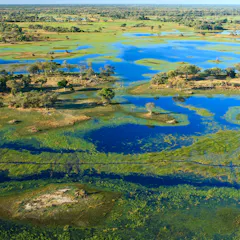
Fracking in Botswana could have an impact not only the country’s groundwater, but also that of Namibia and South Africa.
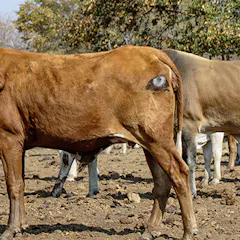
Many carnivores are ambush predators. Being seen by their prey can lead to them abandoning the hunt.
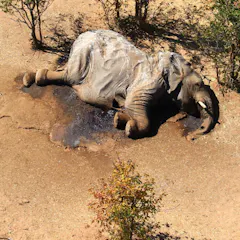
The death toll stands at nearly 400 elephants of both sexes and all ages.
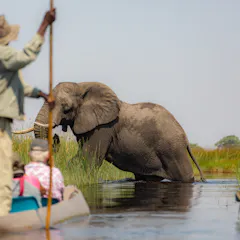
It’s imperative that we understand what creates and sustains the delta for the future management of the system.

Botswana has been an unparalleled elephant conservation success story. That seems to be changing.
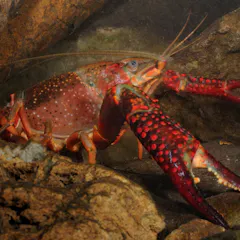
The introduction and spread of invasive freshwater crayfish into Africa threatens the continent’s freshwater biodiversity.
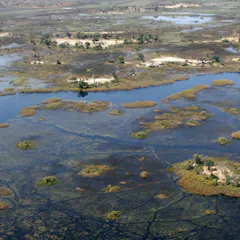
The list of the natural world’s most extraordinary places, UNESCO’s World Heritage List, gained its 1,000th entry this week with the addition of the Okavango Delta in northern Botswana. To be chosen for…
Top contributors
-

Associate Professor in the Centre for Environmental Management, University of the Free State
-
Professor of Environmental Change, UCL
-
Postdoctoral Researcher, Aarhus University
-
Research Associate, Department of International Relations, University of the Witwatersrand; Chief Research Officer, Good Governance Africa; Managing Director, Harvey Economics Pty Ltd.
-
PhD Candidate, UNSW
-
Directeur de Recherche au CNRS, Université de Rennes 1 - Université de Rennes
-
Assistant Professor of Planetary Health, Maastricht University
-
Professor and Chair, Southwestern Environmental Science and Policy, Northern Arizona University
-
Senior Research Fellow, Okavango Research Institute, University of Botswana
-
Communication officer, Institut de recherche pour le développement (IRD)
-
Senior lecturer, UNSW
-
Research Coordinator, The Wildlife Conservation Research Unit, University of Oxford
-
Postdoctoral Researcher in Conservation Biology, University of Reading
-
Research Fellow at the Centre for Planetary Health and Resilient Conservation Group, Griffith University
-
PhD student, University of the Witwatersrand