
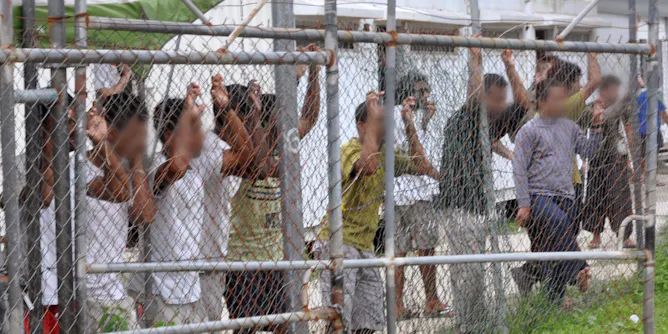
History suggests that resettling refugees on Nauru and Manus Island in Australia and New Zealand will not enliven people smuggling between Indonesia and Christmas Island.
Articles on Offshore detention
Displaying 41 - 60 of 73 articles

If a new High Court claim against Australia’s offshore detention regime succeeds, it will entirely undermine Australia’s inhumane practices in relation to “those who come across the seas”.
High rates of self-harm are endemic on Nauru. And yet, the Australian government persists in seeing suicide and self-harm as the fault of refugees and their supporters.
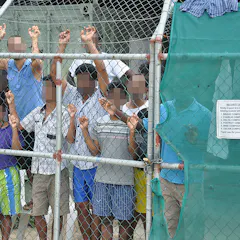
The Australian government must face the uncomfortable truth that it is no longer possible to process or detain asylum seekers and refugees in other countries in our region.

A PNG Supreme Court judgment is likely to have profound implications for Australia’s offshore processing regime in that country.

Doctors at Brisbane’s Lady Cilento Children’s Hospital are refusing to release a 12-month-old asylum seeker, highlighting a murky intersection of politics, ethics and law.

Strong evidence backs the increasing weight of international sentiment opposing Australia’s human rights record. Australia may already have pariah status in terms of its asylum policies.
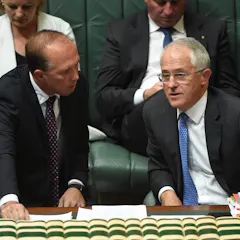
Malcolm Turnbull turned on the machismo and Peter Dutton stayed tough, after the High Court confirmed Australia’s offshore detention regime is constitutional.
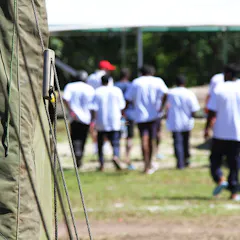
Parts of a High Court decision on the legality of offshore processing deal a crucial blow to the tired argument that what happens offshore is not Australia’s responsibility.

The High Court has thrown out a challenge to the government’s power to detain people offshore.
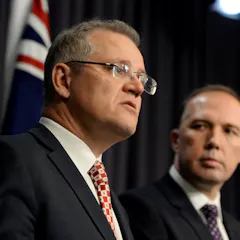
The concept of “ministerial responsibility” means, among other things, that ministers are held accountable for what they say – right? But if you are the immigration minister in the Coalition government…
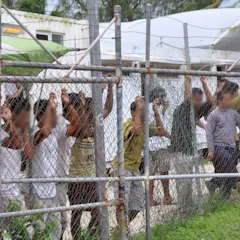
The logic of the policy changes initiated by the Hawke government in mid-1990 has underpinned asylum-seeker policy for much of the quarter-century since.
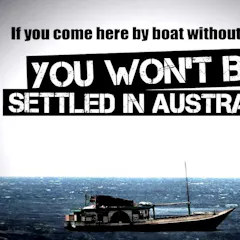
Dallas Rogers speaks with Shanthi Robertson and Ien Ang about the role migrants, refugees and the border will play in Australia during the Asian century.
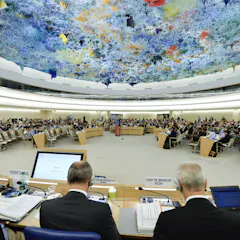
More than 100 countries have taken the opportunity to comment and make recommendations on Australia’s human rights record.

There are reasons to query whether, in practice, proposed legislation to protect Border Force employees who report child abuse in detention centres is necessary.
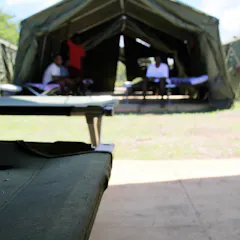
Many have claimed that the ending of detention on Nauru is a strategic move to undermine a constitutional challenge to Australia’s offshore detention regime, heard by the High Court this week.
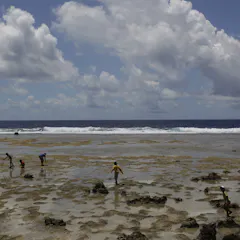
The undeniable truth is that Nauru – whether inside or outside the confines of the detention camp – is a dangerous and soul-destroying place for both asylum seekers and refugees.
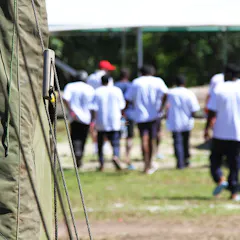
Nauru has announced that its detention facility has become an “open centre” and all refugee claims will be processed within a week.
By our response to boat people since August 2001, we may have redefined our national character.
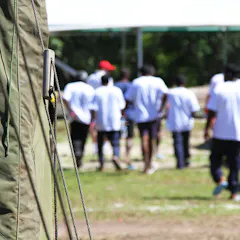
Offshore detention facilities exist precisely to allow Australia to do things abroad that it could not do at home.
Top contributors
-

Professorial Fellow, University of Canberra
-
Professor in Human Rights and International Law, University of Newcastle
-
Senior Research Fellow, Andrew & Renata Kaldor Centre for International Refugee Law, UNSW
-
Associate Lecturer, ANU College of Law – Migration Law Program, Australian National University
-
Adjunct professor, Adelaide University
-
Associate Professor, School of Law, Murdoch University
-
Professor of Paediatrics and Child Health, University of Sydney
-
John Curtin Distinguished Professor, Curtin University
-
Professor of Cultural Studies and Research Director of the Department of Media, Music, Communication and Cultural Studies, Macquarie University
-
Lecturer (Sessional), Monash University
-
Adjunct Professor, Australian Catholic University
-
Associate Professor of Law, Member of Deakin Cyber and the Centre for Law as Protection, Deakin University, Deakin University
-
Chancellor's Postdoctoral Fellow, University of Technology Sydney
-
Sessional Lecturer and PhD Candidate, Monash University
-
Vice-Chancellor and President, University of Canberra