
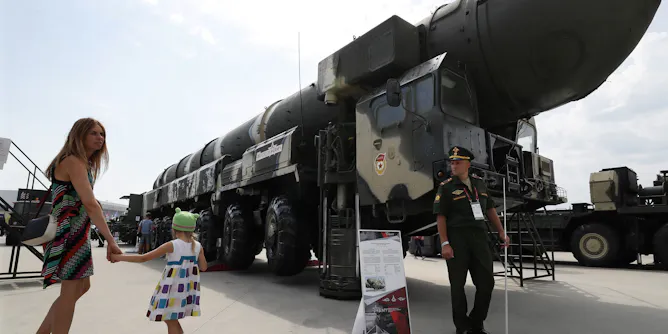
A new strategy from the UN secretary general challenges the world to explain why it’s not doing more to defuse the nuclear threat.
Articles on Nuclear deterrent
Displaying 21 - 35 of 35 articles
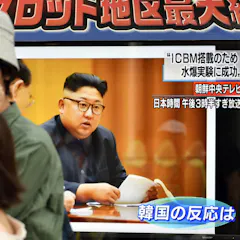
Pyongyang’s latest test isn’t the great leap forward it purports to be.
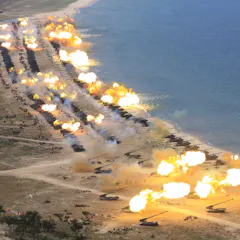
In international relations, words matter – and so does the credibility of the speaker.
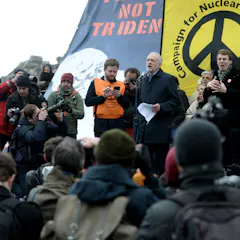
The way Corbyn’s Labour has handled Trident and defence is perfectly in line with Labour’s history since the 1960s.
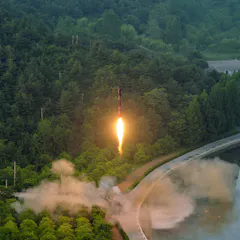
Game theory applies to conflict and cooperation within competitive situations.
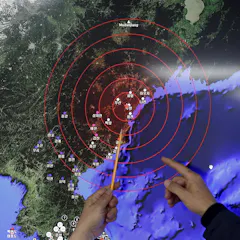
The key question is whether North Korea does have nuclear weapons that it can readily use against the United States and its regional allies, South Korea and Japan.
Beijing has traditionally retained its nuclear weapons on a no-first-use basis, but it’s ready to deploy them more assertively.
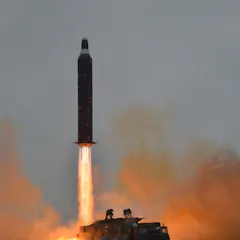
One of the world’s worst nightmares could in fact be an unexpected opportunity.
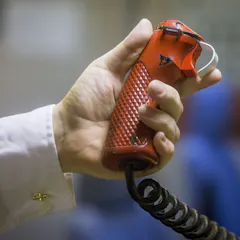
The entire concept of nuclear deterrence depends on the assumption that everything will always work perfectly.
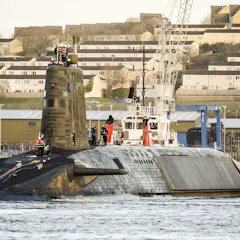
Reports of a failed Trident missile launch have all sorts of political and security implications – but they don’t necessarily spell catastrophe.

For decades, deterrence has effectively countered the threat of nuclear weapons. Can we achieve similar results against cyber weapons?
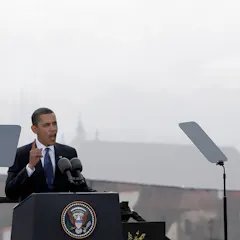
With a $1 trillion modernisation programme signed off and atomic scientists deeply worried about the future, American policy on nuclear weapons is pretty much business as usual.

Is Australia’s reliance on nuclear defence agreements keeping us on the wrong side of history?
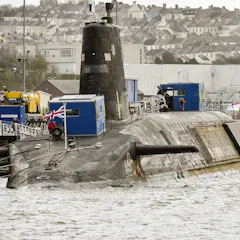
Laugh at Jeremy Corbyn all you like, but he’s right: nuclear deterrence isn’t a zero-sum game.
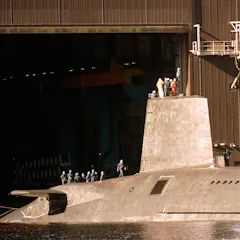
Splits over Trident can create stalemate between the UK’s forces, but the public needs to debate renewing the deterrent before time runs out.
Top contributors
-

Professor of International Relations and Security, University of Bradford
-
Research Leader, Defence and Security, RAND Europe
-
Lecturer, University of Aberdeen
-
Professor, Department of Politics & International Relations, University of York
-
Lecturer, Public Safety, University of Tasmania
-
Professor at the Centre for International Studies and Diplomacy, SOAS, University of London
-
Researcher in Security and Defence, the Policy Institute at King's, King's College London
-
Migration & Social Inclusion Researcher, University of Sheffield
-
Research Fellow, S. Rajaratnam School of International Studies, Nanyang Technological University
-
Professor in International Relations, Head of Inclusion and Development, Aston University
-
Senior Lecturer in Politics and History, Swinburne University of Technology
-
Associate Professor of Security and International Relations, Royal Danish Defence College
-
Assistant Professor, Università di Bologna
-
PhD Candidate, Swinburne University of Technology
-
Pre-doctoral researcher, University of Cambridge