

When people taking part in 22 pilot programs across the US got free fruits and vegetables, their health improved.
Articles on Nonprofits
Displaying 81 - 100 of 270 articles
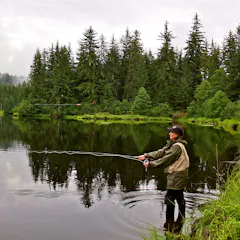
Founded in 1959, the membership group Trout Unlimited has changed the culture of fly-fishing and mobilized members to support conservation. Could its approach work for other social problems?
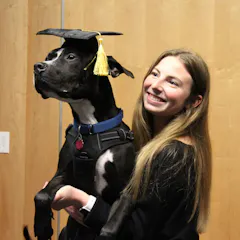
Shelter dogs get a new shot at life through a college course that teaches them how to be faithful companions once again.
Two economists calculated that the Paycheck Protection Program saved more than 450,000 nonprofit jobs in the first six months after the pandemic was declared.
Massachusetts is establishing the first US green bank dedicated to sustainable affordable housing. Three experts in climate finance explain why better housing can help rein in global warming.

Non-profits provide critical services and social support for communities. They also provide settings where vital forms of social capital are produced.
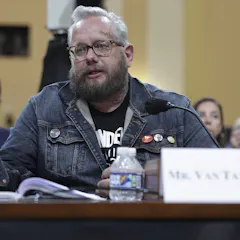
The First Amendment, along with a lack of clarity on what counts as an educational mission for charities, can lead authorities to approve applications from extremist groups.

Governments and wildlife advocates are working to protect 30% of Earth’s lands and waters for nature by 2030. An ecologist explains why creating large protected areas should be a top priority.
The National Rifle Association is spending heavily on legal fees and slashing programs for its members.
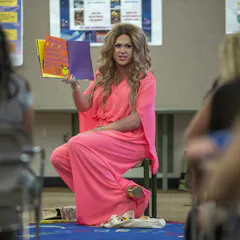
Emphasizing threats to children is a well-worn refrain among those worried about the decline of American culture and values.

A study of more than 200 social services and arts groups points to the severity of structural barriers.
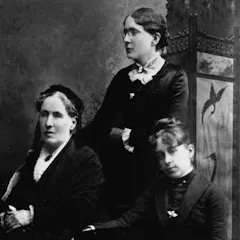
A historian highlights the role of Frances Willard, who helped found the Woman’s Christian Temperance Union, one of the major social movements of the 19th and 20th centuries.
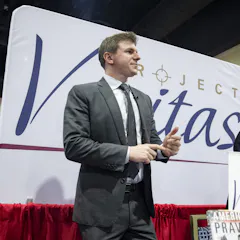
A scholar of the laws governing tax-exempt groups explains why trustees showed James O'Keefe the door and what the consequences might be if their concerns prove to be accurate.
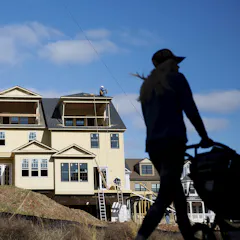
A longtime critic of Atlanta’s BeltLine explains how the popular network of parks has increased inequality in the city and driven out lower-income residents.
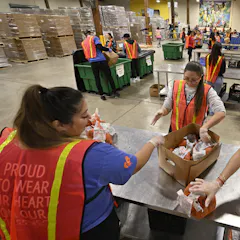
A little more than 1 in 10 Americans can’t get enough to eat – around the same share of the country that was experiencing food insecurity before the COVID-19 pandemic.
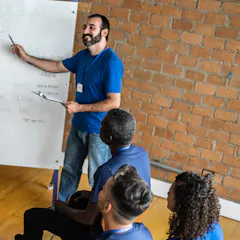
Until now, little research has been done about how people become nonprofit executive directors and how well-prepared those leaders are for their jobs.

Their primary obligations consist of three duties: care, loyalty and obedience.
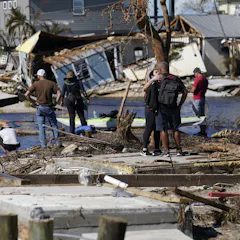
Many government agencies help people whose lives are thrown off course, but not everyone is eligible or able to access that aid.

A new study adds to a body of work that casts doubt on the wisdom of the standard rulebook many donors expect charities to follow.
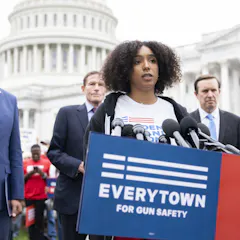
Congress tends to be most likely to act after an assassination or assassination attempt of historic proportions or mass shootings. But sometimes lawmakers do nothing beyond debate new measures.
Top contributors
-

Professor of Accounting, The Ohio State University
-
Professor of Law, University of Pittsburgh
-
Professor of Public Administration, Binghamton University, State University of New York
-
Associate Professor of Nonprofit Studies, George Mason University
-
Associate Professor of Accounting, University of Dayton
-
Senior Scholar in Residence at the Lowell Milken Center for Philanthropy and Nonprofit Law, University of California, Los Angeles
-
Professor of Law, Loyola University Chicago
-
Senior Research Fellow in Nonprofit Organizations, UMass Amherst
-
Assistant Professor of Human Geography, University of Tennessee
-
Associate Professor of Economic Geography, University of South Carolina
-
Glenn Family Chair Emeritus of Economics and Philanthropic Studies, Indiana University
-
Assistant Professor of Public Administration, University of Nebraska Omaha
-
Distinguished Service Professor Emeritus of the Political Science Department, State University of New York Cortland
-
Professor of Political Science and Founding Director, Center for Environmental Politics, University of Washington
-
Professor of Public Administration and Policy, University at Albany, State University of New York