
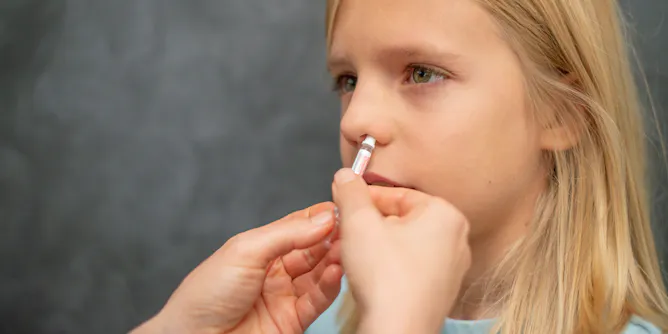
An effective nasal vaccine could stop the virus that causes COVID-19 right at its point of entry. But devising one that works has been a challenge for researchers.
Articles on Needle phobia
Displaying all articles

A pediatrician recommends helping your child cope with getting vaccines by employing “The Three P’s” – Preparation, Proximity and Praise.
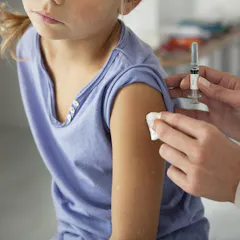
Australia’s regulator has approved the Pfizer COVID vaccine for 5-11 year olds, with the rollout expected to start on January 10. Here’s how to prepare your child if they’re fearful of needles.
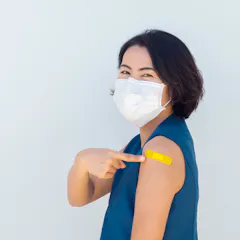
For the one in 10 people with a significant fear of needles, getting a vaccination is distressing. This can disrupt vaccination campaigns, but there are effective ways to manage pain and fear.

People who are afraid of needles are twice as likely to be vaccine hesitant, new research shows.
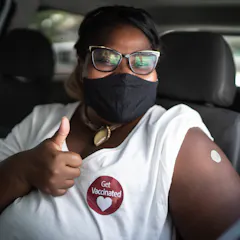
Free doughnuts and lotteries may drive some people to get their COVID-19 vaccine. But for those who are afraid of needles, other interventions may be necessary.
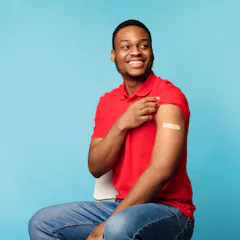
Our well-meaning efforts to use images to help demystify the vaccination process or share our pride in getting a COVID vaccine can backfire.
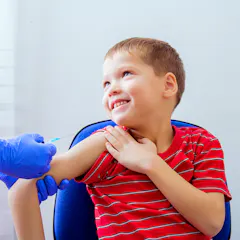
It’s no secret many kids (and adults) don’t like needles. But where needle phobia can be a barrier to vaccine acceptance, it’s important to set your children up not to fear injections. Here’s how.
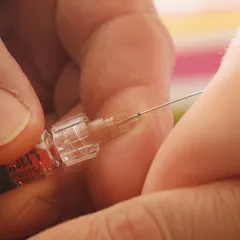
What happens when we have a COVID-19 vaccine – and millions are afraid of a needle?
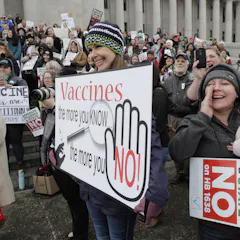
Studies have shown that the reasons for anti-vaccine sentiment run deep, and scientific facts don’t often matter. A new study drills deeper into reasons for resistance and possible ways to counteract them.

Almost half of all needle sticks in a hospital may be unnecessary, a recent study shows. There’s a way to be done with one, thus avoiding the pain of extra sticks.
Top contributors
-

Clinical Associate Professor of Emergency Medicine, Augusta University
-
Assistant Dean for Healthcare Value, Dell Medical School, The University of Texas at Austin
-
Assistant Director for Healthcare Value, Dell Medical School, The University of Texas at Austin
-
Associate Professor of Pediatrics and Director of Pediatric Residency Program, Morehouse School of Medicine
-
Professor, School of Population Health, UNSW
-
Research Fellow, Vaccine Uptake Group, Murdoch Children's Research Institute
-
Associate Professor of Health Law, Policy and Management, Boston University
-
Associate Professor in Nutrition and Dietetics, Edith Cowan University
-
Associate Professor in Psychology, University of Guelph
-
Assistant Professor of Health Policy and Managment, School of Public Health, Texas A&M University
-
Professor Emeritus of Microbiology and Immunology, University at Buffalo
-
Senior Lecturer, Child Play Therapy, Deakin University
-
Professor of Clinical Psychology, University of Oxford