
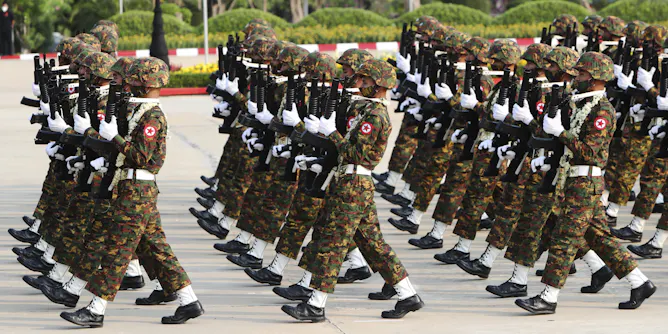
China may be pivotal to the outcome.
Articles on Myanmar military
Displaying all articles
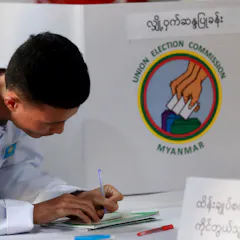
Far from being free and fair, the elections lack any meaningful resemblance to democratic practice.
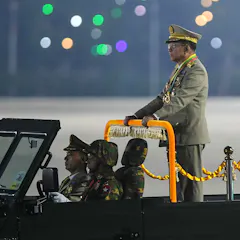
Thousands were killed in 7.7 magnitude earthquake. Yet military generals were slow to agree to pause in civil war fighting, and continued airstrikes.
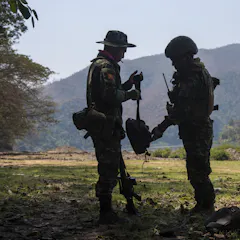
US cuts in overseas aid will hurt the myriad opposition groups that have been fighting the army in a complex and regionalized conflict.
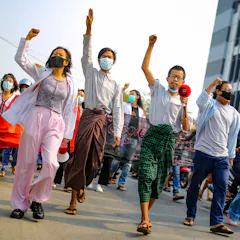
Over the past year, Myanmar’s military junta has been enforcing mandatory conscription, targeting men and women of working age.

Where traditional advocacy fails, a more creative approach is giving new life to Rohingya resistance across the globe.
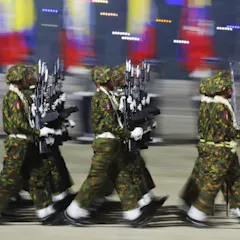
In the absence of effective domestic or international prosecutions, evidence of these crimes must continue to be collected for use in future international tribunals.
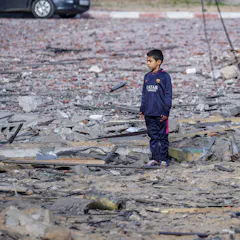
Children’s rights are often violated in times of war.
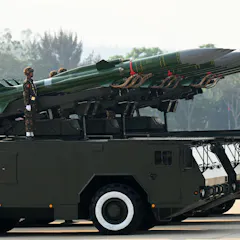
Economic proscriptions by the US and EU are hampered by lack of support among Myanmar’s major trading partners in the region.
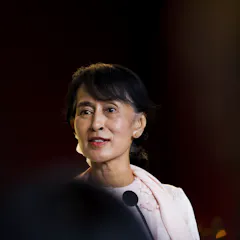
A pointless reduction in the jail sentences for Myanmar’s democratically elected leaders is unlikely to quell the fires of opposition now burning across the country.
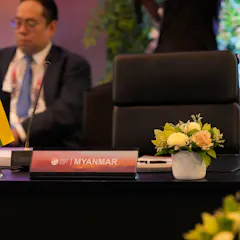
As current chair of the regional body ASEAN, Indonesia is tasked with resolving a conflict that has killed thousands. Progress has been slow.
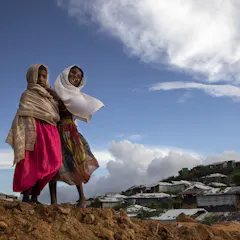
As conflicts last longer, the number of refugees and other displaced people is on the rise.
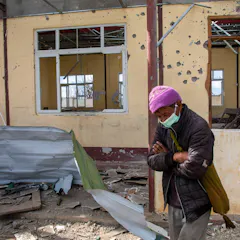
Since seizing power in a 2021 coup, Myanmar’s military has killed more than 3,000 civilians and pro-democracy activists. But the army has struggled to contain an armed resistance movement.
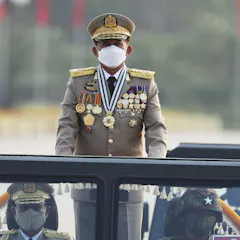
The killings are a tragic reminder of the costs of last year’s coup, and they’re exacerbating the pressures being felt by the regime at home and abroad.

The execution of four activists and opposition politicians is another part of the junta’s campaign of violence and repression in Myanmar.

Myanmar’s military junta is losing some control over the country, but its execution of four high-profile leaders and prisoners sends a warning to Myanmar citizens and the rest of the world.

Will the Association of Southeast Asian Nations, known as ASEAN, start taking tougher stances against authoritarian and military regimes? Its recent treatment of Myanmar’s military ruler is promising.
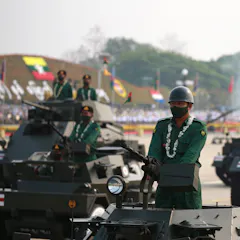
What began in the 1940s as a revolutionary army created to liberate Myanmar from British colonial rule soon turned repressive. The country has been a military dictatorship on and off since 1962.
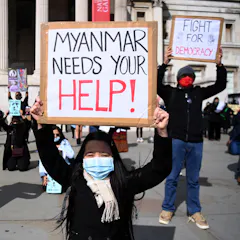
The international community has gained a much greater understanding of the Myanmar military’s transnational revenue streams. Targeted sanctions can work if the world just follows the money.
Top contributors
-

Associate Professor of World Cultures and Languages, Northern Illinois University
-
Pro Vice-Chancellor, University of Tasmania
-
Senior Lecturer in International Studies in the School of Society and Culture, Adelaide University
-
Teaching Assistant Professor, East Carolina University
-
Senior Lecturer, Australian National University
-
Leverhulme Trust Early Career Fellow, Loughborough University
-
PhD in Public International Law, University of Victoria
-
Research Associate at the Centre for Applied Human Rights, University of York
-
Research Fellow, Centre of Excellence for the Elimination of Violence Against Women, Griffith University
-
Lecturer in the School of Architecture, Design & Planning, University of Sydney
-
Marie Curie Research Fellow in the School of Sociology, Politics and International Studies, University of Bristol
-
Associate Instructor, Indiana University
-
Emeritus Professor, School of Humanities and Social Sciences, Deakin University
-
Lecturer in International Relations, Universitas Katolik Parahyangan
-
Assistant Professor of Political Science, Old Dominion University