
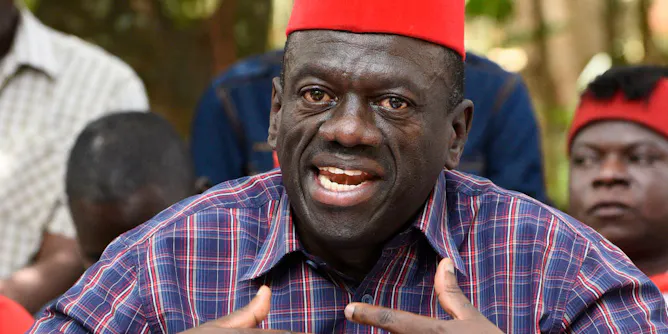
Besigye’s decision to break with the president put him in intense and prolonged personal danger.
Articles on Milton Obote
Displaying all articles

Museveni came to power with the sense that violence is critical to politics, and especially critical to liberation politics.

Political policing in Uganda’s electoral landscape sustains the struggle for power.
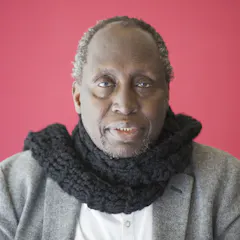
From the late 1950s a new generation of African writers challenged colonial systems and used their work to imagine a new world.
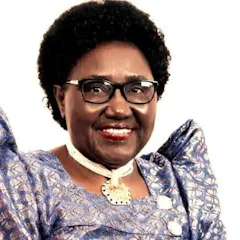
Ogwal’s experiences as an opposition politician are emblematic of the challenges faced by political opponents of the regime in Uganda.

The founding story of Museveni’s government remains persuasive for a great many people 37 years later.

At independence, adults were reading decolonial classics - but children were reading Enid Blyton. A generation of unsung women writers changed that.

The Ugandan militant remains on the run despite a US$5 million bounty on his head for war crimes committed between 1987 and 2006.
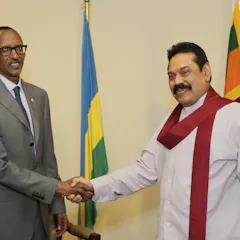
Despite its Imperial origins, the Commonwealth has a strong radical tradition. If it wants to remain relevant to Africa in the 21st Century, that radicalism needs to be rediscovered.

The relationship between the country’s security forces and the civilian population has always been uneasy.
Despite continual threats, the media in Uganda continues to tackle controversial issues and break big stories of corruption and abuse of power.
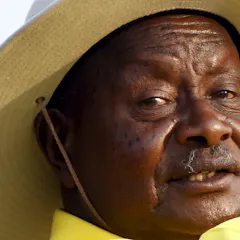
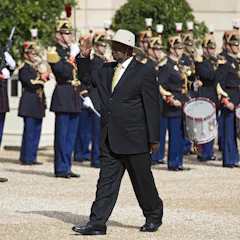
As a young radical in the 1980s, Museveni publicly scorned African rulers who clung to power. Now, after 30 years in office, he is clearly clinging pretty hard himself.
Top contributors
-

Adjunct professor, UMass Boston
-
Lecturer of Mass Communications, Uganda Christian University
-
Professor of History, Durham University
-
Professor of Democracy, University of Birmingham
-
Post Doctorate Researcher under the DANIDA funded project on security, sustainable growth and peace in Uganda., University of Copenhagen
-
Postdoctoral Fellow, Institute for Intercultural and International Studies, Universität Bremen
-
Vilas Research Professor of Political Science, University of Wisconsin-Madison
-
Director of History & Policy at the Institute of Historical Research and Professor of British and Commonwealth History, School of Advanced Study, University of London
-
Post-Doctoral Research Associate in History, University of Edinburgh
-
Herbert Lehman Professor of Government, Department of Anthropology, Columbia University
-
Ali Mazrui Professor of History & African Studies, University of Michigan
-
Lecturer in Law, University of East London
-
Senior Lecturer in Security, Leadership and Development Education, King's College London
-
Professor of Comparative Politics, University of Warwick
-
Professor of English and Chair of the English Department, Princeton University