
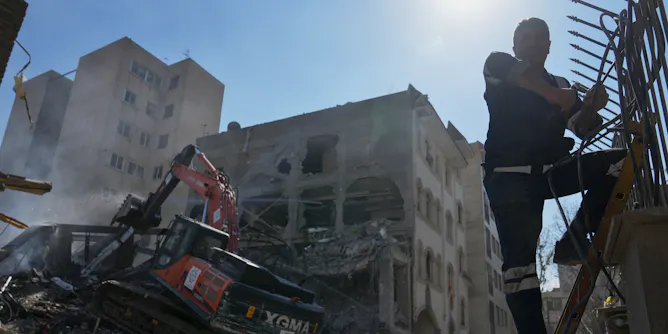
When countries expand their military budgets or enter into conflict, the costs go far beyond equipment and munitions.
Articles on Military spending
Displaying 1 - 20 of 26 articles

DIsproportionately relying on military spending for security purposes fails to prevent conflict and has a detrimental impact on gender equality, human rights and peacemaking.
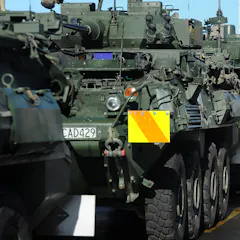
Higher taxes, more debt, GDP growth or cuts in other areas? A bigger defence budget will mean shifts in economic activity and tradeoffs in spending priorities.

By adopting a different military philosophy as its guide, Australia could manage its security largely on its own.
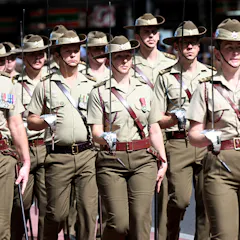
We need women in the military, including in combat roles. Without them, recruitment targets will fail. It’s not diversity, equality and inclusion: it’s reality.

Poland is enjoying strong growth and has massively increased its military spending. It aims to play a greater role within the European Union.
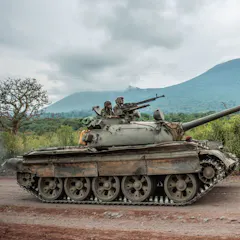
High military spending can sap resources meant for education, healthcare and infrastructure.
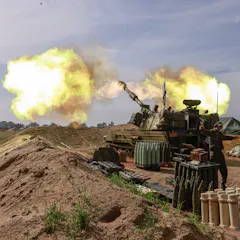
Israel and Hamas are running through countless weapons in the ongoing war − but where are those weapons coming from?
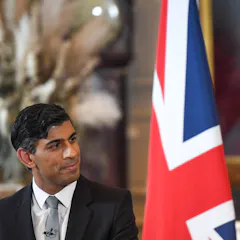
The reality is that cooperation has deepened, but one side seems reluctant to acknowledge that with a formal deal.

The last of four new Boeing P-8A Poseidon aircraft has landed, substantially increasing New Zealand’s surveillance – and military – capacity. But how they are best deployed is open to debate.
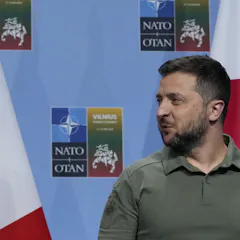
As Western leaders depart a crucial summit, a NATO scholar parses what went down.

The Albanese government’s attempt to sell the AUKUS nuclear submarine plan as a job-creation program is bad economics.
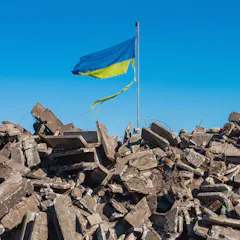
With no end in site to the Ukraine war, and the UN largely powerless, New Zealand now faces difficult military, humanitarian, diplomatic and legal challenges.
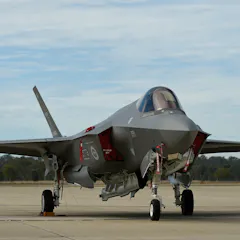
The myriad problems with Australia’s new fleet of F-35 aircraft mean pilots aren’t getting the flying time they need and the jets themselves are in danger of becoming obsolete.
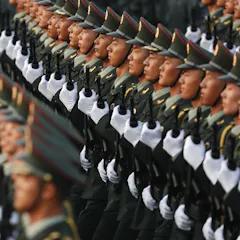
China’s military budget is usually thought to be about 40% of that of the US. In reality it’s about 75%.

While the US has the most powerful military machine in history, it is also incomparably the most expensive – and members of Congress work aggressively to maintain it.
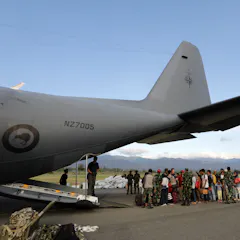
New Zealand’s coalition government has to balance strong martial and pacifist traditions. But ageing equipment and climate change will require taxpayers to fund expensive upgrades for the military.
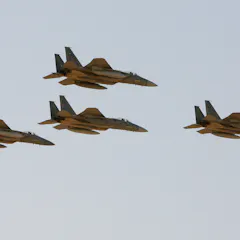
Trump claimed that ‘we would be punishing ourselves’ by using US arms sales to Saudi Arabia as a bargaining chip over the disappearance of Khashoggi. A look at the arms trade shows why he’s wrong.

Both before, during and after conflict, wars have shaped the creation of welfare states.

Millennials are less inclined than older Americans to intervene abroad, maintain superior military power or believe the US is an exceptional nation. What does that mean for the country’s future?
Top contributors
-

Clinical Professor of International Business; Director, Center for Global Business Studies; Associate Dean for International Programs, Penn State
-
Professor of History and Political Science, University of Michigan
-
Adjunct Professor in Naval and Maritime Strategy and Policy, Australian National University
-
Emeritus Professor of International Relations, La Trobe University
-
Associate Professor of Security and International Relations, Royal Danish Defence College
-
Professor of Finance, Francis Marion University
-
Professor of Public Policy and Political Science, Duke University
-
Professor of Political Science, University of Southern Denmark
-
Professor of Economics, University of Warwick
-
Professor of Law, University of Waikato
-
Founding Director, Centre for Britain and Europe, Department of Politics and International Relations, University of Surrey
-
Senior Lecturer in Defence Studies, Te Kunenga ki Pūrehuroa – Massey University
-
Associate Professor of Political Science, University of Washington
-
Professor, School of Economics, The University of Queensland
-
Lecturer in Politics and Citizenship, Te Kunenga ki Pūrehuroa – Massey University