
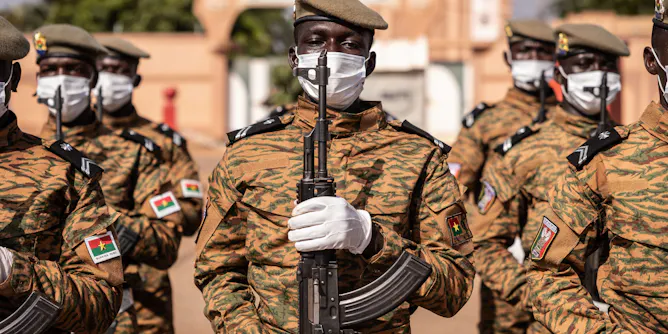
Democracy is messy. It facilitates change, but through an imperfect process of self-correction. This requires patience, engagement, and commitment.
Articles on Military rule
Displaying 21 - 40 of 48 articles
Shonekan’s enduring legacy is in the business world and not the political arena where he remains a footnote in Nigeria’s history.

The focus on building democracy should be on more intermediary outcomes, which can serve as building blocks for longer term democratic renewal.
Nigeria’s current political problems are simply too daunting to embark on an honest journey to true federalism at this stage.
Sudan has needed and will require compromise and principled political goodwill to realise a difficult transition from military rule.

Plus, what the study of 700-year old garbage is revealing about who lived in Islamic Andalusia. Listen to episode 20 of The Conversation Weekly.
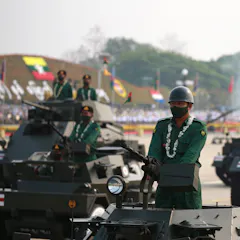
What began in the 1940s as a revolutionary army created to liberate Myanmar from British colonial rule soon turned repressive. The country has been a military dictatorship on and off since 1962.
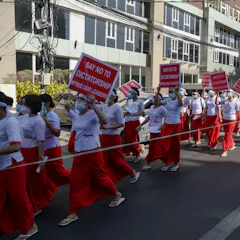
Young people in Myanmar have rallied daily since a Feb. 1 coup, demanding democracy. Now, ever more middle-class professionals are backing their cause, offering food, legal advice and moral support.
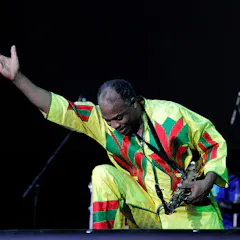
The truth remains that no artist through Nigeria’s postcolonial years has contributed close to what Fela did – and continues to do - for human rights and social justice.
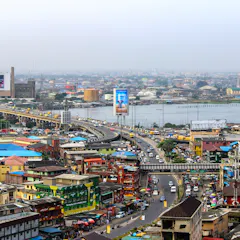
The foundations of orderliness for any city are planning and management. Lagos had this in place in the early days.
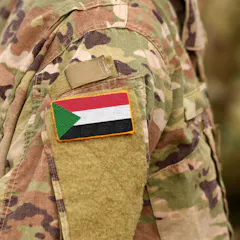
When the establishment retains some leverage over reformers change can be slow, superficial, and short-lived. Sudan appears to be a textbook case of this scenario.
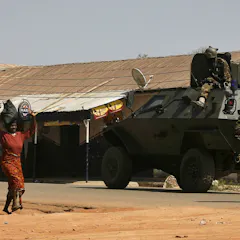
In Nigeria, the government often uses the army to restore order and to keep the peace, largely because the police are unable to contain internal violent conflicts.
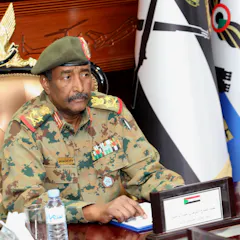
There are concerns that the transition to civilian rule in Sudan won’t be smooth.
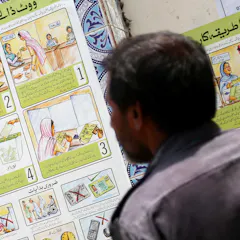
There are no angels in Pakistan’s political scene – except the ‘angels’ of the military.

Nigeria is far from ready to hold a credible ballot in 2019.
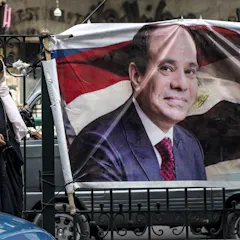
Egyptians’ revolutionary demands for ‘bread, freedom and social justice’ are a distant memory.
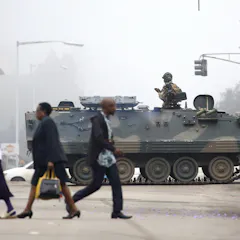
Some observers think Mugabe’s overthrow by the Army might be a good thing for Zimbabwe. An Argentinean expert on Latin America’s bloody military dictatorships disagrees.
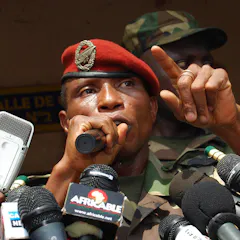
A well-trained military is crucial to a functioning civil democracy, but it can be a liability too.
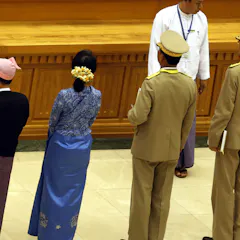
Once a beacon of democratic hope, Myanmar’s ‘civilian’ government is showing its true nature.
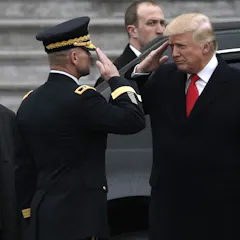
By appointing generals to top political posts and hiking defence spending, Donald Trump is imperiling a cherished tenet of the US constitution: civilian control of the military.
Top contributors
-

Associate Professor of World Cultures and Languages, Northern Illinois University
-
Associate professor in Politics and International Relations, Leeds Beckett University
-
Nonresident Research Fellow, Rice University
-
Political Science Profesor, Torcuato di Tella University
-
Associate Professor of International Studies, University of Nottingham
-
Emeritus Professor of International Law, Western Sydney University
-
Research fellow, King's College London
-
Tutor in History, University of Dundee
-
Senior Lecturer in Politics and International Relations, University of Dundee
-
Assistant Professor of Sociology, Fitchburg State University
-
Professor of Socio-Legal Studies, University of East Anglia
-
Research fellow, Queen's University Belfast
-
Adjunct Professor of International Relations, Torcuato di Tella University
-
Lecturer, University of Leeds
-
Professor of Law, Adelaide University