

Inflated death tolls in the news don’t just mislead; they can misguide public fear, funding and policy.
Articles on Media reporting
Displaying all articles

The recent deaths of two babies have both been reported as family violence. The overdue change in language gets us one step closer to keeping children safer.

Media coverage is making young people feel they are all seen as ‘bad’ by a fearful community. Marginalising young people, while ignoring the complexities of their lives, won’t solve these issues.

We have also lost moments of shared empathy – a space for others to see people who are travelling the same path.
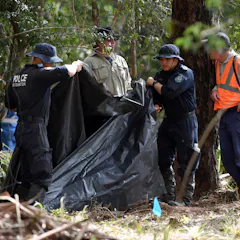
Non-stop media coverage can invade their privacy, raise and dash their hopes, and prolong their trauma.

Our attitudes and behaviours are shaped by what others in society do. So there’s a real danger that vaccine hesitancy, when reported widely in the media, could catch on to more people.

When rape allegations are in the news, it can be a traumatic experience for survivors of past sexual violence. But there are ways to shield yourself from further trauma.

Media reporting often unfairly stigmatises people with mental illness and promotes the stereotype that mental illness causes violent behaviour. New guidelines offer tips for more responsible reporting.
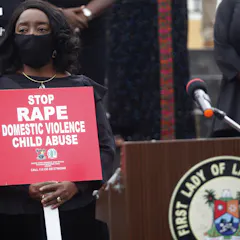
In our media analysis, we found that rapists were mainly people the victims knew.

Wondering if that latest study finding is too good to be true, or whether it’s as bad as we’re told? Here are five questions to ask to help you assess the evidence.

The headlines paint a picture of a frightening flu season. While this season set in earlier than usual, it’s not necessarily more severe than previous years.
Top contributors
-

Professor of Social Work, CQUniversity Australia
-
Conjoint Senior Lecturer, School of Creative Industries, University of Newcastle
-
Professor of Sociology (Criminology, Victimology and Security Studies), University of Ibadan
-
Associate Professor in Criminology, Deakin University
-
Lecturer, Department of Marketing, Griffith University
-
Professor of Communications and Cultural Studies, University of Southern Queensland
-
-
Research Fellow in Mental Health, The University of Melbourne
-
Honorary Senior Research Fellow, The University of Melbourne
-
Associate Professor in Criminology, The University of Melbourne
-
Senior Lecturer in Criminology, University of Wollongong
-
Conjoint Associate Professor, School of Medicine and Public Health, University of Newcastle
-
Senior Lecturer, School of Applied Psychology, Griffith University
-
Associate Dean of Engagement, Murdoch University
-
Associate professor, The University of Western Australia