
Markets follow a mix of economic reasoning, human emotion and out-of-control algorithms.
Articles on Markets
Displaying 81 - 100 of 120 articles
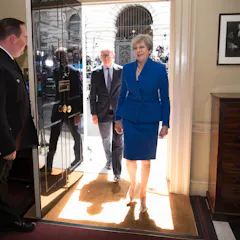
Markets hate uncertainty and the economic data reflects the turbulent nature of British politics.

Under pressure to create new markets, big alcohol producers are scouring the African continent in what promises to yield negative socioeconomic consequences.

Luxury is a global phenomenon present in all societies in various forms.
The company tax cut may signal to the world that Australia wants to be competitive on corporate tax, but it won’t make much of a difference to our largest businesses and multinationals.

New research reveals not only why female traders buy and sell less than men, but that they may be better at it.

Scientists’ success in producing synthetic vanilla flavouring means it is used 99% of the time. So why does the price of genuine beans keep rising?
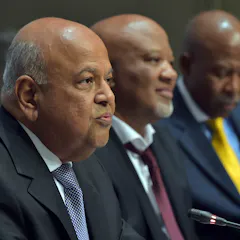
The decision to give former Eskom CEO, Brian Molefe, a seat in the country’s parliament comes with the potential to cause great economic pain for South Africa.

For a discipline that is supposedly rational, finance has had its fair share of irrational crazes. For example, the dotcom bubble and the collateralized debt obligation craze that led to the global financial…

Government agencies are investigating how to start regulating trading algorithms. But algorithms are ubiquitous and we need to make sure we don’t stamp out good ones.
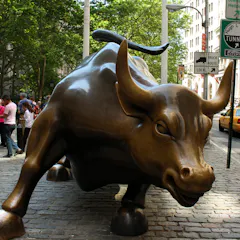
Donald Trump doesn’t represent as much uncertainty for markets as you might think.
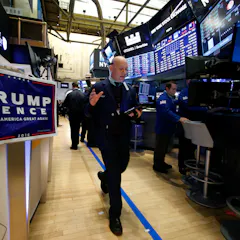
World markets bounced back surprisingly quickly after Trump’s election. Here are a few theories as to why.

The president-elect has made some worrying noises on a range of issues, and from Australia’s perspective the most worrying of all is the relationship with China.
The world braces for Donald Trump’s brand of` trade protectionism, which will send shockwaves through the global economy.
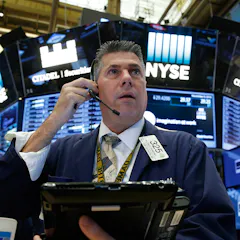
Research suggests their initial reaction may portend how they will perform in the coming months and even years.

Uber is exiting the race for dominance in China’s ride-hailing market and selling its stake to rival Didi Chuxing.
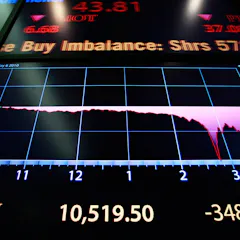
New research shines light on whether creating such a haven as a new type of exchange that slows trading down a bit could attract enough traders to be effective.
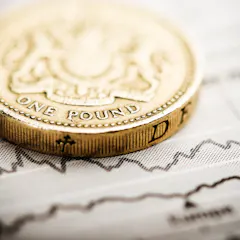
A weak pound might be good for exports but it is bad news for the investment that the economy is based on.
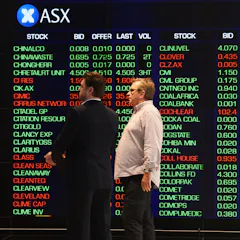
Research shows that having experienced shareholders that use swing trading on boards is better for business, than the independent directors required by the ASX.

It doesn’t matter how much Oliver Curtis and John Hartman stood to gain from insider trading, what matters is what we all lose from market tampering.
Top contributors
-

Professor of Economics, Centre for Competition, Regulation & Economic Development, UJ, and at SOAS University of London; advisor Shamba Centre for Food & Climate, University of Johannesburg
-
Senior lecturer, Canberra School of Government, University of Canberra
-
Professor of Finance, North Carolina State University
-
Research Fellow, Tegemeo Institute, Egerton University
-
Distinguished Emeritus Professor of Management, University of California, Davis
-
Senior Fellow, Department of Agricultural Economics, Stellenbosch University
-
retired, The University of Western Australia
-
Professor of Finance, UNSW
-
Senior Lecturer in Economics, Lancaster University Management School, Lancaster University
-
Senior Research Fellow in Nonprofit Organizations, UMass Amherst
-
Senior Lecturer in Finance, University of Sydney
-
Tony Walker AM is a Friend of The Conversation.
Director, La Trobe University
-
Senior Economist and Associate Director of Social Science and Policy, University of Michigan Energy Institute, University of Michigan
-
Lecturer in Marketing, Research School of Management, Australian National University
-
Professor of Practice, Associate Dean, Warwick Business School, University of Warwick