
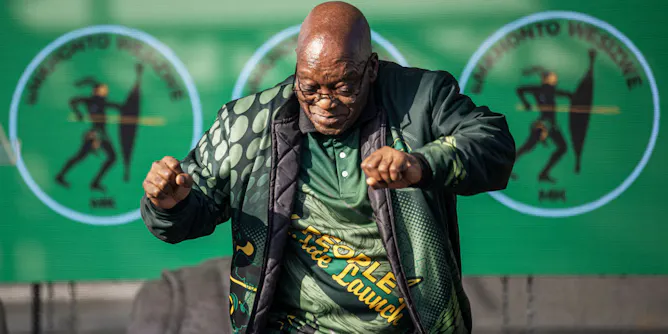
There’s confusion in South Africa about what’s driving the popularity of Jacob Zuma and his uMkhonto weSizwe party.
Articles on Mangosuthu Buthelezi
Displaying all articles

Land disputes arise when the fundamental principles of customary law are breached. The breach can be at the hands of the state or its representatives.
Buthelezi should not be dismissed as a mere stooge during apartheid. Yet, he deserves little praise as an advocate for human rights and civil liberties.
If Mangosuthu Buthelezi had not opposed the apartheid state’s plans for an ‘independent’ Zulu kingdom, South Africa’s history would have unfolded very differently.
Regarding himself heir to Cecil Rhodes, Oppenheimer deplored the threat to civilisation represented by ‘primitive tribesmen’.
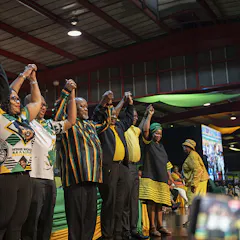
Mzala’s distinctive intellectual contribution combined a sophisticated grasp of revolutionary theory with the reality of ethnic nationalism.
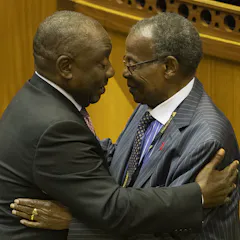
The failure of the 2021 post-election deal is a missed opportunity for the African National Congress and Inkatha to work together.
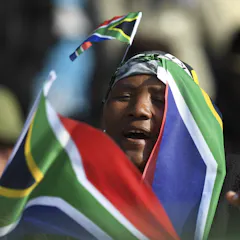
The rise in political parties and the explosion in the number of independents means that it’s no longer simply a race among the three major parties.
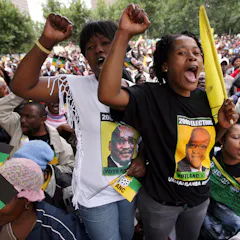
Author shows how politicians intent on settling problems by physically eliminating opponents tap into a ready source of assassins from within the taxi industry.
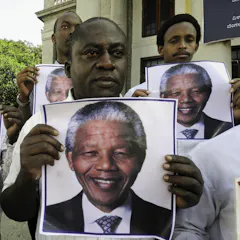
Mandela left at the right time in 1999, when the country still seemed in a healthy state, after which he consolidated his international reputation.
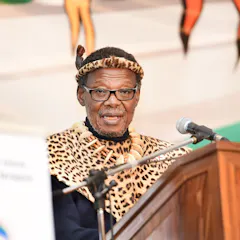
The IFP’s constitution provides that the nomination of national office bearers be approved by the branches. But this was not done in the nomination of its new president.
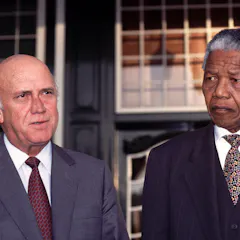
The April 1994 election proved to be a watershed for South Africa.
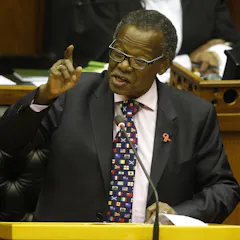
Mangosuthu Buthelezi carries extensive accountability for the sectarianism that characterised politics in South Africa before 1994.
The decision by South Africa’s Film and Publication Board to ban the film Inxeba has been widely criticised.
Top contributors
-

Professor of Political Science, University of the Western Cape
-
Lecturer, Culture and Media department, Birkbeck, University of London
-
Emeritus Professor of Political Sociology, University of KwaZulu-Natal
-
Professor of Sociology, University of the Witwatersrand
-
Reader, Institute of Commonwealth Studies, School of Advanced Study, University of London
-
Senior lecturer in Screen Production and Film and Television Studies, University of Cape Town
-
Senior Research Fellow, Horn of Africa and Southern Africa, Institute of Commonwealth Studies, School of Advanced Study, University of London
-
Extraordinary Professor, Department of Political Sciences, University of Pretoria
-
Lecturer, University of the Free State
-
Distinguished Reserach Professor, Southern Centre for Inequality Studies, University of the Witwatersrand