
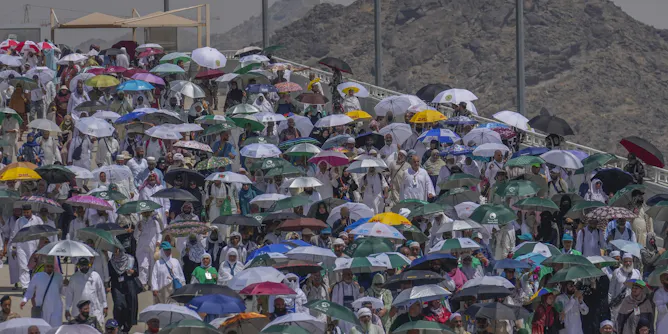
Despite reports of mismanagement, the 2024 Hajj brought together pilgrims of diverse backgrounds from 180 countries.
Articles on Malcolm X
Displaying all articles
The secret recordings of two Supreme Court justices reveal dramatic differences in how they see American political life.

Fannie Lou Hamer became one of the most respected civil rights leaders during the 1960s in part because of her resistance to racist voting laws in Mississippi.
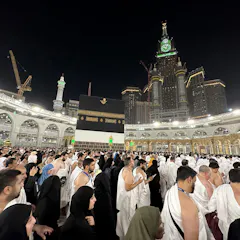
Millions of men, women and children are converging on Mecca for the Hajj pilgrimage, a return to pre-pandemic numbers.
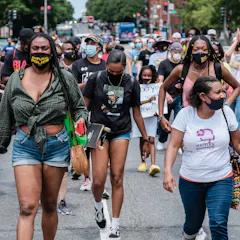
Some lament that today’s anti-racism movement has no charismatic leaders like the civil rights era did. Such comparisons don’t reflect the real history of the struggle for Black equality in the US.
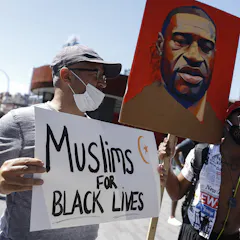
Race, class and national identity mean that views within the American Muslim community vary when it comes to such hot-button issues as policing, protests and discrimination.
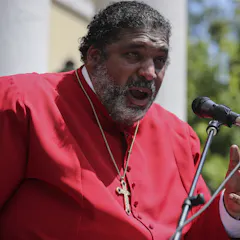
From the earliest days of the anti-slavery movement, Black religious leaders have infused the fight for civil rights with spirituality.
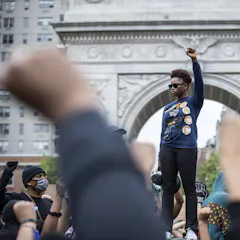
Sweeping changes were possible in the past because black leaders were willing to risk their lives and call out problems before they became crises.
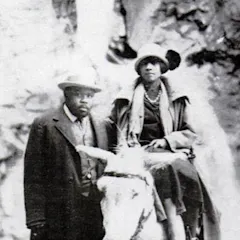
Before the civil rights era, a group of powerful and resourceful black women laid the groundwork for a generation of black activists.
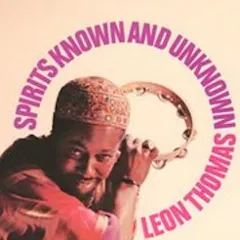
The protest song “Malcolm’s gone” not only pays tribute to one of the most influential black leaders, but provocatively likens him, as a Muslim and so-called enemy of the state, to Jesus Christ.

Something really magical is happening at the intersection between jazz and hip-hop at the moment. Many of the artists involved will be playing at Africa’s foremost jazz festival.
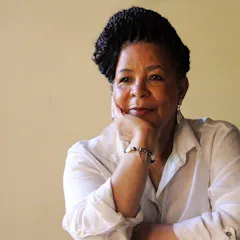
Qunta advocates a reparations fund to accelerate corrective policies, that schools be freed from colonial indoctrination and that African culture should be mainstreamed, especially African languages.
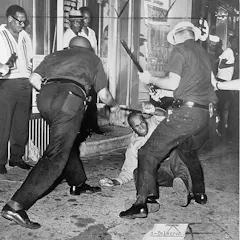
A historian examines what it means to value black life, then and now.
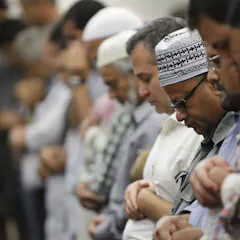
The American Muslim population is one of the most diverse. So, what are the religious and political leanings of America’s different Muslim communities?
Top contributors
-

Lecturer of English. PhD Candidate in Afrofuturism and African Studies, University of the Western Cape
-
Assistant Professor of Religious Studies, Georgia State University
-
Ph.D. Candidate in American Culture, University of Michigan
-
Associate Professor of History, University of Pittsburgh
-
Senior Lecturer of African American Studies, University of Florida
-
Staff K-12 Initiatives, Office of the Chancellor, University of Illinois Urbana-Champaign
-
Vice President for Diversity and Inclusion, University of Dayton
-
Professor of History and Social and Economic Justice, Lycoming College
-
Professor of Political Science, Director of Center for Islamic & Arabic Studies, San Diego State University
-
Professor of Theological Studies, Loyola Marymount University
-
PhD candidate, Western Sydney University
-
Political Scientist, University of the Western Cape
-
Professor of Political Science, Trinity College