

Educators can confront AI head on by distinguishing its pattern-recognition skills from its inability to daydream, embody other people and authentically express itself.
Articles on literary fiction
Displaying all articles

The magazine, founder Harold Ross famously declared, would not be ‘edited for the old lady in Dubuque.’ A century later, it stands as a testament to his bold, uncompromising vision.
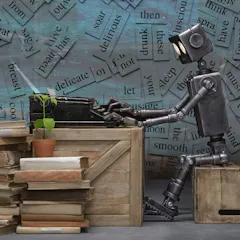
Technically, ChatGPT can do (some of) the work of a human editor. But an experiment comparing three separate human edits of a literary short story to edits by ChatGPT exposes AI’s serious limitations.
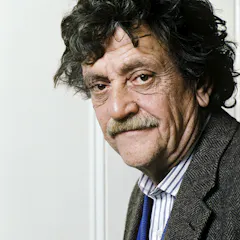
A strain of sorrow and pessimism underlies all of Vonnegut’s fiction, as well as his graduation speeches. But he also insisted that young people cherish those fleeting moments of joy.
Here’s to the good/bad women leading the world of fiction.
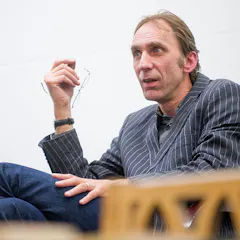
Literary fiction is robust enough to withstand the challenges the 21st century throws at it.

Vladimir Nabokov merged writing and cinema, bringing the art forms together like no one before or since.

The late QC Jeremy Hutchinson only got away with it because the prosecution weren’t quicker on the uptake.

There is a surprising degree of compassion in the narrative voices of this year’s five shortlisted novels. They are a heart-warming selection.
If all you know of Northern Ireland is the turmoil of political institutions, you could do worse than to pick up some of the recent flux in women’s fiction.
Students of the social and political sciences can benefit enormously from being taught literature, short stories and watching artistic feature films.
Works of fiction are brimming with economic principles, but perhaps none more so than the detective story.
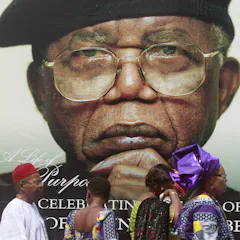
There’s a fierce debate underway about changing university curricula in Africa and the UK to be less Eurocentric. Three academics offer their suggestions for a decolonised reading list.
Readers of literary fiction are better placed to comprehend the complexity of social relationships and understand the mental…
Top contributors
-

Senior Lecturer (screenwriting), English & Creative Writing, University of Staffordshire
-
Lecturer in History, Rhodes University
-
Distinguished Professor Emerita of Creative Practice, Faculty of Arts and Design, University of Canberra
-
Researcher, Social History/Tutor in Medical Education, University of Dundee
-
Associate Professor of Sociology, University of Cape Town
-
Professor Emeritus of English Literature, Harper College
-
Lecturer in English, SOAS, SOAS, University of London
-
Research Associate, Southern Centre for Inequality Studies, University of the Witwatersrand, University of the Witwatersrand
-
Professor of Contemporary Irish Literature, University of Salford
-
School of Culture and Communication, The University of Melbourne
-
Professor of English, College of Charleston
-
Lecturer, Publishing, The University of Melbourne
-
Honorary Research Fellow, Faculty of Health, Deakin University
-
Senior Lecturer, Writing & Publishing, RMIT University
-
Professor of Contemporary Writings, Northumbria University, Newcastle