

The Malawi court’s decision provides a roadmap for future challenges to the death penalty in other southern African countries.
Articles on Lesotho
Displaying 41 - 60 of 81 articles

The Southern African Development Community does not have a remarkable record of military interventions in civil conflicts in the region.

The appointment of judges has hitherto been an obscure and oftentimes clandestine affair. This has produced incompetent judges and led to claims that the judiciary is beholden to the executive.

Large-scale droughts can have cascading impacts on food security. They can reduce yield, increase food prices, trigger changes in consumption and lead to unstable supply.
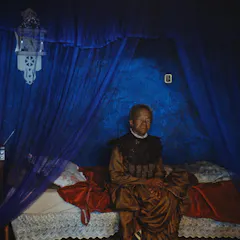
Lesotho’s first-ever entry at the Oscars is a powerful story based on true-to-life events in which a village is to be forcibly evicted to make way for a new dam.
The fundamental structure of the current constitution, which is cast in classical Westminster conceptions, is unsuited for modern-day constitutionalism.
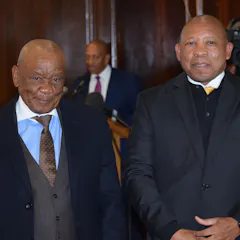
Moeketsi Majoro’s installation as Prime Minister is welcome. But it does not guarantee much needed political stability in an era of complex coalition politics.
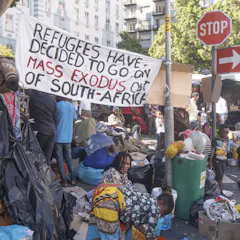
The policy and law applying to refugees and asylum seekers in South Africa is largely progressive. But, in practice, they continue to endure hardship and unfair treatment by officials.
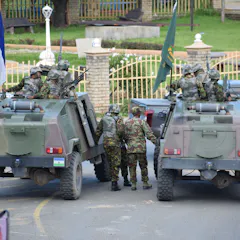
South Africa’s numerous interventions in Lesotho contribute to the acrimonious nature of its political culture.
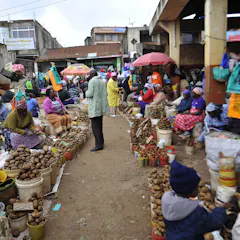
The loss of livelihoods flowing from the efforts to combat the pandemic highlights the dearth of social protection measures on the continent.
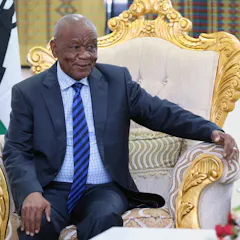
Power is visibly draining away from Tom Thabane. But, even at 80 years old, he remains a wily operator, and seems determined to cause maximum trouble to secure his immunity from prosecution.
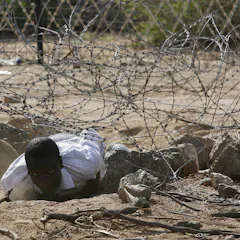
Borders in southern Africa – as on the entire continent – were arbitrarily imposed by former colonial powers, and aren’t respected.
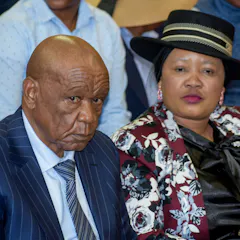
The doctrine of equality is ingrained both in theory and in the express provisions of Lesotho’s constitution.
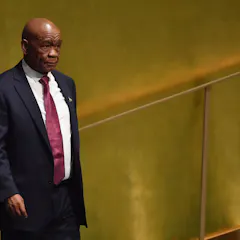
Since the demand for resources far outmatches the patronage available, Lesotho’s political arena has become brutally competitive.

In Eswatini, Botswana, South Africa and Lesotho more than 1 in 5 children are HIV-exposed but uninfected. A coordinated strategy is needed to ensure all children reach their developmental potential.
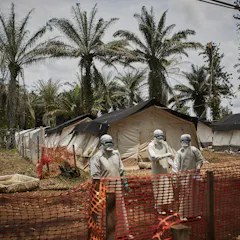
When done properly, a simulation exercise is a useful tool for evaluating preparedness for a public health emergency.
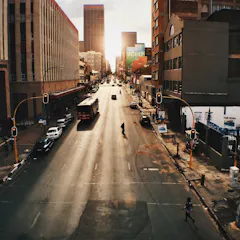
HIV is a condition that must be managed, not just medically, but also socially, tackling stigma, social anxieties and the risks of disclosure.
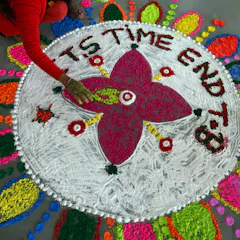
Many of the most fundamental aspects of TB disease remain unknown. For example, after exposure to the organism that causes TB, why do only some people get infected and only some of those fall ill?
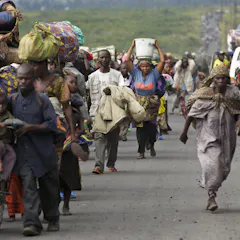
The lengthy nature of some of Africa’s wars is one of the main hindrances to ending the “refugee cycle”.

Angola’s new President João Lourenço has shown some willingness to engage in more inclusive politics.
Top contributors
-

Head of Department, Public and Environmental Law Department, University of Limpopo
-
Associate Professor of African History, Michigan State University
-
Professor of Sociology, University of the Witwatersrand
-
Associate professor in Vertebrate Palaeontology, University of the Witwatersrand
-
Lecturer, University of Cape Town
-
Researcher and curator, Jurassica Museum
-
Professor of History, University of Limpopo
-
Research Associate, African Centre for Coastal Palaeoscience, Nelson Mandela University
-
Professor of Physical Geography, University of the Witwatersrand
-
Extraordinary Professor, Department of Political Sciences, University of Pretoria
-
Professor of Democracy, University of Birmingham
-
Honorary Research Associate at Institute for Democracy Citizenship and Public Policy in Africa, University of Cape Town
-
Professor of International Human Rights Law, Centre for Human Rights, and acting SARChI Chair in International Constitutional Law, University of Pretoria
-
Postdoctoral Research Fellow; Institute for Democracy, Citizenship and Public Policy in Africa, University of Cape Town
-
Executive director, Africa Institute of South Africa, Human Sciences Research Council