
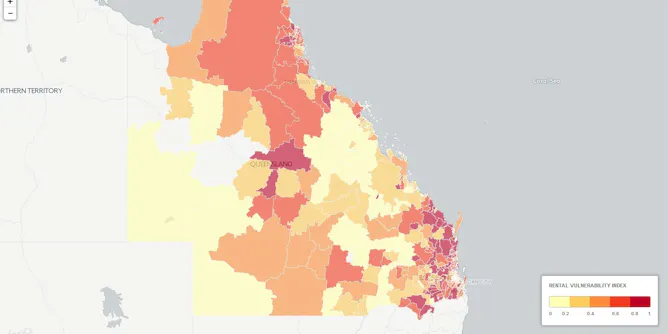
Almost nowhere in our capital cities can low-income households – and those on average incomes in Sydney – afford the median rent. Mapping rental vulnerability finds it in regional areas too.
Articles on Land tax
Displaying 21 - 32 of 32 articles

Who is entitled to the increase in value created by planning approvals, new infrastructure, population growth or urban development? For John Stuart Mill, the answer would have been the community.

When people do downsize, financial incentives are generally not the big things on their minds. And so most of the budget’s financial incentives will go to those who were going to downsize anyway.
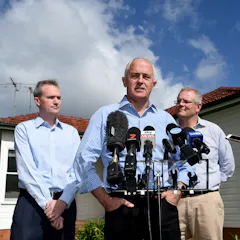
Housing experts writing for The Conversation largely agree on the government policies that are causing negative distortions in the market and the wider economy. And supply is not the key concern.
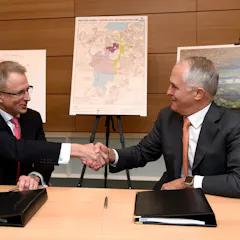
Consider these home truths: value capture is a tax, it would need to apply to the family home and deciding which areas it covers would be politically contentious. A broad-based land tax is simpler.

A combination of transit-oriented centres, inclusionary zoning and a special rate on land instead of stamp duty could make housing more affordable by cutting congestion, development and travel costs.

State revenue offices are using data matching to identify people who earn income from Airbnb, then sending notices that they may be liable for land tax, even though this remains a legal grey area.

The Land Registry is a valuable asset – so why not keep it in state hands, for the public good?
It makes sense for the federal government to grease the wheels of federal-state tax reform.

Not only is council tax on the rise, it’s completely out of touch with reality.
The gains from modest tax reform are not likely to be a revolution in Australia.

There are far too many financial incentives keeping older Australians from choosing to downsize.
Top contributors
-

Program Director, Housing and Economic Security, Grattan Institute
-
Research Fellow - Henry Halloran Trust, University of Sydney
-
Professiorial Fellow, The University of Melbourne
-
John Curtin Distinguished Professor, Curtin University
-
Director, Tas Law Reform Institue / Associate Professor, University of Tasmania, University of Tasmania
-
Casual Lecturer in Planning, University of Sydney
-
Senior Lecturer in Law, Nottingham Trent University
-
Halford Mackinder Professor of Geography, University of Oxford
-
Transport and Cities Program Director, Grattan Institute
-
Sir Henry Wellcome Postdoctoral Fellow, King's College London
-
Researcher, Grattan Institute
-
Emeritus Professor of Finance and Financial History, The Open University
-
Senior Lecturer, Faculty of Law, University of Tasmania
-
Director, Bankwest Curtin Economics Centre (BCEC) and John Curtin Distinguished Professor at Curtin Business School, Curtin University
-
PhD Candidate in Conservation Psychology, Royal Holloway, University of London