

His life in music was a struggle against narrow definitions - of ‘race’, instrumental appropriateness and musical genre.
Articles on KhoiSan
Displaying 1 - 20 of 28 articles

Studying ancient genes can tell us more about the evolution of humans’ anatomy, behaviour and thinking.
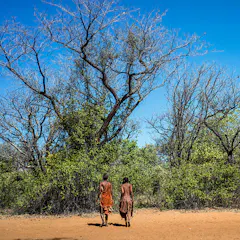
There are several reasons why ethical conduct in scientific research is so important.
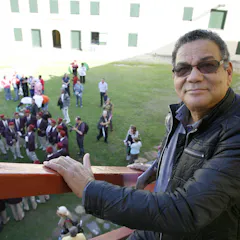
The father of Khoisan revivalism became a public historian as his academic work met activism.

Hopefully more curators and custodians of repositories of human skeletal remains will attempt to redress some of the wrongs of the past.
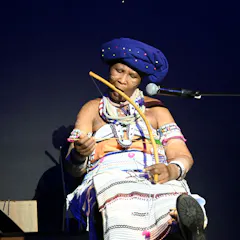
Composers are keeping bow music alive through electronic music and other experiments.
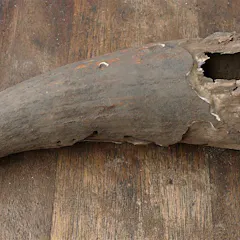
The medicine container was found in a painted rock shelter. A radio carbon date of the horn container places it at around AD 1461-1630.
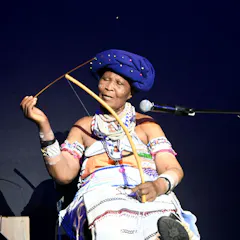
The queen of Xhosa music has passed away. She reinvigorated ancient Xhosa cultural traditions through performance and teaching.

The first speech sounds were uttered about 70,000 years ago and not hundreds of thousands of years ago as is sometimes claimed.
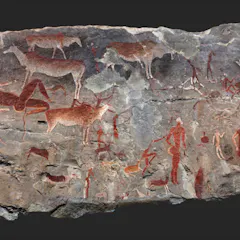
A new exhibition in Johannesburg focuses on the beliefs and paintings of the San people.
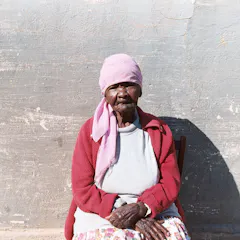
The South African Khoe-San communities are no strangers to exploitative research. One research team is trying to provide genetic ancestry results to community members. But they still face many challenges.
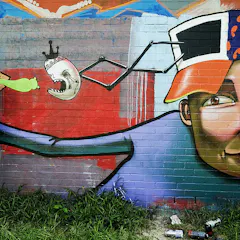
It’s been in existence since the 1500s but the Kaaps language, synonymous with Cape Town, has never had a dictionary until now.

The term “citizen science” is intended to widen the network of people whose contribution to science is acknowledged. But the word “citizen” can be problematic.

Traditional leaders do not adequately represent the interests of rural communities in dealing with mining companies.
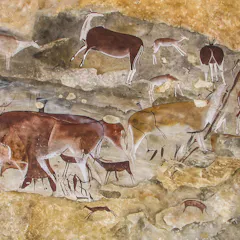
The team from Wits University returned to a well-known ceiling panel in the Maloti-Drakensberg mountains, armed with new knowledge about the beliefs of the San people who made the paintings.

South Africa’s Constitutional Court verdict is possibly a defining moment for South Africa’s electoral system.
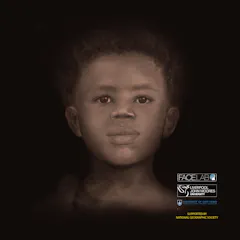
Through science, art and technology, we are able to reconstruct the faces of the dead based on their remains. The researcher who did this work for descendants in Sutherland explains the process.

When the University of Cape Town discovered skeletons in its archive that had been unethically obtained and used, they set about restoring justice to the bones and the community they came from.

Developments in mitochondrial DNA sequencing are returning South Africa’s slavery heritage to view.

Colonialism and apartheid sought to make traditional leaders accountable to white officials by tying them to land.
Top contributors
-

Professor and DSTI/NRF SARChI Bio-economy Research Chair, University of Cape Town
-
Associate of the Gordon Institute for Business Science, University of Pretoria
-
Professor in Biological Anthropology, Division of Clinical Anatomy and Biological Anthropology, University of Cape Town
-
Professor with Research Focus in Stone Age Archaeology, Palaeo-Research Institute, University of Johannesburg
-
Senior Researcher, University of the Witwatersrand
-
Professor at School of Art and Design, Liverpool John Moores University
-
Professor of Biochemistry and Executive Dean of Science, University of Johannesburg
-
Emeritus professor, University of the Witwatersrand
-
PhD Candidate in Anthropology, University of California, Davis
-
Professor Emeritus, University of South Africa
-
Associate of Human Evolutionary Biology, Harvard University
-
University of Cape Town
-
Associate Professor of History, Southern Methodist University
-
Distinguished Professor of Curriculum Studies, Stellenbosch University
-
Ethnomusicology and African Musical Arts lecturer, Rhodes University