
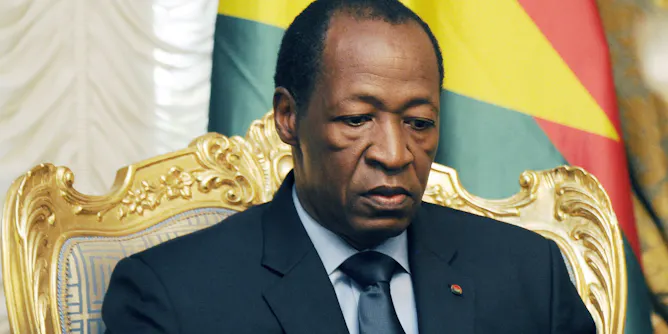
The guilty verdict on Blaise Compaoré should be celebrated as a landmark victory for democracy and peoples’ movements in Africa.
Articles on judiciary
Displaying 21 - 40 of 45 articles

Even famous Supreme Court rulings like Brown v. Board of Education haven’t necessarily pushed US society forward in a linear direction.

The actions of the chief justice undermine the independence, impartiality and competence of the judiciary, which erodes public confidence in the courts.

Electoral disputes and petitions are becoming a prominent feature of the electoral process.

The Ghanaian media decides how the public understands proceedings from the Supreme Court.
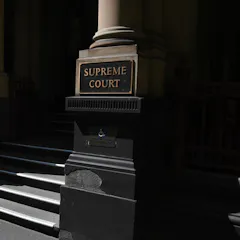
In the wake of the allegations about Dyson Heydon, a key outstanding question is reforming Australia’s opaque judicial appointments system.

The novel coronavirus has necessitated judicial reforms that should have been the norm.

Assuming machines could take the place of judges belies their role as the third arm of government and makers of law.

As the recent Brexit litigation has shown, the UK’s Supreme Court has had to consider political as well as legal issues in its first ten years.
Secure and appropriate compensation for judges is a constitutionally recognized component of judicial independence. Here’s why politics must not be allowed to interfere with it.

The problems high-profile defendants pose in receiving a fair trial are hardly new. But they are more pressing today than ever.
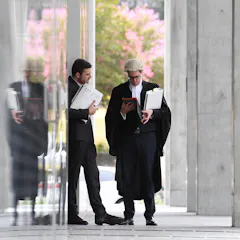
Mandatory retirement ages are mostly a thing of the past in Australia. Removing the last vestiges of this practice is one way to address the problem of Australia’s ageing workforce.

Racial bias likely played a role in the Gerald Stanley case. This article explains how racial dynamics and process failures enabled systemic racism to play a part in Stanley’s acquittal.

A succession of leaders have failed to address problems in England and Wales.
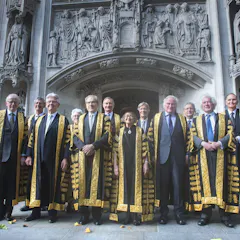
There are still far too few female, black, Asian and minority ethnic judges.
The social grant saga shows how South African courts are doomed to fail to protect the public from its government.
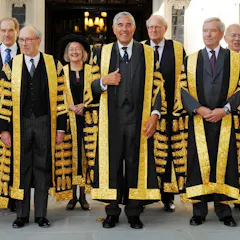
At least half of the UK’s Supreme Court will retire in the next two years, presenting a prime opportunity for a more representative judiciary.
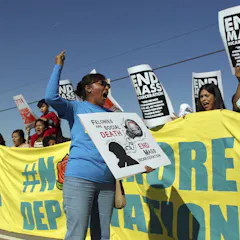
A short history of legal challenges to immigrant detention practices in the U.S. may shed light on what’s to come for the new administration.

A key argument in support of the jury system is that it is a valued form of citizen participation in democracies. But the system has led to human rights abuses in Ghana.
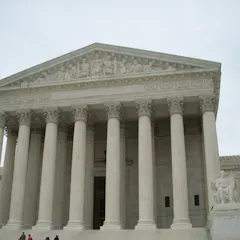
With three current Supreme Court justices aged 78 or older and one seat on the court vacant, the next US president may end up nominating four justices in their first term.
Top contributors
-

Lecturer in Constitutional and Administrative Law, and Public Procurement, Bangor University
-
Lecturer, Melbourne Law School, The University of Melbourne
-
Centre director, University of Dundee
-
Doctoral Candidate, Institute of Air & Space Law, McGill University
-
Senior Research Fellow, University of the Witwatersrand
-
Associate Professor in Public Law, University of Cape Town
-
Dean and Professor of Law, UNSW
-
Teaching Assistant, University of Aberdeen
-
Assistant Professor of History, Armstrong State University
-
Professor of Public Interest Law and Chicana/o Studies, University of California, Davis
-
Professor/Senior Research Fellow, Centre for Advancement of Scholarship, University of Pretoria
-
Professor of Comparative Politics, University of Warwick
-
Associate professor, University of Lagos
-
Professor of Francophone Studies (Africa, Caribbean), Faculty Affiliate with Africana Studies, World Literature Program and Human Rights Pracice, University of Arizona
-
Director Leverhulme Research Centre for Forensic Science, University of Dundee