

The Trump administration’s Religious Liberty Commission argues that religious freedom is under attack and blames the ‘wall of separation’ between church and state.
Articles on John Locke
Displaying all articles

Researchers fail to replicate a seminal study in developmental psychology. Do babies really prefer helpers over hinderers?

Flagpoles outside homes owned by Justice Samuel Alito have displayed symbols used by Trump supporters and Jan. 6 insurrectionists.
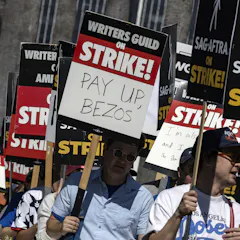
Given the hypocritical and exploitative treatment of artists by entertainment industries, do we really have moral obligations to pay for streaming services?

Constituents’ willingness to overlook deception may depend, in part, on whether politicians lie well and with a good purpose.

Having the ability to decide either to do something or not, and to act accordingly, is a basic definition of freedom. Smart buildings challenge this freedom.
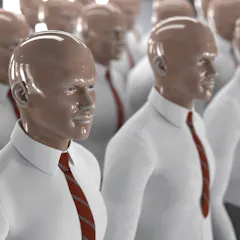
Apple TV’s Severance imagines what would happen to our sense of self if we could completely separate our work and home lives.

The maverick MP has made no bones about his plan to use Palmer’s considerable war chest to spread misinformation about COVID – and it’s in democracy’s interest that he be stopped.

A British literature scholar explains how philosopher John Locke’s theory of selfhood will not help the pandemic recovery, if individuals fail to see themselves as interconnected.

The absence of trust in a nation’s leader and government jeopardizes an effective response to a health crisis. It also creates a political crisis, a loss of faith in democracy.

Travel and philosophy have enjoyed a quiet love affair for centuries.
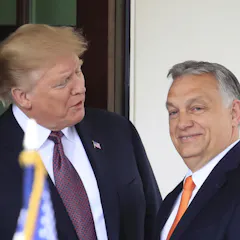
Liberal democracy is in trouble, and the seeds of its demise can be found in the property rights so cherished by so-called liberals generations ago.

The language of the neutral and secular state in Bill 21, like its precursors, presumes an invisible Christian default for the rules around public expressions of religiosity.

Many Americans are fretting over paying their taxes. A philosopher says the moral question isn’t as much about a duty toward the government, but being fair to fellow tax-paying citizens.

A philosopher argues that moral responsibility for past transgressions can actually change over time. The test lies in how deeply an individual has changed.

Whether the sins of our past stay with us forever has become a pertinent question of our time. A philosopher argues we don’t need to carry our past burdens – although there are some moral conditions.

Bilocation is a popular Christian myth but also one that is known to modern physics.

Turkish painter Esref Armagan uses colour and perspective that he has never seen.
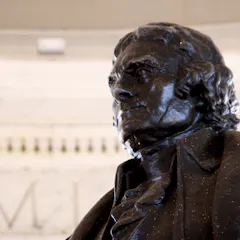
The first two Muslim-American women are in Congress now. They stand in a long and little-known tradition of Islam in America.

The notion of civil rebellion – like the one at Malheur National Wildlife Refuge – is at the heart of the Second Amendment. But so is the idea that such rebellions should not be undertaken lightly.
Top contributors
-

Instructor of Philosophy, Arizona State University
-
Lecturer in Education, University of Bath
-
Professor of History and Middle Eastern Studies, The University of Texas at Austin
-
Professor of Philosophy and Intellectual History
-
Associate Professor of English, University of Nebraska Omaha
-
Senior Distinguished Lecturer, Jepson School of Leadership Studies, University of Richmond
-
Associate Professor of Philosophy, author of The Meaning of Travel: Philosophers Abroad (2020), Durham University
-
Professor of Philosophy, Public Policy and Governance, University of Washington
-
Assistant Professor of Philosophy, Director of the Law, Liberty, & Justice Program, Clemson University
-
Professor, Real Estate, Université du Québec à Montréal (UQAM)
-
Assistant Professor in Philosophy, Northeastern University
-
Senior Research Fellow, Centre for Advancing Journalism, The University of Melbourne
-
Director of the Wilson Institute for Canadian History, McMaster University
-
Assistant Professor, School of Journalism and Communication, Carleton University
-
Professor of Communication, Baylor University