

Australians’ sense of job insecurity is now as bad as it was in COVID, when unemployment hit 6.4%. Yet there are steps that can help turn fear into action.
Articles on Jobseeker
Displaying 1 - 20 of 66 articles

Research shows where those cost-of-living stresses are greatest. It’s not the vast bulk of middle income Australia, but working age welfare recipients.
Research shows a possible return to society of $1.24 for every dollar invested in increasing the JobSeeker rate.

41% of Australians on Jobseeker are failing to collect the number of “points” needed to stay on benefits, suggesting there is as much wrong with the system as the people on it.

If the government had spent half as much on economic support but delivered it to the right places, inflation and interest rates could have been 2% lower.

The government says it is serious about improving living standards but it has failed to provide targeted and long-term relief for the people who need it the most.

Domestic violence is not just a critical social and health issue, but a major economic challenge for victim survivors and the nation.

Unemployment and related payments for working-age people were given a welcome boost in last year’s budget. But they remain well below pensions, and far from adequate.
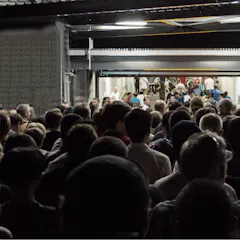
The Institute of Public Affairs says 425,000 more Australians are on welfare than in 2018, but it has double-counted some Australians and left out others.

Unrealistic criteria and poor communication are causing people who need it most to lose an important income support.

The forum is also critical of Australia on several other fronts, including income support for the unemployed, job market flexibility and the recognition of trade qualifications.

People on benefits are borrowing from the government to pay for essentials like power bills and car repairs. But repayments leave them with even less than before.

The JobSeeker payment is set to increase by an extra $40 a fortnight from September, but only if the budget measure gets through parliament.
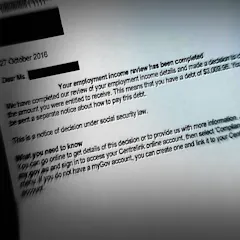
Robodebt affected hundreds of thousands of people and undercut trust in our political and social welfare systems. Unless we act on today’s royal commission report, something like it will happen again.
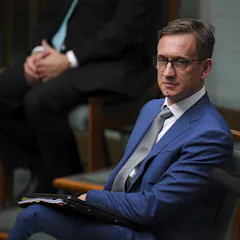
In this podcast, Labor MP Julian Hill joins Michelle Grattan to discuss the job market and getting people into work, artificial intelligence, Julian Assange, and TikTok.
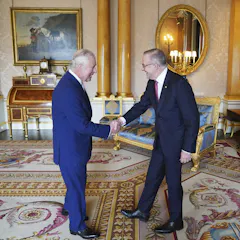
While Albanese (who lands back in Australia on budget eve) basks in the international limelight, at home Treasurer Jim Chalmers this week has been feeling the heat of the spotlight.
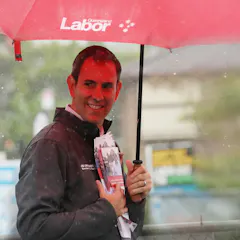
The treasurer’s handpicked advisory committee recommended he lift the base rate of JobSeeker for everyone. He is acting as if it didn’t.

Delivered against a background of rising inflation, increasing interest rates and huge global uncertainties, Labor’s first budget will also contain $33 billion in extra funding for pensions and payments.

Unemployed Australians who accessed their super during COVID stayed on benefits seven weeks longer than similarly-placed recipients who did not.

On September 20, the single rate of JobSeeker will climb $25.70, to $668.40 a fortnight – its biggest-ever automatic jump. Yet that’s only $17,378 a year: not even two-thirds of the poverty line.
Top contributors
-

Professorial Fellow, University of Canberra
-
Professor, Crawford School of Public Policy, Australian National University
-
Visiting Fellow, Crawford School of Public Policy, Australian National University
-
Research Associate, Centre for People, Organisation and Work, RMIT University
-
Associate Professor, Social Policy Research Centre, UNSW
-
Visiting Fellow, Tax and Transfer Policy Institute, Crawford School of Public Policy, Australian National University
-
Associate Professor of Public Policy, Crawford School of Public Policy, Australian National University
-
Associate Professor, POLIS@ANU Centre for Social Policy Research, Australian National University
-
Adjunct associate, Swinburne University of Technology
-
DPhil Candidate, University of Oxford
-
Professor of Sociology, Director of Australian Research Council Centre of Excellence for Children and Families over the Life Course, The University of Queensland
-
Researcher, UQ Critical Thinking Project, The University of Queensland
-
Associate Professor, College of Business, Law & Governance, James Cook University
-
Postdoctoral Research Fellow, Australian Catholic University
-
Professor of History, President, Australian Historical Association, Macquarie University