
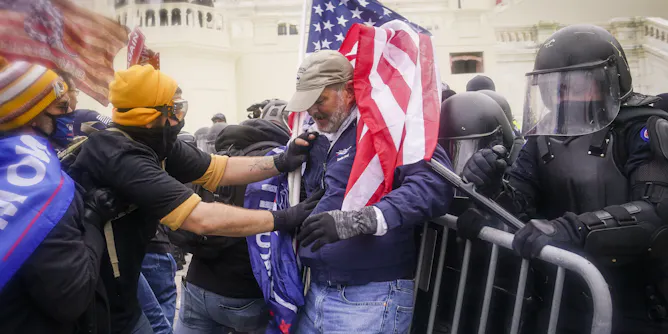
Legitimate political discourse is based on persuasion, not coercion or violence. Two scholars of communication and democracy explain the difference.
Articles on January 6 US Capitol attack
Displaying 121 - 140 of 265 articles
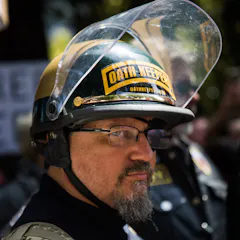
About 10% of the Oath Keepers are active-duty military, and around two-thirds are retired military or law enforcement.
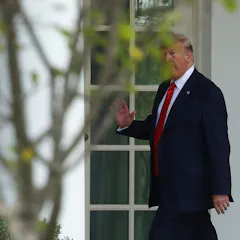
Justices have cleared the way for hundreds of Trump administration documents to be handed to a panel investigating the Jan. 6 attack. A law scholar explains what that means for executive privilege.
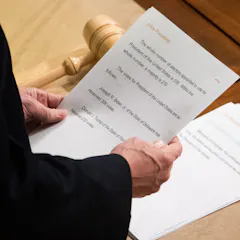
Concerned about problems in counting Electoral College votes that determine the next president, lawmakers are considering changes to the Electoral Count Act. What is the act, and what’s wrong with it?
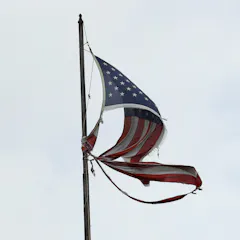
Despite growing public discussion of the risk of civil war in the US, a political violence scholar says widespread civil strife is unlikely to happen – but other political violence is more likely.

Stewart Rhodes of the Oath Keepers, has been charged with seditious conspiracy over the attempted insurrection. A constitutional law scholar outlines why that may set a bad precedent.
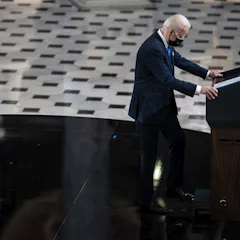
Rioters at the Capitol represented a ‘dagger against the throat’ of American democracy, President Biden said in an address laden with imagery.
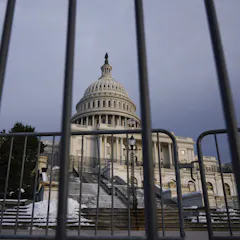
The January 6, 2021, Capitol riot happened a year ago. But the attempt to disrupt the peaceful transfer of power was just one part of a larger, and more long-term, attempt to undo US democracy.
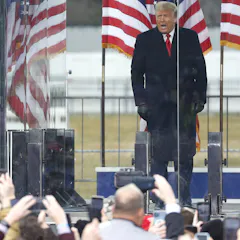
What happened on January 6, 2021 was a genuine co-production between Trump and his supporters.

Apocalyptic thinking undermines democracy because it delegitimizes political opponents, turning them into enemies of God.
The popularity of zombie apocalyptic and post-apocalyptic narratives has emerged from some of the same economic and cultural currents that gave rise to Trump’s presidency.
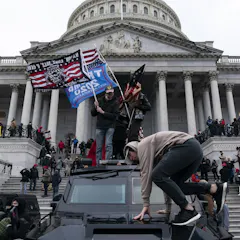
Scholars and journalists have sounded the alarm about the threats to American democracy, including the threat of a simmering coup d’état, further political violence, and even civil war.

Almost eight years before the Jan. 6, 2021 Capitol attack, nearly one-third of Americans surveyed – and 44% of Republicans – said armed rebellion might soon be necessary in the US to protect liberties.
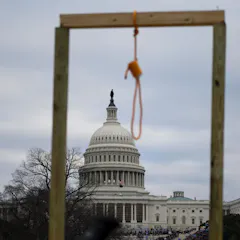
False election fraud claims helped fuel the US Capitol attack — and continue to create risks of violence and domestic terrorism.
Deep-seated disagreement is healthy for a democracy. But when people lose the ability to navigate those differences, they risk seeking anti-democratic unity of thought.
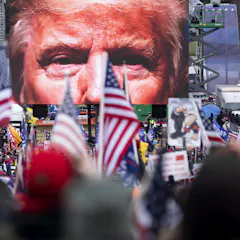
Diaries, visitor logs, handwritten notes and speech drafts are among the records Donald Trump has tried to keep from a Congressional committee investigating the Capitol riot of Jan. 6.
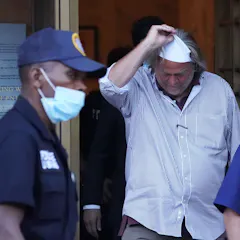
Donald Trump asked former aides not to testify before a committee investigating the Jan. 6 Capitol insurrection. The Department of Justice has now charged one over that refusal.
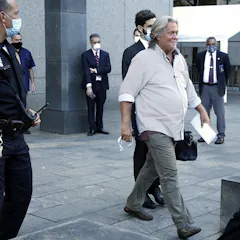
Former aides to Donald Trump have refused and delayed compliance with a subpoena issued by the Jan. 6 committee. It has set up a messy legal fight over executive privilege.
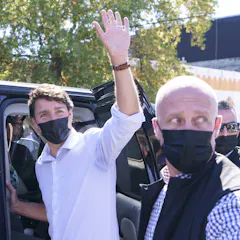
While the recent federal election maintained the status quo, there were moments on the campaign trail that reflected the fragility of Canadian democracy.
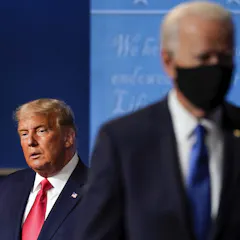
A representative survey of American adults finds broader support for violent insurrection than many would like to think.
Top contributors
-

Director of Research, Academic Development and Innovation at the Center on Terrorism, Extremism and Counterterrorism, Middlebury College
-
Assistant Professor of Government, Smith College
-
University Professor and Joseph H. & Belle R. Braun Professor of American Jewish History, Brandeis University
-
Associate Professor of Criminal Justice and Criminology, University of North Carolina – Charlotte
-
Associate Professor of Criminology and Criminal Justice, University of Alabama
-
Professor of Law, University of Notre Dame
-
Spécialiste de la politique américaine, Sciences Po
-
Professor of Law and Adjunct Professor of Political Science, Wayne State University
-
Professor of Old English and Old Norse, University College Cork
-
Visiting Assistant Professor of Geography, Macalester College
-
Associate Professor of Law, Arizona State University
-
Associate Professor of Graphic Design, Iowa State University
-
Associate Professor of Law, Quinnipiac University
-
Associate Professor of Global and International Studies, University of California, Irvine
-
Associate Professor of History, College of Saint Benedict & Saint John's University