

There are clear parallels between today’s AI debate and how the world tackled the threat from nuclear weapons.
Articles on J Robert Oppenheimer
Displaying all articles

Christopher Nolan’s historical drama took home seven Oscars, but the film conspicuously avoids Oppenheimer’s intimate involvement in how his diabolical weapon was used – and where.

The success of ‘Oppenheimer’ at the Academy Awards presents an opportunity to think about critical criteria for viewing historical film — and what we are owed by historical filmmakers.

For all its praise, the film furthers the dominant narrative of the bombs as a morally fraught but necessary project, with American anxieties playing a starring role.

The Cold War was an economic standoff as well as an atomic one. The author of a new book describes the minds behind the great ideological battles on that 20th-century front line.

Remember building model molecules with balls and sticks in chemistry class? You have J. Robert Oppenheimer to thank for that, as a quantum chemist explains.
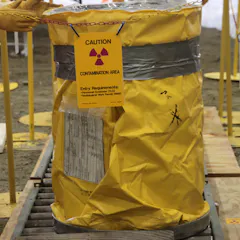
Nuclear weapons production and testing contaminated many sites across the US and exposed people unknowingly to radiation and toxic materials. Some have gone uncompensated for decades.
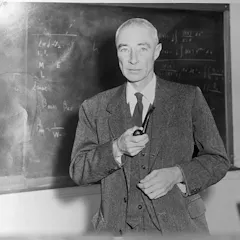
Complex as they are, Oppenheimer’s life and views of the bomb are far easier to wrestle with than the reality of nuclear power itself.

Lack of effective regulation means the risk of nuclear war is greater than at any time since the end of the Cold War. Other potentially existential military threats remain similarly uncontrolled.

Spying was a concern from the dawn of the nuclear age, but charges that J. Robert Oppenheimer, who led the development of the first nuclear weapons, was a Soviet spy have been proved wrong.

As my seat shakes from the stereo effects, nobody in the nearly-full cinema flinches. The teenagers to my right are as used to explosions as J. Robert Oppenheimer himself.

Christopher Nolan’s film is the latest of many portrayals of the famous theoretical physicist. Here are five of the most intriguing.

The subject of the new Christoper Nolan film, Robert Oppenheimer, is often placed next to Albert Einstein as the 20th century’s most famous physicist.
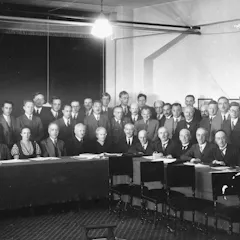
The trailer for ‘Oppenheimer’ fails to include female physicists, which is indicative of a broader media trend that, if reversed, could lead to greater gender diversity in science.

The Doomsday Clock has never before been as close to midnight as it is now. There is scant hope of it winding back on its 75th anniversary.

Seventy-five years ago, the first atomic bomb exploded and a new world dawned.
Top contributors
-

Associate Professor in English and American Literature, Nottingham Trent University
-
Lecturer in narrative history, Sciences Po
-
PhD Candidate, School of Modern Languages and Social Anthropology, University of St Andrews
-
Professor of Molecular Biology and Genetics, University of Canterbury
-
Assistant Director, Applied History Project and Intelligence Project, Harvard Kennedy School
-
Assistant Professor of Chemistry, Trinity University
-
Professor of History, Australian Catholic University
-
Senior Lecturer, Film and Media Studies, University of Pittsburgh
-
Professor of Economics, Te Herenga Waka — Victoria University of Wellington
-
Associate Professor. Cinema Arts, School of Creative Arts, University of Windsor
-
Professor of Law, University of Waikato
-
Professor of Sociology, University of California, San Diego
-
Professor of History, Michigan State University
-
Professor Emeritus of Communication, North Carolina State University
-
Distinguished Professor of Physics, University of Pittsburgh