

Some major events in the history of US-Iran relations highlight differences between the countries’ views, but others have presented real opportunities for reconciliation.
Articles on Iran nuclear program
Displaying all articles
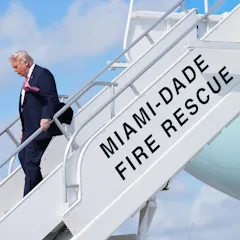
Donald Trump will probably lean into his rhetorical strengths and try to convince Americans the U.S. has won in Iran when it hasn’t.

The war in Iran has cut off diplomatic efforts to limit the country’s development of nuclear weapons. Securing that material and equipment in other ways would be difficult and dangerous.
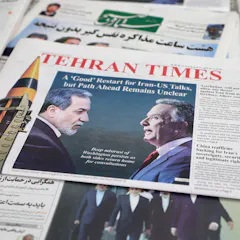
The US administration may sense that Iran is weak and ready to do a deal. But negotiations could be undone by intransigent red lines.

The Trump administration has called on Iran to permanently end its nuclear program. But threats of force may undermine effort of nonproliferation.
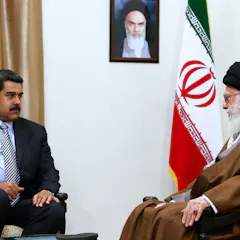
Perhaps no one outside of Venezuela should care more about the US invasion and capture of President Nicolás Maduro than the Islamic Republic of Iran’s supreme leader, Ali Khamenei.
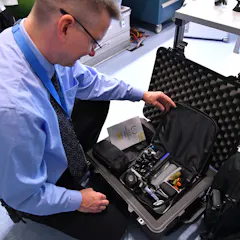
A nuclear engineer explains how the International Atomic Energy Agency monitors peaceful nuclear programs, and why it’s worrisome that Iran stopped cooperating with the IAEA.

In the majority of cases, diplomacy has played a pivotal role in convincing nuclear-seeking nations to relinquish their pursuit of nuclear weapons.

A scholar of intelligence and strategy explains why battle damage assessments are so challenging – and why the process has become politicized.
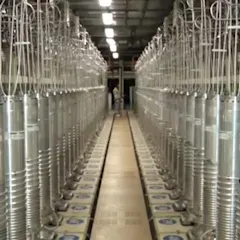
Iran has a long history of enriching uranium in an effort to develop nuclear weapons. It’s not clear how far the US attack set back Iran’s production of bomb-grade uranium.

While Israel and Iran have agreed to a ceasefire after 12 days of airstrikes, it isn’t clear what specific measures, if any, the countries might agree to in order to keep the peace.

Nonproliferation experts believe Iraq’s nuclear program went underground after Israel destroyed its reactor just outside Baghdad.
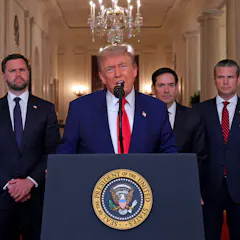
‘Bunker buster’ bombs and Tomahawk missiles struck three targets, with President Donald Trump saying that Iran’s nuclear program had been ‘completely and fully obliterated.’
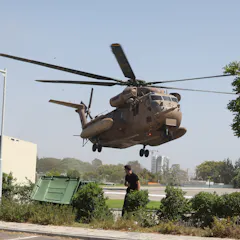
Iran’s key installations are hidden deep underground. But Israel has shown it can target such facilities.
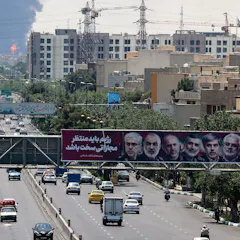
Close to 100 scientists have been killed or abducted to stymie foreign nations’ nuclear programs since World War II. But the tactic has serious drawbacks as a means of countering proliferation.
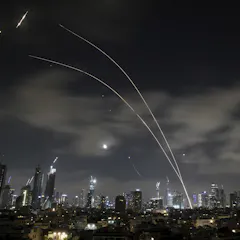
The U.S. military could certainly make an impact in any air campaign against Iran. But it will want to avoid another Iraq-like quagmire.
Top contributors
-

Professor of Nuclear and Radiological Engineering, Georgia Institute of Technology
-
Professor of the Practice of Political Science and International Relations, USC Dornsife College of Letters, Arts and Sciences
-
Professor of International Relations, Munk School of Global Affairs & Public Policy, University of Toronto; USC Dornsife College of Letters, Arts and Sciences
-
Professor of Regional Security, Durham University
-
Associate Professor and Edward and Emily McWhinney Professor in International Relations, Simon Fraser University
-
Associate Professor of International Affairs, Georgia Institute of Technology
-
Associate Professor of International Affairs, Georgia Institute of Technology
-
Fellow at the Center for Middle East Studies, University of Denver
-
Executive Director of the Edward R. Murrow Center and Senior Fellow of Diplomatic Practice, The Fletcher School, Tufts University
-
Associate Professor of International Relations, American University
-
Professor of Government and International Affairs, Kennesaw State University
-
Professor of the Practice of Energy, National Security and Foreign Policy, Harvard Kennedy School
-
Director of the Ethics, Society and Law Program; Academic Director of the Ideas for the World Program, University of Toronto
-
Associate Professor of Practice of Public Policy, University of Michigan
-
Senior Lecturer in International Relations, University of Pennsylvania