
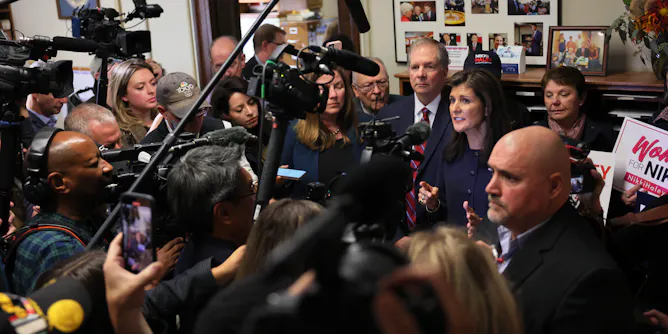
Two states that are not representative of the US, particularly in terms of race, have outsize influence in the presidential campaign.
Articles on Iowa caucus
Displaying 1 - 20 of 32 articles
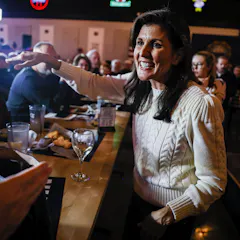
Nikki Haley is the latest American female politician to shift her language, depending on whom she is talking to and where. But this tactic has a flip side, prompting criticism of her as inconsistent.
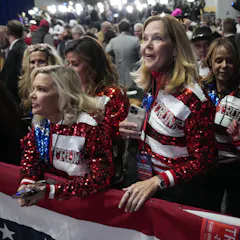
Iowa and New Hampshire have long cemented their status as the first-in-the-nation deciders in presidential nominating contests. This outsized influence has increasingly come under scrutiny.
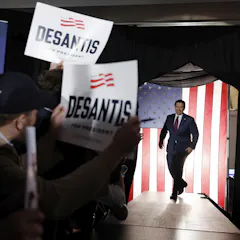
In Iowa, the Ron DeSantis super PAC Never Back Down seemed intent on mocking the dividing line federal regulators set between campaigns and the PACs that support them.

From the ‘static’ polls to Trump’s ‘dissing’ of voters, two political scientists look at the Iowa caucus and see more than just the fact that Trump won it, resoundingly.

The Iowa caucuses have long been an oddity in modern-day politics but remain a place where GOP candidates can test their presidential aspirations.

The result confirms the vast majority of Republican voters are still infatuated with the former president, despite his legal troubles and how little campaigning he’s done thus far.
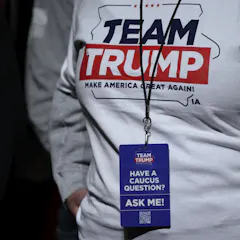
Donald Trump’s Iowa caucus campaign is very nuts-and-bolts. That may be a recognition that celebrity will only take him so far and attention to traditional political tools might be in his interest.
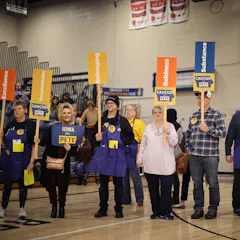
The Iowa caucuses have traditionally heralded the start of the Democratic Party’s presidential nominating contest. But the party, eager to maintain the White House, is redesigning that process.
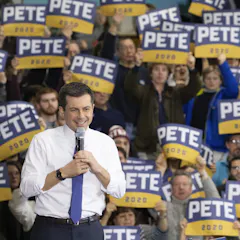
When candidates beat pollsters’ expectations, that can mean more positive media coverage.

While much of the focus is on the Iowa result, it is a small, largely white, state – the key results for the presidential nominee will come in on March 3.
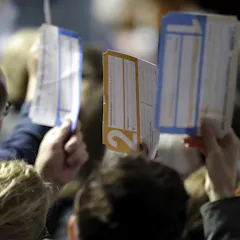
With electronic voting and vote-counting machines susceptible to hacking, paper ballots ensure recounts are possible – and accurate.

What will happen to campaign workers after the Feb. 3 caucuses? It’s a question that’s in the cold Iowa air, carrying with it a subtle message about the state of democratic politics.
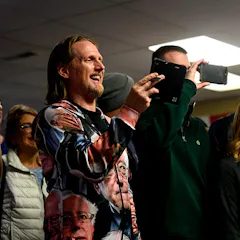
Schools and colleges can teach political hope that can help citizens make better choices.
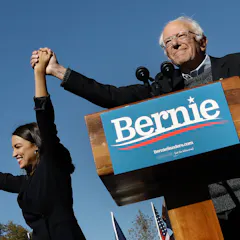
Polls are showing Bernie Sanders leading in next week’s important Iowa caucuses- but polls have been notoriously bad at predicting caucuses’ outcomes.
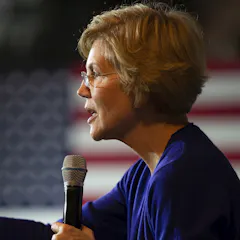
Americans didn’t always have primaries and caucuses to choose presidential candidates. The system was meant to be more democratic, but it places too much attention on largely white, small states.
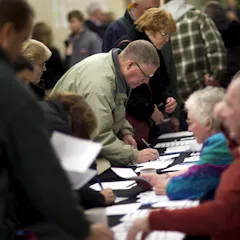
How did a small, rural state become so influential in the presidential nominating process? A political scientist traces the development of the first-in-the-nation Iowa caucus.

Investing in farming methods that improve lands and water, and in rural infrastructure and markets, could bring new prosperity to agricultural communities.
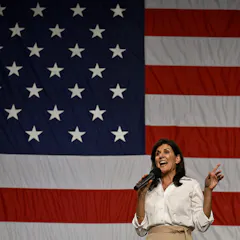
While other countries set strict limits on the length of campaigns, American presidential races have become drawn-out, yearslong affairs. It wasn’t always this way.
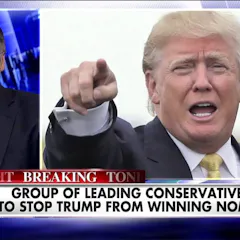
Donald Trump has applied the lessons of winning a TV audience to politics. Much as we might deplore the theatre of entertaining voters, we can’t wish it away.
Top contributors
-

Professor of Political Science, Grinnell College
-
Election Analyst (Psephologist) at The Conversation; and Honorary Associate, School of Mathematics and Statistics, The University of Melbourne
-
Lead Academic Teacher - Politics & Social Science (Swinburne Online), Swinburne University of Technology
-
Professor of Law, Drake University
-
Lecturer and Teacher, Department of Politics and International Relations, Cardiff University
-
Reader in US History, Northumbria University, Newcastle
-
Professor in The Division of Global Affairs and The Department of Political Science, Rutgers University - Newark
-
Lecturer in Politics and International Relations, Nottingham Trent University
-
Professor of Natural Resource Ecology and Management; Co-director of the Bioeconomy Institute; Director C-CHANGE, Iowa State University
-
Professor in International Politics, City St George's, University of London
-
Docteure en science politique, Learning Planet Institute (LPI)
-
Professor, Head of Department of Government, University of Essex
-
Associate Professor, Political Science, Emory University
-
Bradlee Professor of Government and the Press, Harvard Kennedy School
-
Professor of History & Head of the National School of Arts, Australian Catholic University