
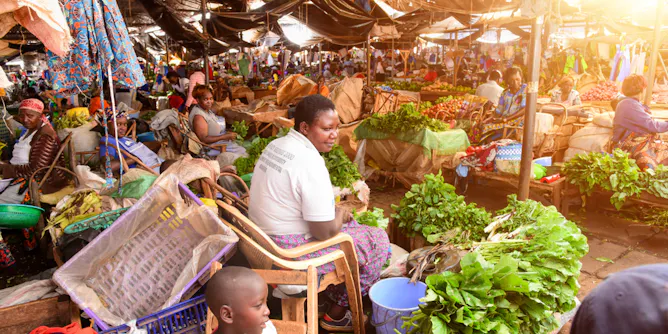
Many informal workers will not be able to take the precautions that health authorities suggest.
Articles on Informal sector
Displaying 41 - 60 of 61 articles
Most consumers in South Africa aren’t able to fill up a trolley of groceries for their daily needs, let alone join the panic buying induced by the COVID-19 pandemic.
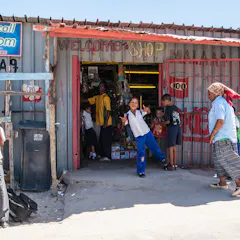
Informal retailers that dot South Africa’s townships have changed dramatically, but at great cost - avoidance of regulation and exploitation of employees.

From Santiago and La Paz to Beirut and Jakarta, many of the cities now gripped by protest share a common problem: They’ve grown too much, too fast.
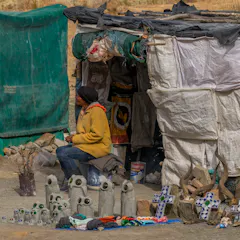
The informal sector represents an opportunity to improve the lives of a large part of the workforce. Government should desist from harming livelihoods and broaden the scope of policy measures.

Underpaying workers has become rampant in Australia.

The Otigba Computer Village shows how businesses in a largely informal market identify new and useful knowledge, apply it innovatively to scale up their operations and increase profits.

The informal economy is often perceived negatively, yet recent research from developing and emerging countries indicate that the preconceptions that surround it are myths.

Africa’s new continental free trade area, the AfCFTA, is a remarkable achievement. However, decisive diplomatic, technical and social action is needed for it to succeed.
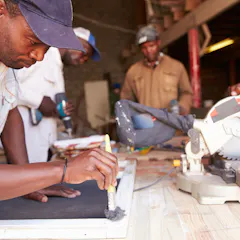
Little is known about how many people transition between the informal and formal sectors, a phenomenon called “churning”.
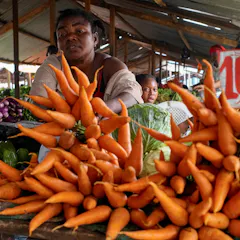
Graft is common in the way that markets in Kinshasa are run.
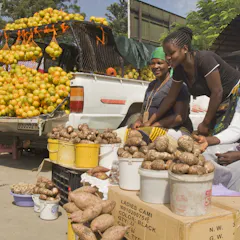
South African commercial law courses do not address the question of what norms and procedures govern business relations in indigenous African communities.
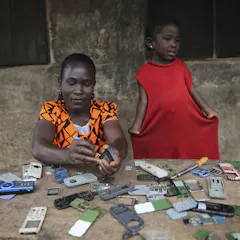
The extent to which mobile phones can support and sustain real improvement in young lives is depressingly finite unless significant interventions occur.
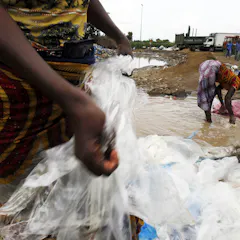
The plastic bag ban doesn’t consider the impact it will have on Kenya’s economy or consider other environmental alternatives.
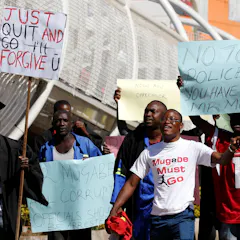
Zimbabwe’s students and graduates are angry. They have every reason to be. The country’s finances are badly managed and its economy is in crisis.

There is a growing trend of designing modernised replicas of traditional buildings for entertainment and tourism. That’s no way to salvage positive lessons from building traditions.
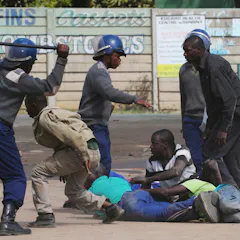
Zimbabwe has experienced another wave of discontent, manifesting in protests by its citizenry. This may well herald a change in the idea of citizenship in the country.
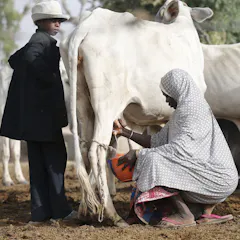
Escalating clashes between herders and farmers in Nigeria threaten the country’s national and food security. A response based on innovation, sustainability and political will is urgently needed.

The essence of Ubuntu can best be found in Africa’s informal economies. They are not dependent on western shareholders or donations, and certainly not subject to western management education.
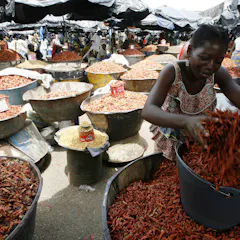
The informal economy in sub-Saharan Africa is largely marginalised despite its significant contribution to employment and GDP.
Top contributors
-

Associate Professor, Rhodes University
-
Senior Researcher, Southern Centre for Inequality Studies, University of the Witwatersrand
-
Lecturer in Economics, University of Venda
-
Associate Professor of Sociology, University of Johannesburg
-
Research Fellow, Institute of Development Studies
-
Pro Vice-Chancellor, Climate, Sustainability and Inequality and Director, Southern Centre for Inequality Studies, University of the Witwatersrand
-
Researcher, University of Cape Town
-
Associate Professor & Director, Centre for Social Policy Studies, University of Ghana
-
Professor of Cross-cultural Management, Middlesex University
-
Research Fellow, Institute of Development Studies
-
Professor, Economics, University of the Western Cape
-
Professor of Economics & Business, Allegheny College
-
Senior Researcher: Poverty and Inequality Initiative, Southern Africa Labour and Development Research Unit, University of Cape Town
-
Departmental Lecturer in African History and Politics, University of Oxford
-
Associate researcher, University of Antwerp