
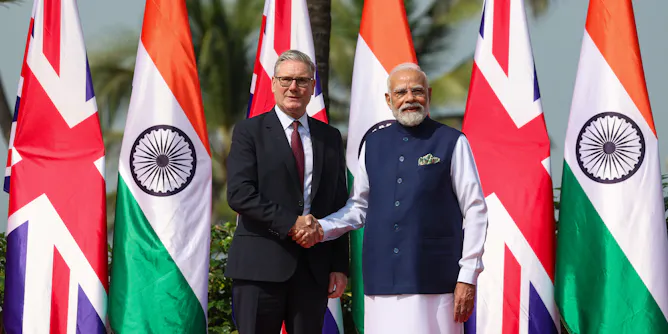
India’s fintech sector is spread widely across the country.
Articles on Indian economy
Displaying 1 - 20 of 38 articles
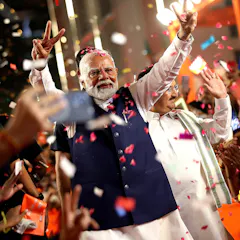
India remains a powerful economic force.
Modi’s party has struggled to generate jobs for young people, but is highly adept at marshalling votes to win elections.
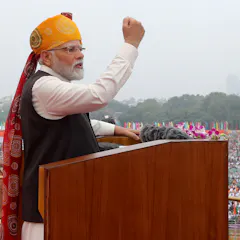
The Indian prime minister’s rhetoric strayed a long way from reality.

As a hugely diverse continent, one thing has united Asia in the last 50 years: economic development.

India’s furniture industry is worth US$32billion and is projected to double by 2023.
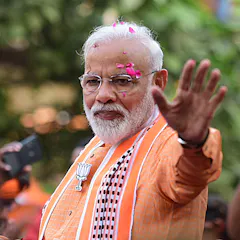
In Narendra Modi, India has found a development messiah.

As India grapples with boosting the number of jobs available to people, it must ensure it does not leave women behind.
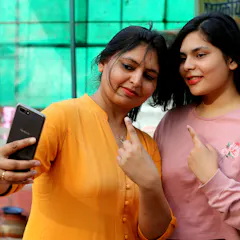
This is a transcript of part 6 of India Tomorrow, focusing on India’s huge population of young people.

Modi has had mixed successes in delivering on big promises to transform India’s economy.
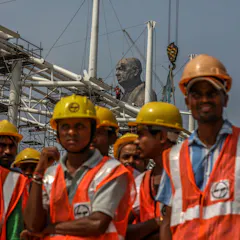
India’s prime minister, Narendra Modi, rode to power in 2014 promising economic transformation.
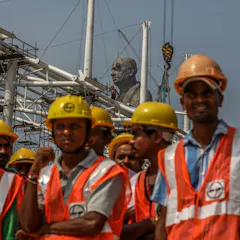
CC BY-ND24.4 MB (download)
Part five of India Tomorrow takes a look at India’s economy.
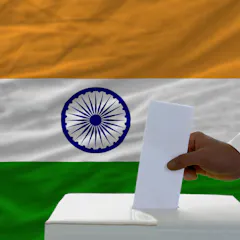
India election 2019: millions of Indian youth are underemployed and going to the polls
The Conversation, CC BY64.4 MB (download)
The world's largest democracy will see its biggest young voter turnout since gaining independence 72 years ago, with millions delivering their verdict on Narendra Modi's BJP government.

India requires large enterprises to spend 2% of their profits on corporate social responsibility projects. It’s a bold idea, but looks doomed to fail.

Climate change could hurt Indian farmers’ income by up to 20-25% in the medium term.
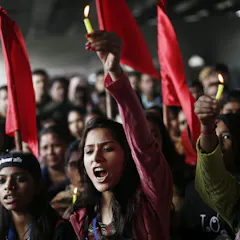
Millennial Indian women have been leading a new kind of feminism since the early 2000s.

Breast cancer could kill 76,000 Indian women a year by 20220, according to new research.
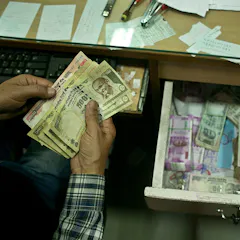
India’s recent move toward a cash-free society helped reveal just how important physical currency is to the informal economies that the poorest families depend upon.

Traditional economists cannot quantify or measure the effect of white male privilege in facilitating business dealings or obtaining employment in emerging market economies.
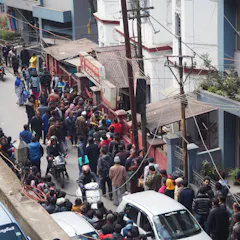
Public co-operation is not proof of trust in government. The Indian people did not trust elected politicians to represent them against top-down policymaking that caused enormous difficulties.
Top contributors
-

Pro-VC, Sharda University
-
Professor of Development Economics, University of Manchester
-
Lecturer in Global Development Politics, University of York
-
Leverhulme Early Career Fellow, Institute of Asia-Pacific Studies, School of Politics and International Relations, University of Nottingham
-
Deputy Vice-Chancellor (International) and Senior Vice-President, Monash University
-
Distinguished Professor, King Fahd University of Petroleum & Minerals
-
Professor of Entrepreneurship, Kingston University
-
Professor of Gender & Development, University of East Anglia
-
Reader in Agrarian and Labour studies, SOAS, University of London
-
Director, Centre for India & Global Business, Cambridge Judge Business School
-
Senior Lecturer & Researcher, University of Portsmouth
-
Professor of Accounting, Banking and Finance, University of Canberra
-
Associate Teaching Professor, School of Interdisciplinary Arts and Sciences, University of Washington, Bothell
-
Assistant researcher, University of Sydney
-
University of Southern Queensland