

Both male and female employees report reacting more negatively to criticism from a woman, which has implications for the success of women in leadership roles such as Citigroup’s incoming CEO.
Articles on Implicit bias
Displaying 21 - 40 of 47 articles
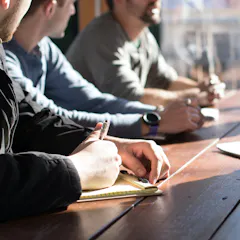
Recent years have seen a rise in the number of businesses offering employees bias training. However, bias training is not a one-size-fits-all solution and unless tailored to specific contexts loses its value.

These new findings could help explain why Black students are more likely to be suspended, expelled or otherwise disciplined than other children.
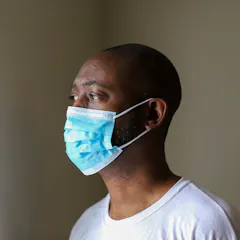
COVID-19 has again demonstrated the health inequities that exist between African Americans and whites.
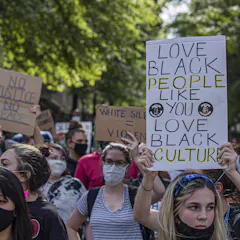
We need a revolution in behaviour, not just in rhetoric.
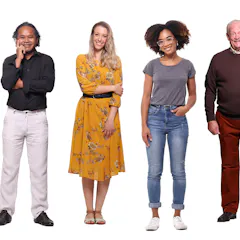
Leaders like Ford Foundation President Darren Walker are the exception.
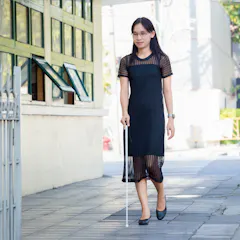
People who are blind have made great strides in the workplace in the 55 years since the US first observed White Cane Day. Yet discrimination in employment still remains, two experts explain.

Progress has been made toward gender parity in science fields. But explicit and implicit barriers still hold women back from advancing in the same numbers as men to the upper reaches of STEM academia.
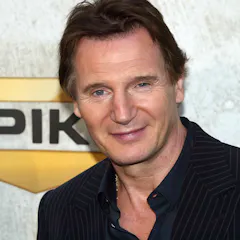
Unconscious biases can trigger aggressive behaviour and lead to miscarriages of justice.

Awareness campaigns can only go so far to stopping the stigmatization of mental health. Change occurs once we stop shaming ourselves and others for our bias.
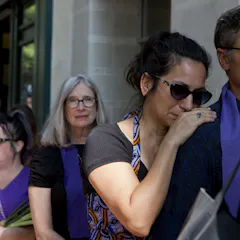
As death tolls rise from hate crimes, a psychiatrist wonders: Is it time to treat bigotry like a disease?
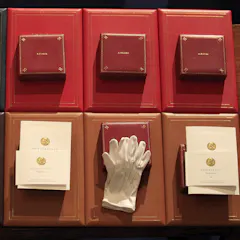
Progress has been made toward gender parity in science fields. But explicit and implicit barriers still hold women back from advancing in the same numbers as men to the upper reaches of STEM academia.
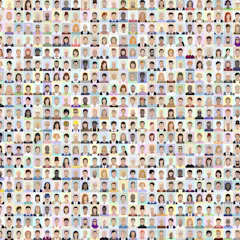
Our neural circuits lead us to find comfort in those like us and unease with those who differ, resulting in a battle between reward and distrust. But these brain connections aren’t the end of the story.

Starbucks is implementing implicit bias training for its employees in the United States and Canada. Even though we are not aware implicit biases, they lead to discriminatory behaviours.

Each person experiences pain differently, depending on his or her genetic makeup. That makes it difficult to figure out what treatments patients need.

Seeing is not just believing. Seeing changes what we believe, about ourselves and about other people.
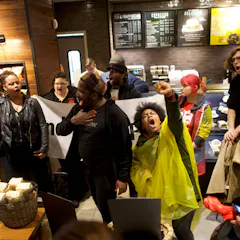
Starbucks is giving this training to its employees, but it’s still so new that there’s no standard format and little research yet on whether it’s effective.
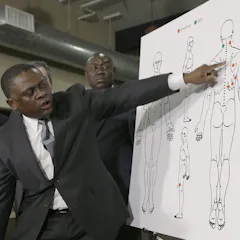
Research on implicit bias, machismo and community relations may shed light on what drives police-citizen violence.

Prejudice and stereotypes are part of why social inequality persists. Social scientists use tests to measure the implicit biases people harbor and see how much they relate to actions.
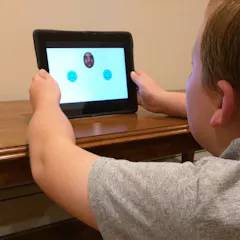
Racial bias is associated with dehumanizing social groups different from your own. Psychologists trained kids to differentiate individuals of another race – with lasting effects on their biases.
Top contributors
-

Professor and Lincoln Professor of Ethics in Public Affairs, Arizona State University
-
Associate professor, Psychiatry, Western University
-
Associate Professor of Marketing, Cognitive Science, & Psychology, University of California, Berkeley
-
Assistant Professor of Psychology, University of Georgia
-
Assistant Professor of Psychology, University of Florida
-
Professor of Psychology, Cornell University
-
Associate Professor in Gender and Consumer Psychology, Director of Groups and Societies Research Centre and Chair of Faculty Athena Swan Committee, Anglia Ruskin University
-
Lecturer in Psychology, Keele University
-
Lecturer in Psychology and Cognitive Science, University of Sheffield
-
Professor of Psychology, University of California, San Diego
-
Professor of Government, Colby College
-
Emeritus Professor of Psychiatry, Lecturer on Bioethics & Humanities at SUNY Upstate Medical University; and Clinical Professor of Psychiatry, Tufts University School of Medicine; Editor-in-Chief Emeritus, Psychiatric Times., Tufts University
-
Professor of Economics, Meredith College
-
Professor of Physiology and Neurobiology, Dean of Faculty Affairs, Geisel School of Medicine, Dartmouth College
-
Senior Lecturer in Quantitative Sociology in the School of Social Policy, Sociology, and Social Research, University of Kent