

Crowdfunding has become a go-to means of raising money for political causes, but the monetary show of support can cause opponents to double down on their opposition.
Articles on Ideology
Displaying 21 - 40 of 44 articles

The narrative of the Fourth Industrial Revolution is more aspiration than reality.
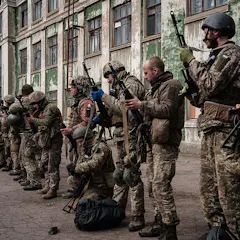
Ideology informs foreign policy practice. Behaviour that could – for better or worse – influence individual lives.

Looking back on Ford’s four years in power reveals four themes in his approach to governance — and what the next four years might have in store if he wins again.

Many people promoting cryptocurrencies are looking for something bigger than the future of financial transactions. They’re aiming to break free of governments and corporations.
Research shows Twitter tends to amplify the tweets of politically right-wing sources over left-leaning sources.
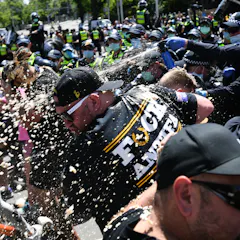
The pandemic has changed the nature of the national security threat to Australia: here’s what our research uncovered.

Public health recommendations have always been a hard sell. Resistance to new behaviors – like the mask-wearing and social distancing advised during the COVID-19 pandemic – is part of human nature.

Whether in situations relating to scientific consensus, economic history or current political events, denialism has its roots in what psychologists call ‘motivated reasoning.’
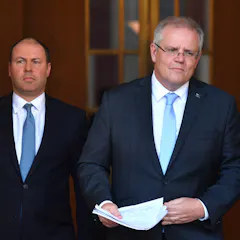
Rather than the absence of ideology, Liberals may be reverting to earlier forms of social liberalism that emphasise the common interests between labour and capital.
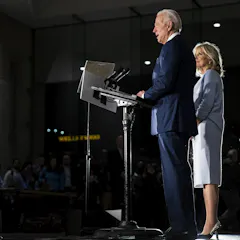
It is becoming clear that this election season, the Democratic Party will likely adopt a center-left agenda.
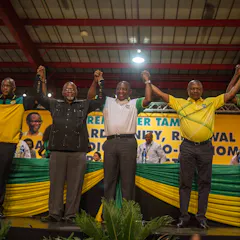
South Africa suffers capability deficiencies and institutional stasis due to poor political management.
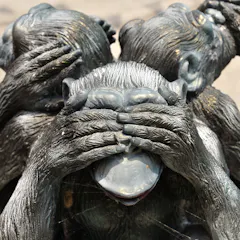
Whether in situations relating to scientific consensus, economic history or current political events, denialism has its roots in what psychologists call ‘motivated reasoning.’

The Coalition should not use this unexpected win to allow itself to be complacent and drift. It needs to work out its agenda for the next three years and how it allows internal debate.

On racist dog-whistling and on climate change, the “right” now finds itself on the wrong side of public opinion – so the acrimonious public debates on ideological lines may be coming to an end.

Research suggests people intuitively draw a distinction between what is known and what is believed. Recognizing the difference can help in ideological disagreements.
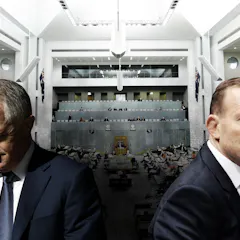
The Liberals once tried to build a big tent to include a range of political positions. Recent conflicts over energy, same-sex marriage and euthanasia show this is no longer sustainable.

As an intellectual history of the disciplines of paleontology and paleoanthropology, Kuljan’s book is especially adept at narrating the interwoven connections between science and power.
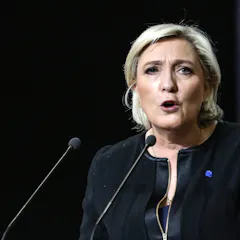
Both attack the status-quo, but for entirely different reasons.

Economics doesn’t have all the answers – at least not for those looking to escape ideology.
Top contributors
-

Professor of Philosophy, Wake Forest University
-
Associate Professor at the Wits Institute for Social & Economic Research, University of the Witwatersrand
-
Professeur, Université du Québec à Montréal (UQAM)
-
PhD Researcher, Lancaster University
-
Professor of History and Politics, School of Humanities and Social Inquiry, University of Wollongong
-
Associate Lecturer in Philosophy of Education, University of the Witwatersrand
-
Associate Professor and Head of Department of Economics, Kingston University
-
Associate Professor in the School of Government and Public Policy, University of Arizona
-
Lecturer, Public Policy and Political Communications, The University of Melbourne
-
Associate Professor, School of Economics, University of Sydney
-
Emerita Professor of Politics, Adelaide University
-
Associate Professor, Terrorism and Security Studies, Charles Sturt University
-
Professor Emeritus of Political Science, Indiana University
-
Professor, University of South Africa
-
PhD Candidate, Griffith University