
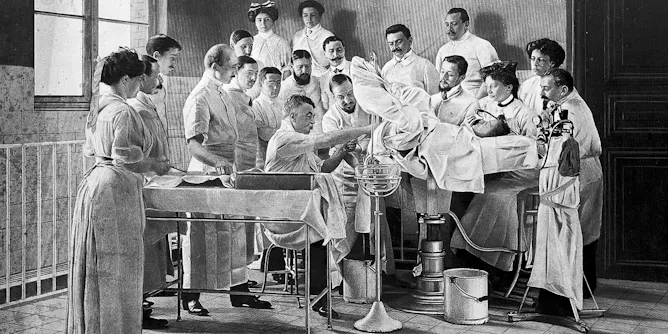
Endometriosis is an age-old condition and yet until recently, the complex disorder remained largely overlooked due to medical and social perceptions of women’s pain.
Articles on Hysteria
Displaying all articles

Millions of people suffer from debilitating symptoms their doctors don’t quite believe. But advances in neuroscience and education may be changing the tides for treatment.

Periodic Bitch tells what it’s like to live with PMDD: an extreme, chronically understudied and widely misunderstood form of premenstrual illness.

This toxic social media trend proves how – even today – women are punished and pathologised for simply being less than perfect.

Who bears responsibility when false information leads to real harm?

The uterus does move, but not like ancient physicians thought.

Set in 1990s suburban Australia, The Exact Dimensions of Hell is a theatrical exploration that unflinchingly examines themes of teenage girls, desire and power.
No one seems to be taught about the function of periods. It’s time to take menstrual literacy seriously.

An Italian study revealed how a murder mystery novel and a medical rarity were used to whip up media hysteria about spiders.

Apart from their functional purpose, products can also impact how we feel, both about ourselves and our situation.

When it comes to stemming the frenzy of stockpiling in the face of Covid-19, governments have to act decisively and communicate clearly.

Greta Thunberg’s critics say the climate activist is unstable, hysterical and mentally ill. That’s because she challenges the view that the world is theirs to conquer.

Multiple sclerosis and endometriosis in women both used to be diagnosed as hysteria. The same could be happening with ‘Havana syndrome.’
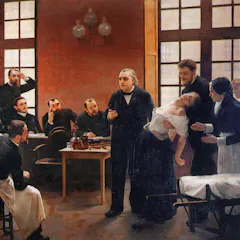
Split personality, neurotic, hysterical … these terms aren’t used by mainstream psychologists.
Treatment for nervous exhaustion in the Victorian era could literally drive you mad.

Sigmund Freud understood that mental conflict could become physical disability.

The debate about the nature of early trauma memories and their recovery isn’t new.
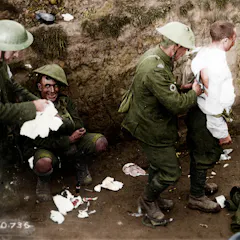
Mental health trauma has always been a part of war. Treatments have come a long way over the last century, but we still don’t understand why the responses change for different people and times.
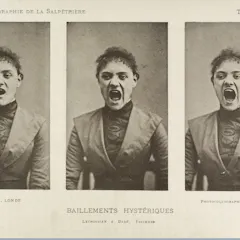
Psychiatrists in the 19th century began attributing self-harm to a desire to manipulate others.

Describing someone as ‘hysterical’ associates them with traits long deemed feminine – being overly emotional, out-of-control and irrational. If levelled against a male, the charge would impugn his manliness.
Top contributors
-

Professor of History, University of Warwick
-
Senior lecturer, Monash University
-
Professor of Clinical Psychology, University of Liverpool
-
Research Project Manager, School of History, Queen Mary University of London
-
Associate Professor of Philosophy, Michigan State University
-
Head of Department of Psychosocial and Psychoanalytic Studies, University of Essex
-
Assistant Professor of Practice, Michigan State University
-
Assistant Professor of Philosophy and Religious Studies, Old Dominion University
-
Professorial Fellow in Psychiatry, The University of Melbourne
-
Lecturer in English and Writing/ Academic Advisor, University of Newcastle
-
Professor in Psychology, Macquarie University
-
Visiting Fellow in Menstrual Physiology, King's College London
-
Assistant Professor of Organisational Behaviour, INSEAD
-
Associate Professor, Ecology, Northumbria University, Newcastle
-
Senior Lecturer in Theatre, The University of Melbourne