
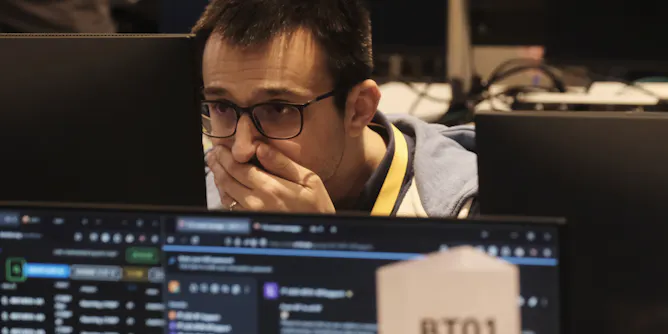
Hybrid warfare, including cyberattacks, poses a big threat, not only to Russia’s neighbours, but to the whole of Europe.
Articles on Hybrid warfare
Displaying all articles
Recent drone and GPS jamming attacks on Germany and Romania have ratcheted up tensions between Russia and the rest of Europe.
There may be a pause in hostilities, but a long-term settlement is still a long way off.
Wargaming is a centuries-old tool to explore ‘what if’ scenarios by simulating real-world crises.

Kathryn Bigelow’s latest film shows us how officials in the US might respond when a nuclear strike appears imminent.
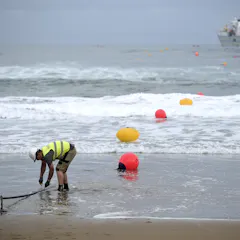
Incidents of accidental and suspect breaches of submarine cables in northern Europe and around Taiwan concern security experts.

The Chinese Communist Party has inadvertently given the country’s nationalist movement influence that it’s struggling to contain.
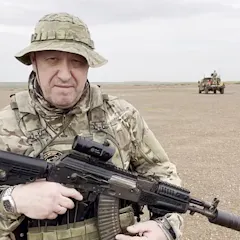
Russia is not interested in helping Africa to prosper or achieve stability, but as a theatre for advancing the Kremlin’s geostrategic interests.
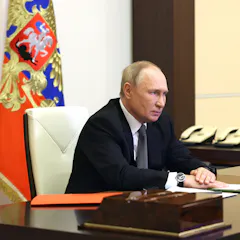
The Kremlin has a range of non-nuclear options for putting more pressure on Ukraine and the west.

If the Nord Stream attacks were an act of sabotage, this shows how energy infrastructure can be strategically targeted as an act of ‘hybrid warfare’.
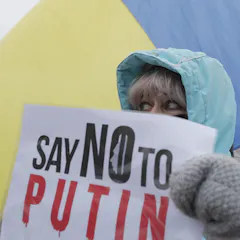
Ukraine has been subjected to Russian interference and hybrid warfare since its independence in 1991. The current troop build-up on its borders is just the latest example.
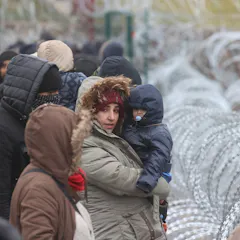
European leaders have accused Belarus of using civilians as weapons along the EU border in a ‘hybrid war’. And Russia, they say, is the mastermind behind it.

Our increasing connectivity and reliance on information technology is a vulnerability being targeted by two key threats: cyber attacks and the subversion of our democratic institutions.
Top contributors
-

Professor in Law and Security, University of Canberra; Stellenbosch University
-
Professor of International Politics in the Department of Political Science and International Studies, University of Birmingham
-
Senior Lecturer in Digital Cultures, Australian Research Council DECRA fellow, University of Sydney
-
Head of Geopolitics - Leidra, Researcher, RMIT University
-
Director of Research, Africa Center for Strategic Studies, University of Maryland
-
Professor of International Security, University of Birmingham
-
Lecturer in the School of Politics and International Relations, University of Nottingham
-
Assistant Professor of International Relations, American University
-
Senior Lecturer, School of Global Affairs, Lancaster University
-
Junior researcher, RAND Europe
-
Research Leader in Wargaming at RAND Europe, RAND Europe
-
Professor in International Politics, City St George's, University of London
-
Honorary Research Fellow, Department of International Politics, City St George's, University of London
-
Edith Cowan University
-
Postdoctoral Research Associate, Communication and Media, University of Liverpool