
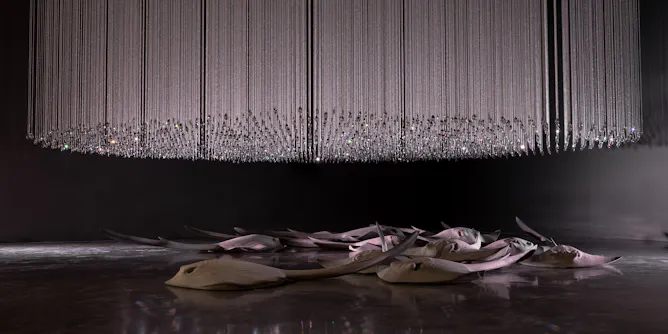
Abdul-Rahman Abdullah’s installation Pretty Beach tells a story from the artist’s childhood to explore mortality and grief.
Articles on Here's looking at
Displaying 1 - 20 of 27 articles
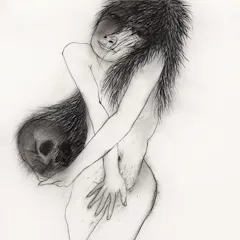
The images of Mary Magdalene made by Australian artist George Baldessin in the years before his sudden death in a car accident in 1977 are some of his most powerful works.
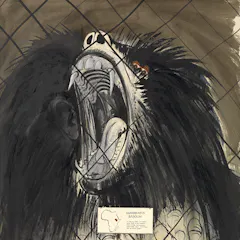
Throughout his life, Brett Whiteley made images of apes and monkeys. He found much in their character and physiognomy to identify with.
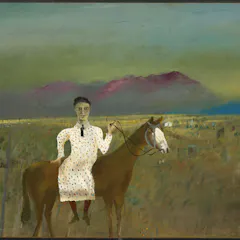
As a bushranger in the Kelly gang, Steve Hart took to dressing as a woman and riding side-saddle to avoid detection. Sidney Nolan’s painting captures Hart’s adolescent cockiness, bravery, and foolhardy bluster.
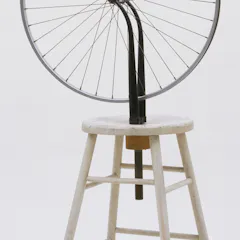
In his Bicycle Wheel, Duchamp made the perfect kinetic Futurist sculpture.
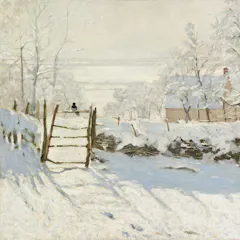
Claude Monet painted The Magpie in winter 1868, turning his interest in colour on the blank canvass of snow.
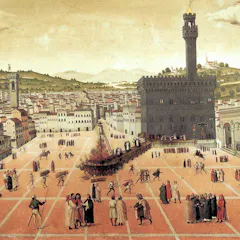
In 1497 Girolamo Savonarola burned books and art in Florence in the most infamous act of European cultural desecration. A year later, he met the same fate.
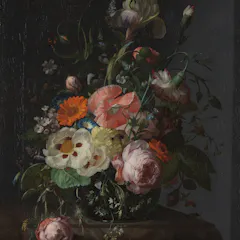
During her lifetime, the paintings of Dutch artist Rachel Ruysch sold for higher prices than those of Rembrandt. Why, then, have her talents not been more widely acknowledged in the centuries since?
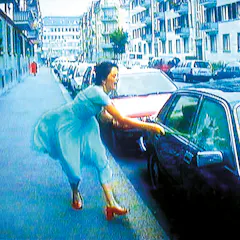
In 1997 Pippilotti Rist walked down a street of cars and smashed their windows in a vivaciously feminist call to arms. You might recognise the homage to Risk’s work in Beyoncé’s Lemonade.
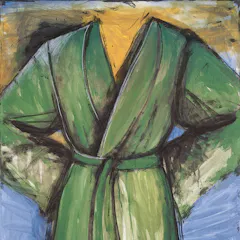
Jim Dine and other pop artists like Andy Warhol took everyday things and transformed them into magical objects. In his prints a robe could become a self-portrait, a president, or a hero.
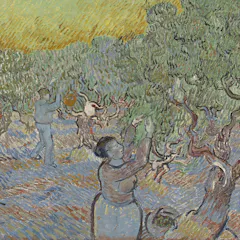
The pickers and sinewy olives in this painting all strain upward towards the hope of spiritual salvation. But six months after he completed it, Vincent Van Gogh walked out into a wheat field and shot himself.
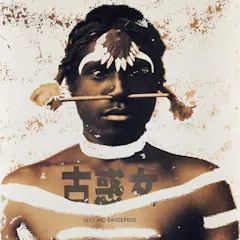
A 20th-century image of an anonymous ‘Aboriginal Chief’ becomes an investigation of power, colonialism and queer sexuality in the hands of Brook Andrew.
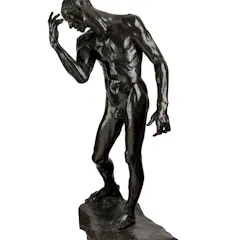
Our empathy for the anguished subject of this sculpture is heightened because although cast in bronze he is so tantalisingly human.
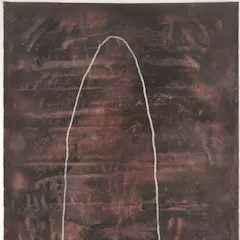
Judy Watson pours ochre and pigment onto unstretched canvases laid on the ground. The puddling and drying created an image of a simple termite mound with a profound connection to country.
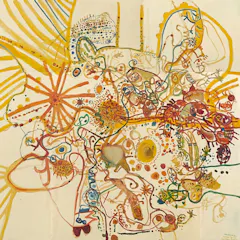
A yellow line becomes a blistering ray of sunlight in Summer in the You Beaut Country. John Olsen’s paintings, often described as ‘quintessentially Australian’, teem with life.
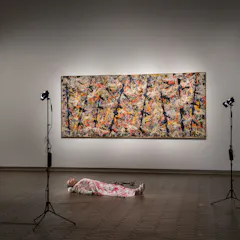
Jackson Pollock’s Blue Poles is one of Australia’s most famous cultural acquisitions. When Mike Parr lay supine before it, streaked with his own blood, he offered a new way of looking at the act of painting.
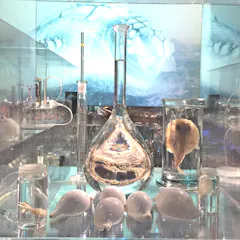
As scientists make a renewed push for greater action on climate change, a new installation at the Australian Museum brings home the fragility of our world.
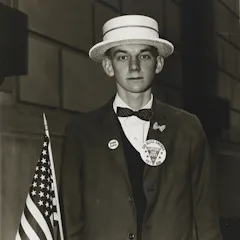
In 1967, as flower children across America marched against the Vietnam war, Diane Arbus chose to photograph a young man wearing a ‘Bomb Hanoi’ badge. What did she capture, about the boy and the time?
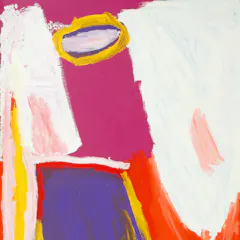
Mirdidingkingathi Juwarnda Sally Gabori began painting in her 80s, and over ten years created an extraordinary body of work. Her paintings are more like music and dance – depicting the stories of the Kaiadilt people for the first time.

The Mexican artist Frida Kahlo kept monkeys as pets and painted them often. They symbolised the children she couldn’t have and were worshipped as gods of fertility in Aztec times.
Top contributors
-

Honorary Professor, Edith Cowan University
-
Lecturer and Researcher in Plant Humanities, UNSW
-
Professor, The University of Melbourne
-
Honorary research fellow, Department Archaeology and History, La Trobe University
-
Emeritus Professor of History, La Trobe University
-
Associate professor, The University of Queensland
-
Professor of Performance and Visual Culture, Head of School of Art and Design, UNSW
-
Lecturer in Art History , University of Sydney
-
Professor in Art, Curtin University