
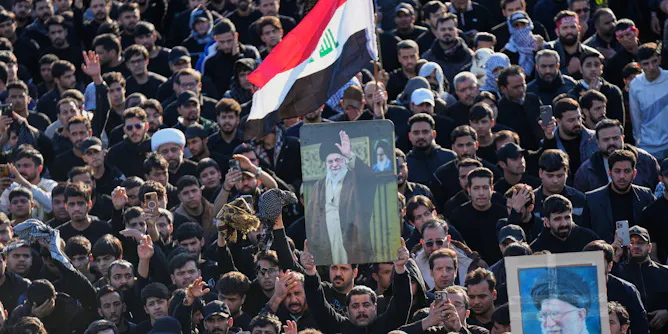
Four possible scenarios for the future of Iran.
Articles on Hassan Rouhani
Displaying 1 - 20 of 54 articles
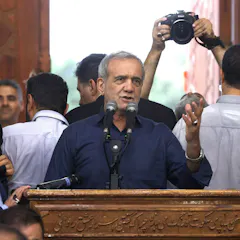
Masoud Pezeshkian wants to reopen dialogue with the west and improve rights for women. The regime may even allow him to do some of that.
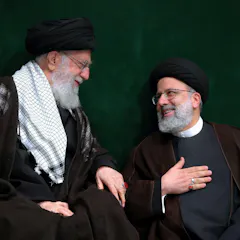
Middle East expert Scott Lucas answers our questions about the politicians vying to become the next president of Iran.
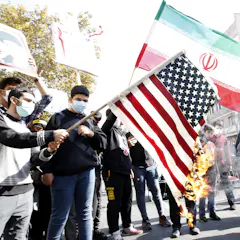
Much has changed since the Trump administration pulled out of the Iran nuclear deal in 2018, and good will is seriously lacking.
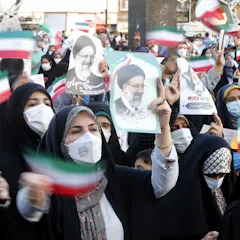
Real change will come from the streets, not the ballot box.
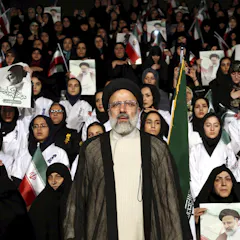
Ebrahim Raisi was declared the winner of Iran’s June 18 presidential election, which critics called rigged after his top opponents were disqualified.
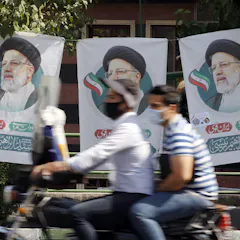
The election result seems a foregone conclusion, but the country’s political future is far from certain.
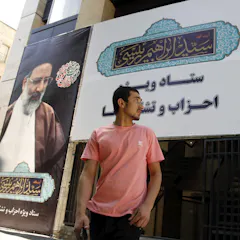
Ahead of June 18 presidential elections, a new survey found that only around a quarter of Iranians plan to vote.

Joe Biden has said he wants to return the United States to the Joint Collective Plan of Action, also known as the Iran nuclear deal.
But the window of opportunity may be closing.
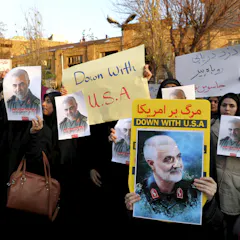
Since President Donald Trump took office, Iranians have held a more unfavorable view of the US.
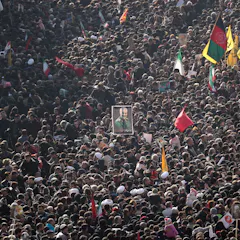
Given the perils of direct confrontation with the US, the most likely recourse for Iran may be to mobilise its proxy militias to attack American assets in Iraq.
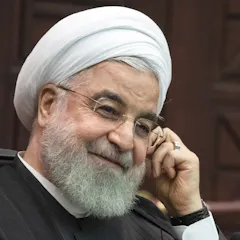
Iran’s goal is to sow discord and inflict pain on energy markets, while avoiding crossing a threshold that prompts retaliation from the US. This is a fine line to walk at the best of times.
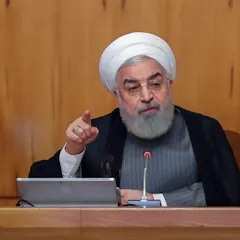
Iranian President Hassan Rouhani staked his political fortunes on bringing Iran out of isolation. Now, it appears he’s losing control to hard-liners in Iran.
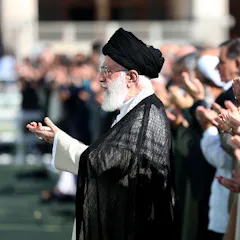
Donald Trump stepped back from launching US airstrikes inside Iran, but the conflict is unabated and there appears to be no way out of confrontation for now.
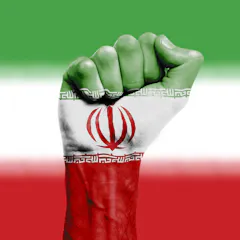
Reformers have tried to modernise Iran for decades but have failed mainly due to the country’s powerful theocracy. And then there are those who want to overthrow the regime altogether.

As Iran struggles under another round of international sanctions, a widening social gap is putting President Hassan Rouhani’s government under pressure.
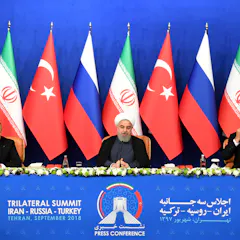
The US was once the dominant force in the Middle East. That old order has disappeared. Now the new powers are Iran, Turkey, Saudi Arabia and Russia – and the US needs a new policy for the region.
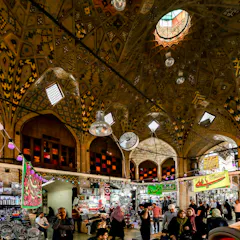
Recent protests in Tehran’s Grand Bazaar are part of a long reform movement, not a new revolution.
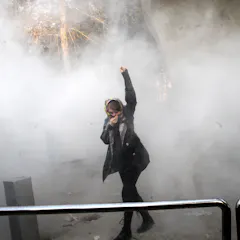
Just as Iran’s centre ground was collapsing under political pressure, Donald Trump offered the hardliners a gift.
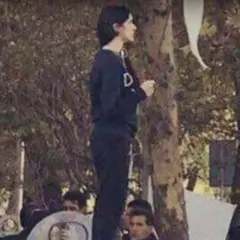
Protests against mandatory hijabs have a clear goal, and if successful, would be a victory for Iranian civil society.
Top contributors
-

Henry J. Leir Professor of Practice in Economics of the Middle East, Brandeis University
-
Director, Middle East Studies Forum (MESF), Deakin University
-
Director of the Curtin Extremism Research Network (CERN), Curtin University
-
Professor in Global Thought and Comparative Philosophies, Inaugural Co-Director of Centre for AI Futures, SOAS, University of London
-
PhD Candidate, School of Law, University of Portsmouth
-
Associate Professor in International Politics, UCL
-
Leiden University
-
Professor of International Politics, Clinton Institute, University College Dublin
-
Lecturer in Politics and International Studies, The Open University
-
Senior Teaching Fellow in the Comparative Politics of the Middle East, SOAS, University of London
-
Researcher in Middle Eastern Politics, Lancaster University
-
Faculty Fellow, Internet Governance Lab, American University School of Communication
-
Associate with the Project on Managing the Atom, Harvard Kennedy School
-
Professor of Non-Proliferation & International Security, King's College London
-
Professor of Criminology and Criminal Justice, Northeastern University