

Republicans and Democrats have negotiated a draft deal that may avert a financial crisis, but why does the US have a debt ceiling in the first place?
Articles on Government debt
Displaying 21 - 40 of 67 articles
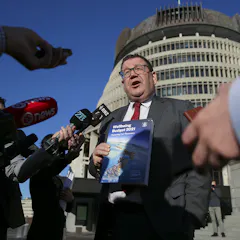
By under-promising and over-delivering, Grant Robertson has pulled off a budget that displeases the fewest people.
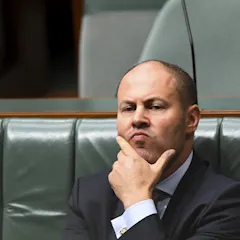
Inflation, interest rates and booming mining royalties give the Morrison government scope to ignore the deficit daleks.

Governments like ours choose to borrow, they don’t have to.
Now that we are recovering from recession, there’s no telling how low we could push the unemployment rate. One estimate is 3.5%.

Resolution of South Africa’s fiscal crisis depends on faster economic growth which must be led by private investment. Fiscal consolidation is necessary but without growth debt will not stabilise.

Massive borrowing to fund NZ’s economic recovery due to COVID-19 cannot be written off without the risk of worsening the crisis it was designed to meet.

While necessary during the crisis, government borrowing isn’t costless. Longer term, it might depress living standards.

44 of the 50 leading economists surveyed by Economic Society and The Conversation back running up more debt to support the economy. Only three do not.

Modern Monetary Theory is suddenly popular because it implies governments can spend as much as they need to. But that spending comes with risks.

With government debt soaring following moves to combat the coronavirus pandemic, now is the ideal moment to change how states borrow money.

The South African government should be spending more, not less, to boost economic growth and create jobs.

We now need a revolution in our national thinking about debt and deficits.
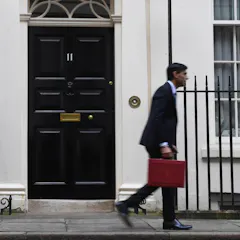
The new chancellor’s plans won’t look half as prudent if the economy tanks.

The only way out of South Africa’s crisis - financially wobbly utility Eskom, worsening public finances and poor economic growth - is a societal agreement that recognises the need for sacrifices.
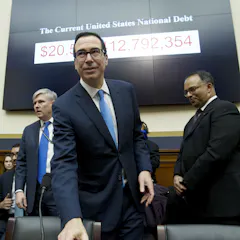
The US hit the debt ceiling in March and is expected to run out of ways to get around the new $22 trillion limit by September. An economist explains why the ceiling is a dysfunctional relic.

History suggests we can run sizable budget deficits while shrinking the budget debt burden. Mid last century our leaders weren’t afraid to say so.

The British government is trying to unblock £400m donated in 1927 by an anonymous donor who wanted it to help pay off the national war debt.

If the stars align, consumers will benefit from increased economic activity in the short term. And if they don’t, then the economic recovery will have consumers saving more in uncertain times.

National governments do not, and should not, behave like a private household.
Top contributors
-

Scientia Professor of Economics, UNSW
-
Emeritus Professor of Economics (Griffith University) and Teaching Associate (University of Queensland), Griffith University
-
Part-Time Professor of Economics, The New School
-
Professor of Finance, University of Liverpool
-
Professor of Economics, Monash University
-
Visiting Fellow, Crawford School of Public Policy, Australian National University
-
Senior Research Fellow, World Institute for Development Economics Research (UNU-WIDER), United Nations University
-
Associate Professor, Department of Economics, University of Otago
-
Professor of Economics, Director of the Australian Institute for Business and Economics, The University of Queensland
-
Lecturer in Accounting, Finance and Economics, Griffith University
-
Director, Melbourne Institute of Applied Economic and Social Research, The University of Melbourne
-
Vice Chancellor's Fellow at Victoria University and Adjunct Professor of Economics, Victoria University
-
Senior Lecturer, Department of Banking and Finance, Monash University
-
Professor of Economics, University of Georgia
-
Sir John Bunting Chair of Public Administration, Australian National University