
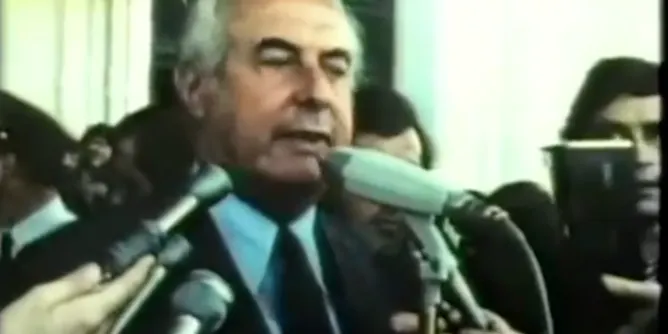
The way in which Bob Wilesmith’s footage has come to dominate Australians’ recollection of The Dismissal is a story of prescience, luck and the limitations of the TV news technology of the day.
Articles on Gough Whitlam
Displaying 61 - 80 of 95 articles
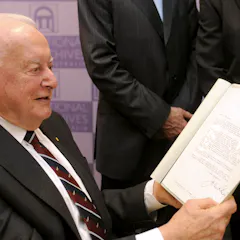
Sir John Kerr probably made his own decision to dismiss the Whitlam government much earlier than he acknowledged publicly while alive – but he came to this conclusion in discussion with others.
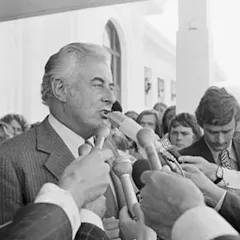
In comments reported in a new book to mark the 40th anniversary of the dismissal of Gough Whitlam, Malcolm Turnbull and Tony Abbott offer sharply differing views.

Michelle Grattan discusses the newly released book The Protest Years: The Official History of ASIO 1963-1975 with its author, John Blaxland.
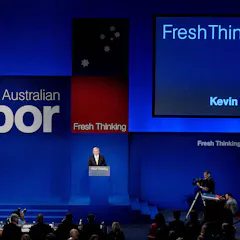
The ALP national conference has lost its policymaking significance of the past. Instead it has become a reflection of the leader’s standing within the party.
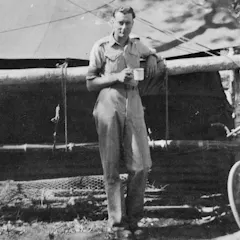
While serving in the RAAF, future prime minister Gough Whitlam led his first political campaign, agitating among his own squadron in support of the 1944 referendum.
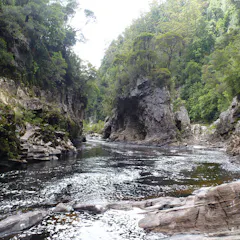
Malcolm Fraser may be remembered for his failure to intervene in the Franklin Dam campaign, but he otherwise led a government distinguished for its environmental action.
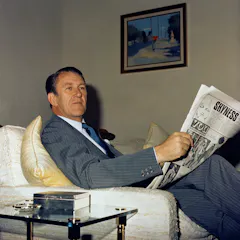
Malcolm Fraser’s relationship with the Australian media waxed and waned, from enthusiasm, pragmatism and caution to something, in the end, approaching mutual respect and perhaps even affection.
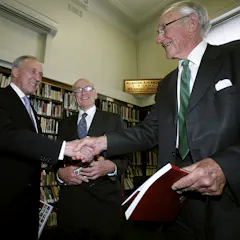
Malcolm Fraser’s economic style was pragmatic, but he resisted the ‘dries’ in his party.
Tom Uren was a “Big Man” not only in stature but in his public life. Uren, who has died at the age of 93, was born into a working-class household. Typical of the 1920s and ‘30s, he had a limited formal…
Australia’s public youth radio station, Triple J, turns 40 today. On January 19 1975, Triple J’s AM predecessor, Double J, infamously burst onto Sydney’s airwaves with the track, You Just Like Me Cause…
Last week, I was one of a sea of Australians who rose to remember Gough Whitlam. Fitting its subject, the Whitlam memorial was sweeping. It was as much a grand story of Australia’s evolution since the…

In a playful rhetorical flourish at the Sydney Town Hall on Wednesday, Indigenous leader Noel Pearson monumentalised Gough Whitlam’s prime ministerial legacy, Monty Python-style: What did the Romans ever…

Gough Whitlam was a prime minister unsuccessful in three of his five federal election campaigns, including 1975’s extremely divisive contest. Somehow, though, his death has sparked an outpouring of kind…
Edward Gough Whitlam has passed on, leaving behind millions of citizens saddened by scores of eloquent obituaries reminding us how, once upon a time, Australian politics produced world-class leaders courageously…
Former prime minister Gough Whitlam, whose death at age 98 was announced on Tuesday, left significant legacies from his short time in office. Whatever their condition today, many of his government’s initiatives…
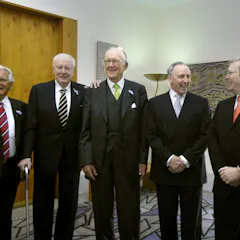
“Where were you when Gough was sacked?” This of course refers to Remembrance Day, 11 November, 1975, when the elected prime minister Gough Whitlam was sacked by Governor-General Sir John Kerr in cahoots…
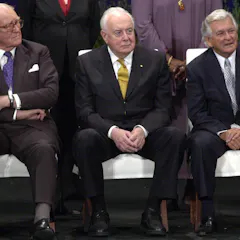
“Men make history,” Karl Marx wrote in 1859 in his Critique of Political Economy, “but not always in circumstances of their own choosing”. Whitlam himself would have chosen a different year to be his time…
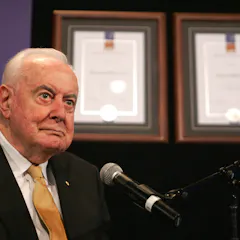
There was nothing inevitable about Gough Whitlam’s rise to the top. He had to fight every inch of the way. The fight was not only against born-to-rule Liberals who thought he had betrayed his class but…
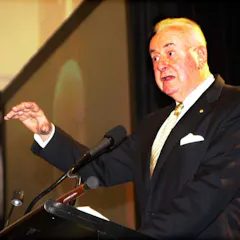
The popular response to Gough Whitlam’s death tells us more about the politics of the present than the past. Whitlam has been cast as a messiah; as Labor’s saviour; and as the slayer of what Paul Keating…
Top contributors
-

Professorial Fellow, University of Canberra
-
Emeritus Professor, Monash University
-
Professor Emerita in Constitutional Law, University of Sydney
-
Tony Walker AM is a Friend of The Conversation.
Director, La Trobe University
-
Professor of History, President, Australian Historical Association, Macquarie University
-
Director, Vice-Chancellor's Centre of Public Ideas (CoPI) and Donald Horne Professor of History and Public Ideas, University of Canberra
-
Joanna Mendelssohn is a Friend of The Conversation.
Honorary Senior Fellow, School of Culture and Communication, The University of Melbourne
-
ANU Law, Australian National University
-
Professor, Australian Studies Institute, Australian National University
-
Lecturer in Australian Political Studies, University of Canberra
-
Honorary lecturer, School of Social Sciences, UNSW
-
Emeritus Professor of Politics, Monash University
-
Scientia Professor of Economics, UNSW
-
Senior Lecturer, School of Humanities and Social Sciences, Deakin University
-
Dennis Altman is a Friend of The Conversation.
Vice Chancellor's Fellow and Professorial Fellow, Institute for Human Security and Social Change, La Trobe University