
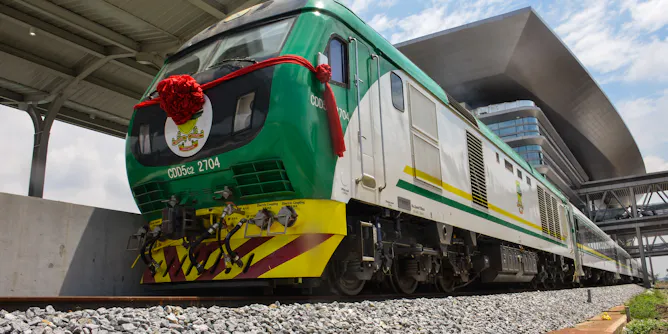
More efforts are needed to restore railways in Nigeria. It was a mainstay of the country’s economy in years gone by.
Articles on Goodluck Jonathan
Displaying 1 - 20 of 26 articles

When pop star D'banj signed up to help get Goodluck Jonathan elected president, fans turned on him. But a hit song turned things around.
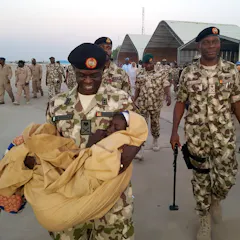
It’s been a decade since Boko Haram morphed into a violent, radicalised, Jihadist sect after the death of its founder. Since then it has caused untold harm in Nigeria.
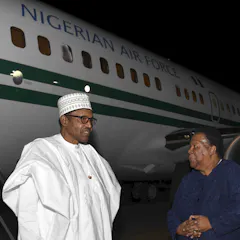
South Africa and Nigeria have had a turbulent relationship dating back to the early 1990s.
Akufo-Addo’s intervention marks a continuing move by African political leaders to use football to advance or affirm political situations.
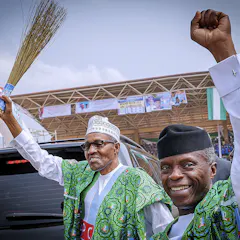
In the end, Buhari possibly won simply because the Peoples Democratic Party wasn’t offering a viable alternative.
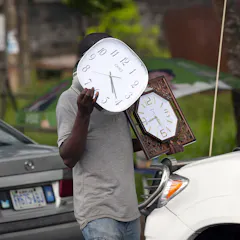
Most of the things Nigerians complained about in 2015 are still unresolved – unemployment, poverty and economic disempowerment.
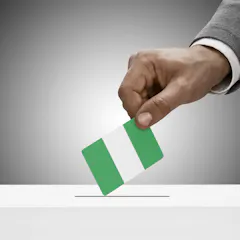
Young aspirant politicians lack support structure and the money, both of which remain strong factors in deciding politics in Nigeria.
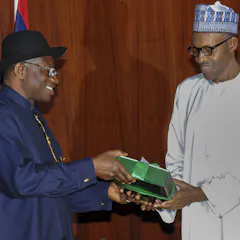
Claims about Cambridge Analytica’s role in elections in Nigeria and Kenya have been overstated.
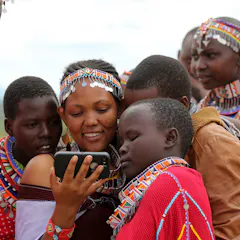
Across Africa, mainstream media have traditionally been the unrivalled custodians and originators of the public agenda. But this year social media took over as a new regime of information.
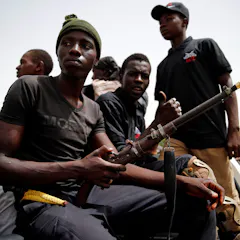
Inefficient policing in Nigeria has forced many communities to rely on vigilante groups for security. Despite using force and violence, many groups even have support from authorities.
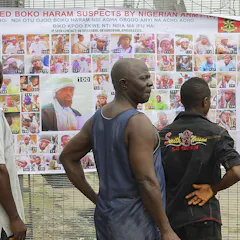
Despite military successes against Boko Haram, Nigeria needs to face up to the unpalatable truth that military force alone will not win the deadly war, and start discussions about peace building.

The final article of our series on the historical roots of Islamic State examines the role recent Western intervention in the Middle East played in the group’s inexorable rise.

No-one imagined that it would take Muhammadu Buhari more than 100 days to form a cabinet. But, then again, Nigeria is no ordinary country and it has its own inherent logic.
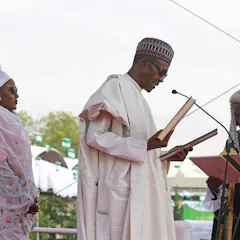
Former presidents Thabo Mbeki and Olusegun Obasanjo led confidently on African affairs because they were elected by comfortable majorities at home and had solid control of their political parties.
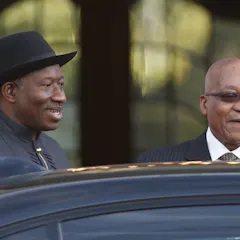
The relationship between Africa’s two great powers, Nigeria and South Africa, has had its ups and downs, but has been relatively cordial since 1999.
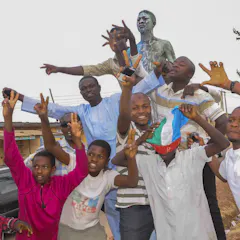
In the end, Nigeria managed what once seemed impossible and transferred political power relatively peacefully. What now?
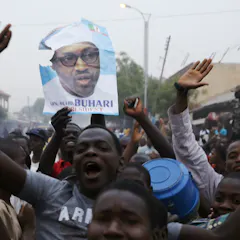
What appears to be a peaceful transference of presidential power in Nigeria – unprecedented in the country’s history – has global significance in the fight against cultist jihadism.
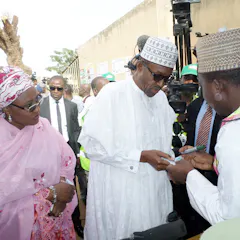
A historic win for a former military ruler in a democratic election and a man who ran out of luck. But Nigeria’s new President Muhammadu Buhari has his work cut out for him.
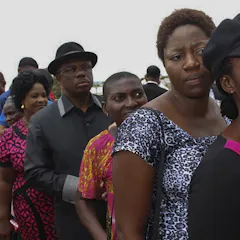
The 2015 elections in Nigeria were chaotic, but the country’s voters displayed immense courage in showing up at all. More than 20 people were killed, not in electoral violence between competing parties…
Top contributors
-

Professor of World Politics, SOAS, University of London
-
Lecturer, Political Science Department, University of Ghana
-
PhD Student, Department of Politics, Languages & International Studies, University of Bath
-
Professor of Democracy, University of Birmingham
-
Professor of History, Durham University
-
Associate Professor in International Relations, University of Nottingham
-
PhD Candidate, Justice Studies, Charles Sturt University
-
Professor of Law, University of Bradford
-
Senior Lecturer in African Studies, University of Birmingham
-
Professor of Sociology (Criminology, Victimology and Security Studies), University of Ibadan
-
Jan Smuts Professor of International Relations and Director of the African Centre for the Study of the United States (ACSUS), University of the Witwatersrand
-
Professor, Northwestern University
-
Professor of Media Industries, University of Nottingham
-
Lecturer in Criminology, Edith Cowan University
-
Professor, University of the Western Cape