
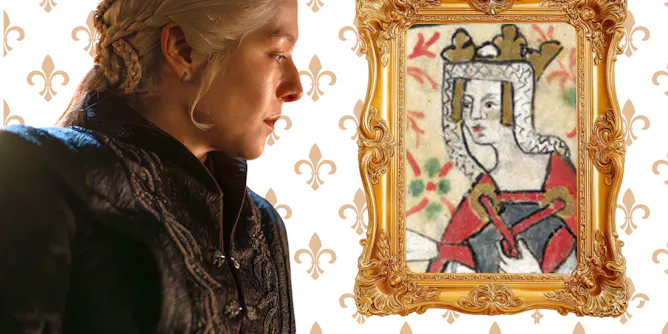
Dragons may be fictional, but the struggle for the throne, influence and legitimacy in House of the Dragons has roots in conflicts that shaped real history.
Articles on Game of Thrones
Displaying 1 - 20 of 100 articles

It’s a seemingly whimsical exercise, but it serves serious purposes.
JK Rowling nor George R.R Martin were afforded the same level of creative control over their books’ adaptations.

A depressed robot, a drugged Kenyan and a singing Saab driver − what could go wrong?

Could filmmaking become the new shipbuilding for Northern Ireland?
Ancient tales of gods and heroes and medieval Scandinavia help us make sense of things like masculinity, betrayal, revenge and the end of the world.
Ever since it launched, the streaming platform has made its name by spearheading ever more daring innovations. But could this model be hurtling toward uniform plots and worldviews?
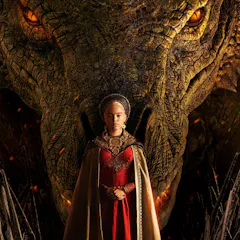
The battle for the Iron throne throws up all sorts of leaders that each has different leadership styles.
From Popes and philosophers to writers and emperors, the foot fetish has a long and storied history in our world.
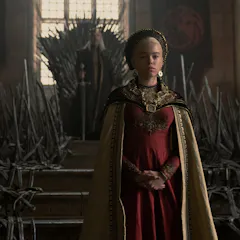
During a two-decade period of English history known as the Anarchy, a woman sought to make the then-unprecedented move of ascending to the English throne.

No green screens or chasing after balls, the actors in House of Dragons are interacting with virtual environments.
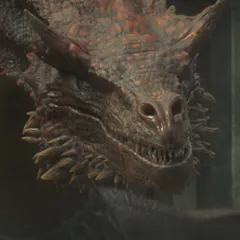
Dragons have been used for political manoeuvring throughout the history of Britain.
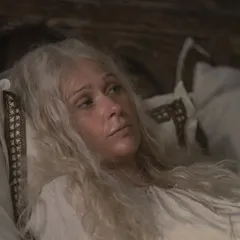
The trope of traumatic and violent childbirth is not new to House of the Dragon, and is often used to reflect on pregnant representation and reproductive politics on screen.
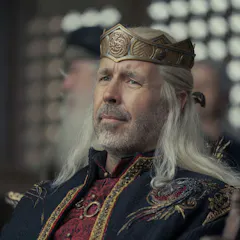
Just like in Westeros, the fates of royal dynasties from history have been shaped by illness and affliction.
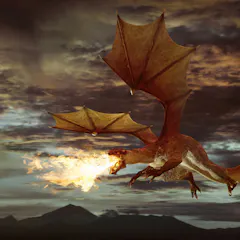
Enormous, scaly, fire-breathing dragons have fascinated civilizations for centuries. A scholar who studies monsters explains their power and appeal.
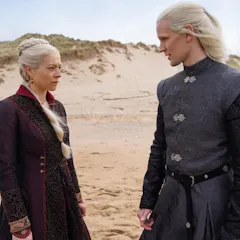
Game of Thrones made a name for itself with frequent and egregious depictions of sexual assault on screen. The upcoming prequel is moving in a new direction.

The key to understanding how brains can recover from trauma is that they are fantastically plastic – meaning our body’s supercomputer can reshape and remodel itself.

The video game community on Twitch has taken a massive interest in chess. The young, irreverent gamers and the ancient world of chess are both transforming as their cultures collide.
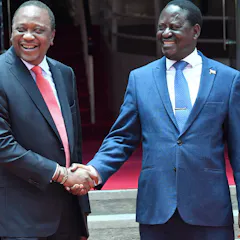
Even in the most tense and dangerous of moments, the elite has found a way to come back together.

Rogue coffee cups and changing hairstyles can distract film audiences. Whose job is it to maintain continuity? And does it matter in the big picture?
Top contributors
-

Professor of Medieval Literature and English Literature, Bangor University
-
Professor and Tutorial Fellow in English, University of Oxford
-
Senior Teaching Fellow, Management Science & Innovation, UCL
-
Senior Research Associate in Meteorology, University of Bristol
-
Associate Professor of Screen Media, Victoria University
-
Senior Lecturer in English and Cultural Studies, University of Canterbury
-
Director of the Centre for History Heritage and Memory Studies; Associate Professor in History, Nottingham Trent University
-
Professor of Persuasive Language and Storytelling, SKEMA Business School
-
PhD Candidate, Early Modern History, The University of Queensland
-
Teaching Fellow in Medieval Studies, University of Leeds
-
Senior Lecturer: Director MSc Animation and VFX MDes Comics & Graphic Novels, University of Dundee
-
Director of the Research School of the Social Sciences and Professor of Philosophy at the ANU, Australian National University
-
Research Associate in Climatology, University of Bristol
-
Professor of Media Cultures, University of Portsmouth
-
Senior Teaching Fellow in the History of the Middle East and Central Asia, SOAS, University of London