

Artists and scientists explore how we subconsciously perceive subtle proportions in trees.
Articles on Fractals
Displaying all articles
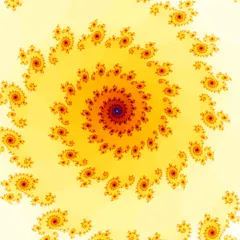
Before the maverick French-American came along, the geometry used by mathematicians was out of step with reality.
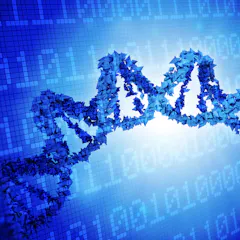
Many of the amino acids that make up proteins are encoded by genetic material in more than one way. An information theorist explains how principles of nature may account for this variance.
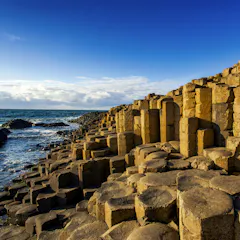
Nature begins forming patterns at the molecular level – and sometimes they grow to enormous sizes.

New experiments could help scientists settle the longstanding debate about whether consciousness is generated by quantum activity.
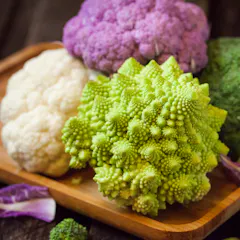
Cauliflowers are unique, and now we know why.
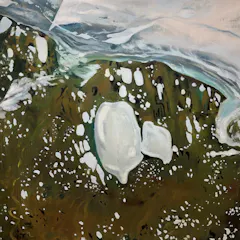
What do earthquakes, wealthy Italian families and your circulatory system have in common? Scientists use fractals, self-similarity and power laws to translate from local to global scales.
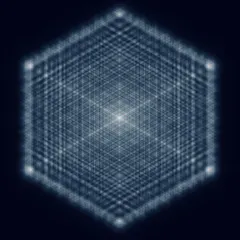
Nature can produce fractals, computers can, too. Could light be a fractal? The answer is yes.
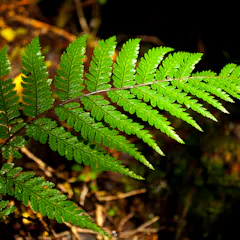
Fractals are patterns that repeat at increasingly fine magnifications. They turn up in the natural world and in artists’ work. Research suggests they contribute to making something aesthetically appealing.
Clouds are not spheres, mountains are not cones … Nature exhibits not simply a higher degree but an altogether different level of complexity. - Benoît Mandelbröt, The Fractal Geometry of Nature Chaos (n…
A new type of solar cell could be developed based on microscopic “fractal trees” grown from silver. The fractal silver structures…
Top contributors
-

Research Assistant Professor of Biology, University of New Mexico
-
PhD Candidate, School of Mathematical and Physical Sciences, University of Newcastle
-
Director of the Materials Science Institute and Professor of Physics, University of Oregon
-
Professor, University of the Witwatersrand
-
Professor, Theoretical Physics, Utrecht University
-
Laureate Professor of Mathematics, University of Newcastle
-
Assistant Professor of Theoretical Biophysics, University of Tennessee
-
Associate professor of Mathematics, University of Nottingham
-
Lecturer in Mathematics, University of Surrey
-
Professor of Electrical and Computer Engineering, Oklahoma State University