
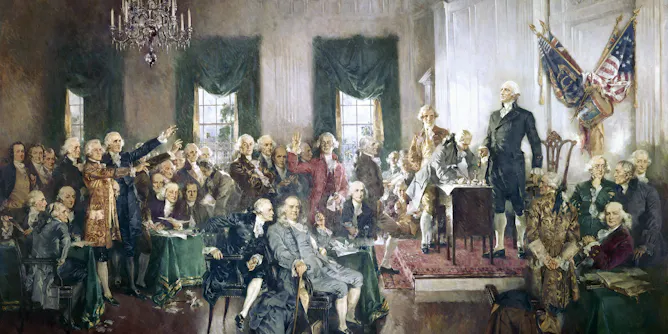
Montesquieu shaped how Americans understood liberty, and his warning about a ‘tyranny of opinion’ speaks to today’s polarization.
Articles on Founding Fathers
Displaying 1 - 20 of 30 articles
Two recent Supreme Court rulings suggest the high court is so pro-gun it has decided it must also be pro-drugs.

Two months after Defense Secretary Pete Hegseth made the flu vaccine optional in the military, an outbreak has led several branches of the military to make it mandatory again.
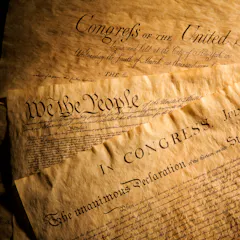
A partisan judiciary, arbitrary power, officials beyond the reach of the people – these are the grievances that drove a revolution.
Ona Judge was 1 of 9 people George Washington owned when he lived in the President’s House in Philadelphia. The city will recognize her legacy each May 21.
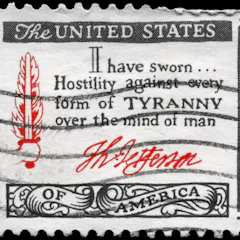
The ‘Rededicate 250’ rally raised questions about separation of church and state. Jefferson and Madison’s many letters to each other shed light on that much-debated principle.
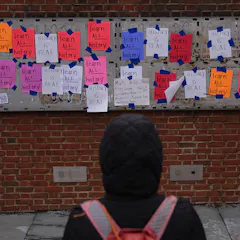
Ona Judge was one of 9 people George Washington owned when he lived in the President’s House in Philadelphia.
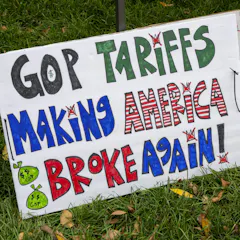
Justices are currently looking at whether Trump’s tariffs are constitutional. But that ruling won’t shed any light on whether they are wise.

Democracy is fragile. As a federal election approaches in Canada, it’s important to know the warning signs of extremism and anti-democratic practices that are now routine in the U.S.

John Adams signed the Sedition Act in an attempt to silence dissent. Some other Founding Fathers thought that muzzling the press would mean the end of the republic.

To stop a crime, it helps to understand who these criminals are and how they think.

Voters have cast their ballots. Now the 2024 US presidential election comes down to the Electoral College.
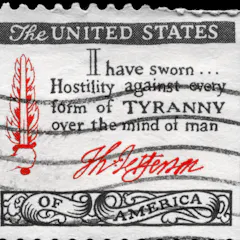
More than 2,000 letters between the two founders are available online. Many attest to their deep commitment to religious freedom.
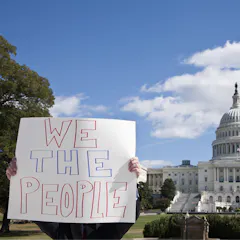
The meaning of the Constitution’s preamble, which begins with the words ‘We the People,’ has evolved over time as voting rights have expanded.
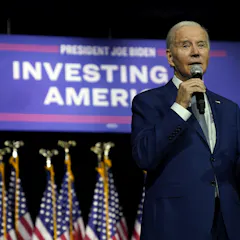
If Democrats embrace and deploy the Constitution leading up to the 2024 election, it will enable them to offer a confident message based on the hallowed principles of America’s founding charter.
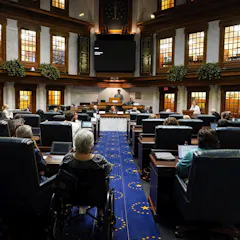
Why do government policies sometimes fail to reflect the public will? The answer begins with the design of the US government system, forged in the 18th century.
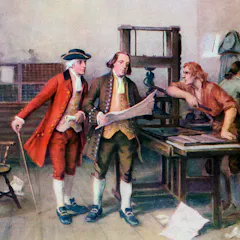
A scholar of 18th-century America and the founders analyzes the Supreme Court opinion overturning the constitutional right to abortion, which he says relies on an incomplete version of US history.
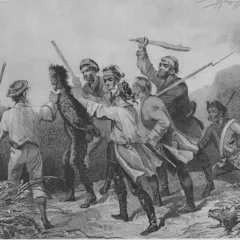
Like today, passions were strong and political discourse was inflamed in late 18th-century America. Angry mobs torched buildings. Virginians drank a toast to George Washington’s speedy death.
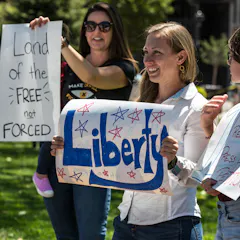
The Founding Fathers were unrelenting in their commitment to the idea that circumstances can arise that require public officials to take actions abridging individual freedoms.
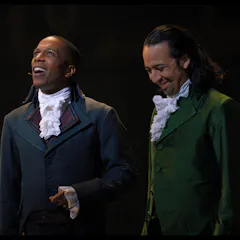
Even Colonial-era abolitionists like Alexander Hamilton enjoyed centuries of generational wealth built from slavery.
Top contributors
-

Professor of American History, Università di Torino
-
Director of the Center for Religion, Law & Democracy, Willamette University
-
Interim Dean and James F. Ackerman Professor; College of Education, Purdue University, Purdue University
-
Professor of History, McGill University
-
Director of the Center for Anti-Racism, Temple University
-
Assistant Professor of Political Science, Gettysburg College
-
William Nelson Cromwell Professor of Jurisprudence and Political Science, Amherst College
-
Distinguished Professor and Professor of the Humanities, USC Dornsife College of Letters, Arts and Sciences
-
Professor Emeritus of Economics, Babson College
-
Professor of Political Science, Iowa State University
-
Associate Professor - Department of African and African American Studies, Dartmouth College
-
Assistant Professor of Media Ethics and Law at Reed College of Media, West Virginia University
-
Global Fellow at the Wahba Institute for Strategic Competition, Associate Professor at the University of Arizona, University of Arizona
-
Professor Emerita of Religious Studies, College of the Holy Cross
-
Assistant Professor of Law, University of Houston