
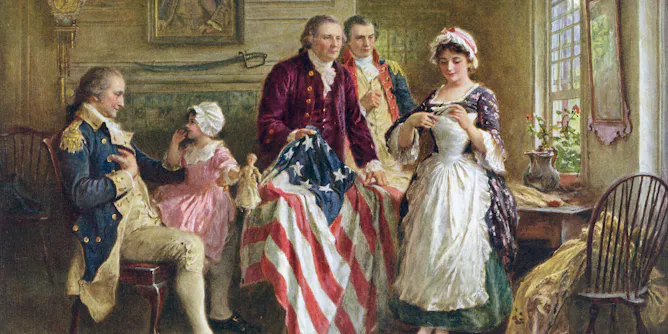
Betsy Ross probably did not sew the first American flag, but she was one of many craftswomen whose wartime labor helped build a nation.
Articles on Flags
Displaying all articles
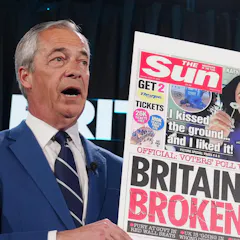
A summer of flag waving has shown how much people experience politics via the places they live.

Flags are complex signs open to multiple interpretations which are affected by how, why and where they are displayed.
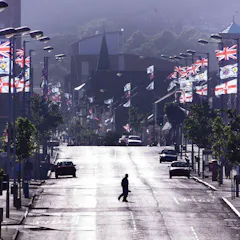
I’ve contributed to at least six reports assessing the tensions around flags.
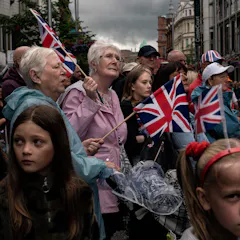
Understanding why we cling to objects in a moments of uncertainty helps explain the appearance of English flags on roadsides and in towns.
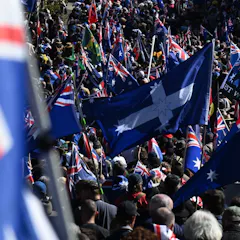
The Eureka flag originated on the gold fields, became a union symbol, and is now being waved at anti-immigration protests.
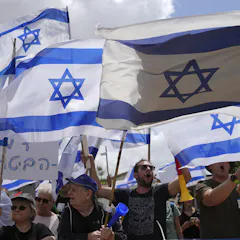
The Israeli flag has long been associated with the country’s far-right, but anti-government protesters have recently begun using the flag to bolster and legitimize their movement.
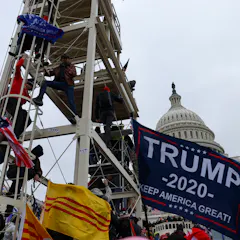
Onlookers who recognized the flag wondered why the mostly white mob had ‘coopted’ Vietnamese history. But Vietnamese Americans are Trump supporters, too, some driven by a potent fear of socialism.

We may think of flags as fixed symbols with a specific meaning, but there are few symbols whose significance is truly permanent.
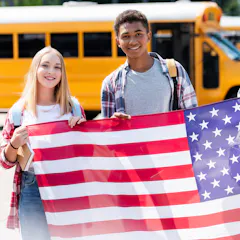
A teen asks why so many young people don’t stand for the Pledge of Allegiance or the national anthem. The data shows that young Americans today do view the U.S. more negatively than older generations.
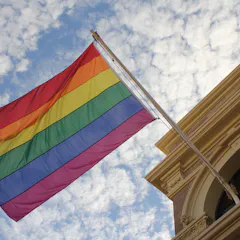
In the year since the resounding Yes vote in the same-sex marriage survey, the flag has clearly escaped the pole or the street bunting of pride festival times to become ever present in our cities.
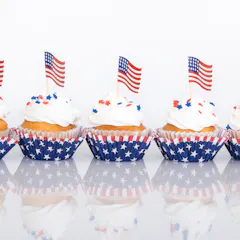
The Star-Spangled Banner does indeed yet wave.
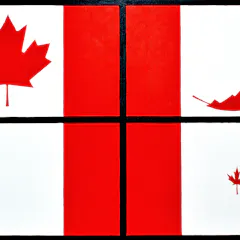
Composer John Burge speaks of his drive to create a musical piece to mark Canada’s 150th year of confederation and to capture our collective experiences.
Like a lot of people, I’m embarrassed to be living in an advanced industrialised OECD nation where our national flag includes that of a foreign nation. I just want us to grow up. Canada, a significant…
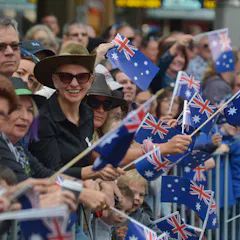
To be truly respectful to Australia’s Indigenous heritage, a new Australian flag would need in some way to integrate Aboriginal visual language and symbolism.

President Obama’s recent condemnation of the Confederate battleflag mirrors the current and rapidly-changing public mood on this artefact. But attitudes to the flag have deeper roots.
Top contributors
-

Senior Lecturer School of Architecture & Urban Design, RMIT University
-
Professor of Composition and Theory, Queen's University, Ontario
-
Senior Lecturer, School of Design, University of Technology Sydney
-
Emeritus Professor in Public Health, University of Sydney
-
Senior lecturer, UNSW
-
PhD Candidate, School of Design, University of Technology Sydney
-
Assistant Professor of Education, Florida State University
-
Associate Professor of Graphic Design, Iowa State University
-
Senior Lecturer in History, University of Dundee
-
Associate Professor of Global and International Studies, University of California, Irvine
-
Senior Lecturer in Human Geography, Cardiff University
-
PhD Candidate, Sociology, University of British Columbia
-
Associate Professor in Political Theory, The University of Melbourne
-
Interdisciplinary PhD Researcher, Bournemouth University
-
Chair professor, Queen's University Belfast